H3-30 Test Flight: Launch Recap for 12 June 2026
Published · Updated
H3-30Mitsubishi Heavy IndustriesH3 rocketTanegashima Space Center✓ recap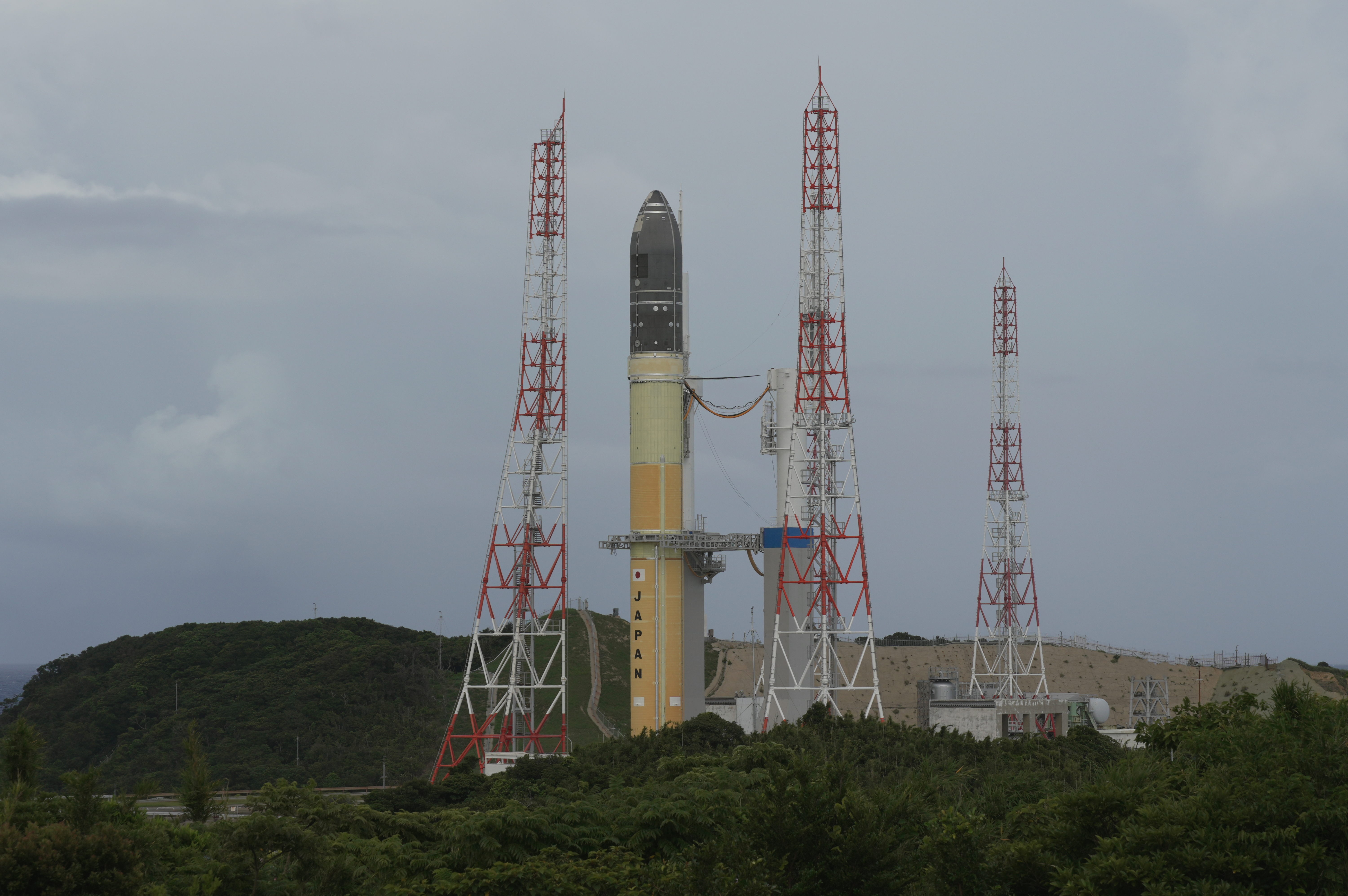
Launch facts
| Rocket | H3-30 |
| Operator | Mitsubishi Heavy Industries |
| Pad | Yoshinobu Launch Complex LP-2, Tanegashima Space Center, Japan |
| T-0 (UTC) | 12 June 2026 at 00:53 |
| Status | Success |
What happened?
Mitsubishi Heavy Industries successfully launched the maiden test flight of the H3-30 rocket on 12 June 2026 at 00:53:59 UTC from Yoshinobu Launch Complex LP-2 at the Tanegashima Space Center in Japan. The mission, operated by Mitsubishi Heavy Industries (MHI) in partnership with JAXA, was confirmed a success.
The H3-30 is the simplest, lowest-cost configuration of Japan's flagship H3 rocket family, designed to replace the long-serving H-IIA. This test flight validated the vehicle in its stripped-down form.
What is the H3-30?
The H3 is a two-stage, liquid-fueled expendable launch vehicle developed jointly by JAXA and MHI to provide flexible, affordable access to orbit. The H3-30 designation breaks down as follows: the first "3" denotes three LE-9 main engines on the first stage, the middle "0" indicates zero solid rocket boosters, and the final "0" reflects the short payload fairing.
This all-liquid, booster-free variant is the cheapest H3 configuration and is central to MHI's goal of driving down launch costs to compete in the commercial market. The LE-9 engine, which burns liquid hydrogen and liquid oxygen, is one of the world's first operational engines to use the expander-bleed cycle at this thrust class.
Why does the boosterless variant matter?
Most H3 flights to date have relied on strap-on SRB-3 solid rocket boosters for extra liftoff thrust. Proving the H3-30 can reach orbit on its three LE-9 engines alone unlocks the family's lowest price point, targeting lighter payloads and cost-sensitive customers.
Where did it launch from?
The rocket lifted off from Yoshinobu Launch Complex LP-2 at the Tanegashima Space Center, located on Tanegashima island in Kagoshima Prefecture. Tanegashima is Japan's largest spaceport and the primary launch site for the H3 program. LP-2 has been the dedicated pad for H3 operations since the vehicle's introduction.
| Detail | Value |
|---|---|
| Rocket | H3-30 |
| Provider | Mitsubishi Heavy Industries |
| Launch date/time | 12 June 2026, 00:53:59 UTC |
| Launch site | Yoshinobu LC LP-2, Tanegashima, Japan |
| Configuration | 3 LE-9 engines, 0 boosters, short fairing |
| Result | Success |
Did the launch succeed?
Yes. The mission was declared a success, marking a milestone for the H3 program and validating the boosterless three-engine configuration in flight. Each successful H3 mission strengthens confidence in the vehicle as Japan retires the H-IIA and consolidates its national and commercial launch capability around the H3 line.
Why is this flight important for Japan?
The H3 program represents Japan's strategy to remain a competitive, sovereign launch provider. After the H-IIA's roughly two-decade service life, the H3 was designed from the ground up for lower manufacturing costs, faster production, and modular configurations spanning light to heavy payloads.
Demonstrating the H3-30 expands the family's flexibility. With variants ranging from this three-engine, booster-free version up to configurations with two engines and multiple solid boosters, MHI can tailor each mission to payload mass and target orbit, improving cost efficiency across a wide range of customers, from government satellites to commercial constellations.
What comes next?
With the H3-30 configuration validated, MHI can offer the full H3 configuration matrix to domestic and international customers. Future flights are expected to carry operational payloads, including Earth observation, communications, and government spacecraft, as Japan builds a steady H3 cadence at Tanegashima.
You can follow every upcoming Japanese mission on our rocket launch schedule and read the latest launch news for updates as MHI ramps up H3 operations.
How to track the mission
Cosmik's live 3D solar system and satellite map lets you follow objects in orbit in real time, and our satellite tracking guide explains how it works. Explore more launches from major global spaceports and browse dedicated provider hubs to stay ahead of the schedule. Launch data is sourced from The Space Devs Launch Library.
For more on the vehicle, operator, and site, see Mitsubishi Heavy Industries and the Tanegashima Space Center.
Follow the next launch live on Cosmik
Track satellites and rockets in real time on Cosmik's free 3D live map, check the full launch schedule, and enable free launch alerts so you never miss a liftoff from Tanegashima or anywhere else on Earth.
Follow this mission live in 3D and get a free alert before liftoff.
Open the live map →Sources
Next launches
- Dragon CRS-2 SpX-35 — launch time & how to watch — 13 October 2026, 10:33 UTC
- Martian Moon eXplorer (MMX) — launch time & how to watch — 19 October 2026, 19:41 UTC
- Amazon Leo (LV-01) — launch time & how to watch — 29 October 2026
More launch coverage
- Falcon 9 Starlink Group 17-54 Launch Recap — 15 June 2026 — 15 June 2026, 15:34 UTC
- Kinetica 1 Launches 8 Jilin-1 Satellites — 15 June 2026 Recap — 15 June 2026, 03:44 UTC
- Starlink Group 10-54: Falcon 9 Launch Recap (12 June 2026) — 12 June 2026, 12:37 UTC
- Starlink Group 17-44 Launch Recap: Falcon 9 Succeeds June 11, 2026 — 11 June 2026, 15:05 UTC
- HASTE 'Curveball' Launch Recap: Rocket Lab Succeeds June 11, 2026 — 11 June 2026, 08:00 UTC
- Long March 5 | TJSW-25 Launch Recap: Success on 11 June 2026 — 11 June 2026, 07:30 UTC