HASTE 'Curveball' Launch Recap: Rocket Lab Succeeds June 11, 2026
Published · Updated
Rocket LabHASTECurveballWallops Flight Facility✓ recap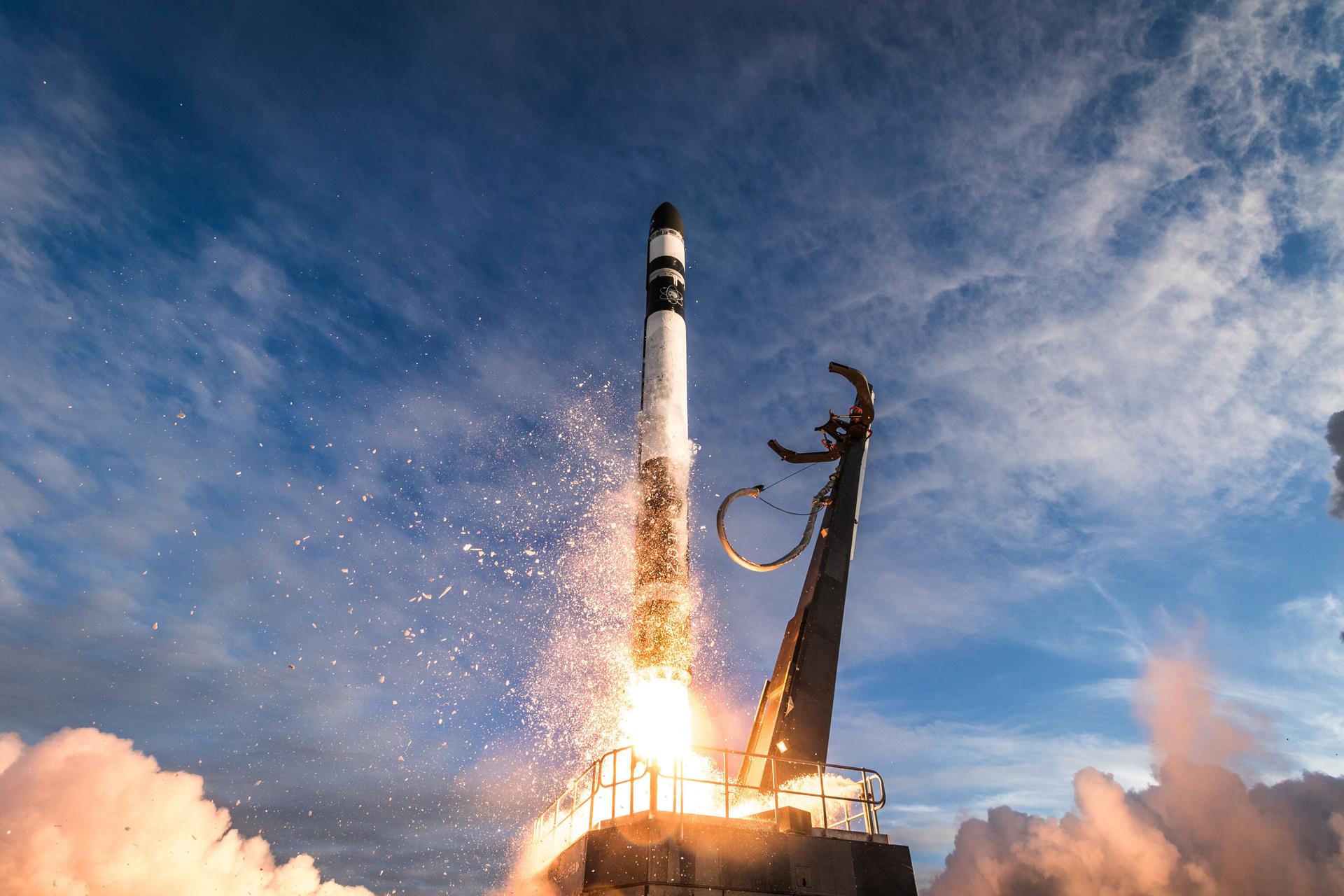
Launch facts
| Rocket | HASTE |
| Operator | Rocket Lab |
| Pad | Rocket Lab Launch Complex 2 (Launch Area 0 C), Wallops Flight Facility, Virginia, USA |
| T-0 (UTC) | 11 June 2026 at 08:00 |
| Status | Success |
What happened?
Rocket Lab successfully launched its HASTE suborbital rocket on the Curveball mission at 08:00 UTC on 11 June 2026 from Launch Complex 2 at NASA's Wallops Flight Facility in Virginia. HASTE (Hypersonic Accelerator Suborbital Test Electron) is a modified variant of Rocket Lab's Electron rocket, purpose-built to carry hypersonic and suborbital test payloads on high-speed trajectories.
What is HASTE?
HASTE is a suborbital launch vehicle derived from the proven Electron orbital rocket. According to Rocket Lab, HASTE reuses Electron's carbon-composite structures, Rutherford engines and flight heritage, but swaps the orbital upper stage for a modified configuration capable of delivering payloads of up to roughly 700 kg on hypersonic test trajectories. The vehicle gives the U.S. defense and research community frequent, dedicated access to the hypersonic flight regime — speeds above Mach 5 — that is otherwise costly and slow to reach.
Key facts at a glance
| Detail | Value |
|---|---|
| Mission | Curveball |
| Rocket | HASTE (suborbital Electron variant) |
| Provider | Rocket Lab |
| Launch site | Launch Complex 2, Wallops Flight Facility, Virginia |
| Launch time | 08:00 UTC, 11 June 2026 |
| Outcome | Success |
Did the launch succeed?
Yes. The Curveball mission was a success, with HASTE lifting off on schedule and completing its planned suborbital flight profile. Because HASTE flies suborbital trajectories rather than reaching orbit, the vehicle does not deploy long-lived satellites; instead it carries test payloads through hypersonic conditions before descending, providing high-value flight data for its customer.
Where did it launch from?
The mission flew from Launch Complex 2 (Launch Area 0 C) at Wallops Flight Facility on Virginia's Eastern Shore. This is Rocket Lab's U.S. launch site, complementing its original Launch Complex 1 in New Zealand. Wallops is the same coastal spaceport that has supported Antares and numerous NASA sounding-rocket campaigns, making it a natural home for HASTE's East Coast suborbital flights. You can explore the site and its trajectory on the U.S. East Coast launch hubs and see all upcoming Rocket Lab launches.
Why does HASTE matter?
Hypersonic flight testing has become a strategic priority, and dedicated test vehicles like HASTE dramatically increase the cadence at which the U.S. can validate hypersonic technologies. Rocket Lab states that HASTE can carry payloads up to about 700 kg and reach the sustained high-Mach conditions required to test guidance, thermal-protection and sensor systems in real flight rather than in ground facilities alone.
Rocket Lab, founded in 2006, has flown Electron and HASTE dozens of times, establishing the second-most-flown U.S. orbital-class small rocket. The company's ability to reuse Electron heritage hardware for HASTE keeps costs low and turnaround fast — a decisive advantage for a customer base that needs frequent, repeatable hypersonic test opportunities.
How to track the mission on Cosmik
While HASTE flights are suborbital and do not leave satellites in orbit, you can still follow Rocket Lab's activity and the thousands of objects already circling Earth using Cosmik's tools:
- Browse the full rocket launch schedule for the next HASTE and Electron missions.
- Explore every tracked satellite on the live 3D solar-system and satellite map.
- Read the latest launch news for post-flight updates.
- Learn the basics with our guide to tracking satellites.
Who provided the launch data?
Launch timing and mission details are sourced from public launch databases including The Space Devs Launch Library, with background on the vehicle drawn from Rocket Lab and the Rocket Lab and Wallops Flight Facility public records.
What's next for Rocket Lab?
Rocket Lab continues an aggressive 2026 manifest across both its orbital Electron and suborbital HASTE lines from New Zealand and Virginia. Curveball adds to a growing string of successful HASTE flights that are steadily expanding the company's hypersonic testing services. Keep an eye on the Rocket Lab launch hub for the next mission announcements.
Follow the next launch live
Don't miss the next HASTE or Electron flight. Follow live launch coverage, watch orbiting satellites in real time, and enable free launch alerts on Cosmik so you're notified the moment the next Rocket Lab mission counts down to liftoff.
Follow this mission live in 3D and get a free alert before liftoff.
Open the live map →Sources
Next launches
- Dragon CRS-2 SpX-35 — launch time & how to watch — 13 October 2026, 10:33 UTC
- Martian Moon eXplorer (MMX) — launch time & how to watch — 19 October 2026, 19:41 UTC
- Amazon Leo (LV-01) — launch time & how to watch — 29 October 2026
More launch coverage
- Starlink Group 10-54: Falcon 9 Launch Recap (12 June 2026) — 12 June 2026, 12:37 UTC
- H3-30 Test Flight: Launch Recap for 12 June 2026 — 12 June 2026, 00:53 UTC
- Starlink Group 17-44 Launch Recap: Falcon 9 Succeeds June 11, 2026 — 11 June 2026, 15:05 UTC
- Long March 5 | TJSW-25 Launch Recap: Success on 11 June 2026 — 11 June 2026, 07:30 UTC
- Zhuque-2E Block 2 Launches 2 SatNet Satellites — 9 June 2026 Recap — 9 June 2026, 08:23 UTC
- Falcon 9 Starlink Group 10-35: Launch Recap (8 June 2026) — 8 June 2026, 10:13 UTC