Kinetica 1 Launches 8 Jilin-1 Satellites — 15 June 2026 Recap
Published · Updated
Kinetica 1CAS SpaceJilin-1Chang Guang Satellite Technology✓ recap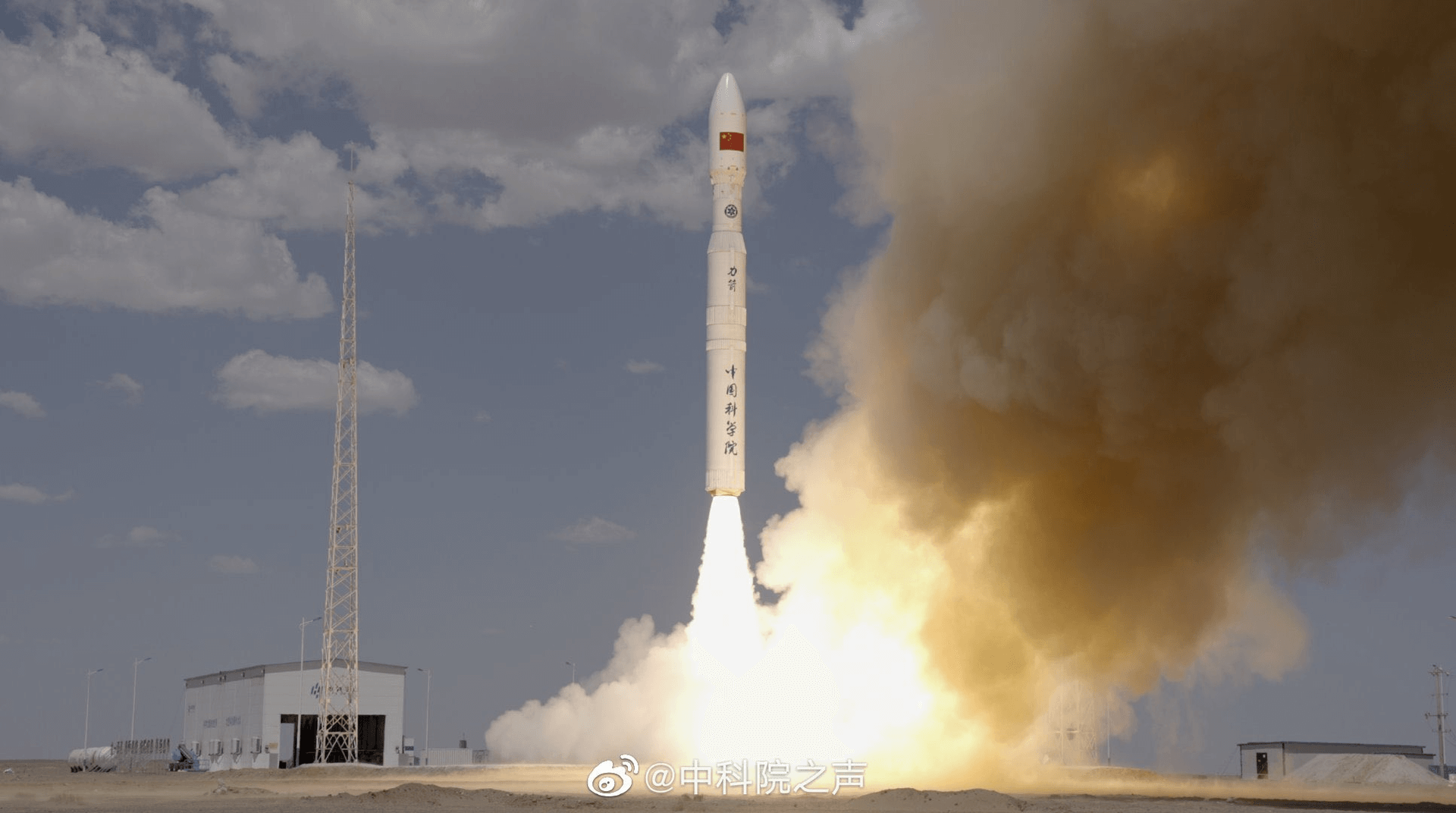
Launch facts
| Rocket | Kinetica 1 |
| Operator | CAS Space |
| Pad | Launch Area 130, Jiuquan Satellite Launch Center, People's Republic of China |
| T-0 (UTC) | 15 June 2026 at 03:44 |
| Status | Success |
What happened?
A CAS Space Kinetica 1 rocket successfully launched 8 Jilin-1 Earth-observation satellites on 15 June 2026 at 03:44 UTC from Launch Area 130 at the Jiuquan Satellite Launch Center in northwestern China. The mission reached orbit as planned, adding another batch to China's largest commercial remote-sensing constellation.
Kinetica 1 (Lijian-1) is a four-stage, solid-fueled small-satellite launch vehicle developed by CAS Space, a commercial spin-off of the Chinese Academy of Sciences. Jilin-1 is a commercial optical Earth-imaging constellation operated by Chang Guang Satellite Technology, designed to deliver high-resolution video and still imagery of the planet's surface.
Did the launch succeed?
Yes. The launch was confirmed a success, with all 8 Jilin-1 satellites delivered to their intended sun-synchronous orbit. Solid-fueled vehicles like Kinetica 1 burn through their stages in a rapid ascent, typically placing payloads in orbit within roughly 10 minutes of liftoff.
When did it launch?
Liftoff occurred at 03:44 UTC on 15 June 2026. Below are the key mission facts.
| Detail | Value |
|---|---|
| Rocket | Kinetica 1 (Lijian-1) |
| Provider | CAS Space |
| Payload | 8 × Jilin-1 satellites |
| Launch site | Launch Area 130, Jiuquan, China |
| Date & time | 15 June 2026, 03:44 UTC |
| Result | Success |
What is Kinetica 1?
Kinetica 1 is one of China's most capable commercial solid rockets. It stands about 30 meters tall, measures 2.65 meters in diameter, and can lift roughly 1,500 kilograms to a 500-kilometer sun-synchronous orbit. Its solid-propellant design allows for quick integration and short launch campaigns, making it well suited to deploying batches of small satellites like Jilin-1.
Since its debut in 2022, Kinetica 1 has become a workhorse for Chinese commercial payloads, repeatedly flying multi-satellite rideshare missions from Jiuquan. CAS Space has positioned the vehicle as a lower-cost route to orbit for the growing Chinese small-satellite market.
Where did it launch from?
The mission flew from Launch Area 130 at the Jiuquan Satellite Launch Center, China's oldest and busiest spaceport. Located in the Gobi Desert in Inner Mongolia, Jiuquan hosts both government and commercial launches, including all of China's crewed spaceflights.
What is the Jilin-1 payload?
The 8 satellites launched on this flight join the Jilin-1 constellation, operated by Chang Guang Satellite Technology. Jilin-1 is the largest sub-meter commercial remote-sensing network built by China, with more than 100 satellites already in orbit and plans to reach a fleet of over 300 spacecraft.
The constellation captures high-resolution optical imagery and video used for agriculture monitoring, urban planning, disaster response, and environmental tracking. Adding 8 more satellites tightens the network's revisit time, allowing more frequent imaging of any given point on Earth.
Why does the orbit matter?
Jilin-1 satellites operate in sun-synchronous orbit, a near-polar path that keeps a consistent angle of sunlight on the ground below each pass. This lighting consistency is ideal for optical Earth observation because it makes images captured on different days directly comparable.
How to track the satellites
You can follow the newly deployed Jilin-1 satellites and thousands of other spacecraft on Cosmik's live 3D map of the solar system and every satellite in orbit. To see how orbital tracking works, read our guide on how to track satellites, and browse upcoming missions on the rocket launch schedule.
For more coverage of Chinese commercial launches and other missions, visit the latest launch news. Mission data for this recap is sourced from the open-source Launch Library 2 API by The Space Devs. Background on the operator is available via Chang Guang Satellite Technology and Kinetica 1 on Wikipedia.
What's next?
CAS Space continues to fly Kinetica 1 regularly from Jiuquan, and the Jilin-1 constellation keeps expanding toward its 300-plus satellite target. Each successful batch launch shortens the network's global revisit interval and strengthens China's commercial Earth-observation capacity.
Track the newly launched Jilin-1 satellites live on Cosmik and turn on free launch alerts to never miss the next Kinetica 1 mission.
Follow this mission live in 3D and get a free alert before liftoff.
Open the live map →Sources
Next launches
- Dragon CRS-2 SpX-35 — launch time & how to watch — 13 October 2026, 10:33 UTC
- Martian Moon eXplorer (MMX) — launch time & how to watch — 19 October 2026, 19:41 UTC
- Amazon Leo (LV-01) — launch time & how to watch — 29 October 2026
More launch coverage
- Long March 12 Launches SatNet LEO Group 22 — 17 June 2026 Recap — 17 June 2026, 02:44 UTC
- Long March 3B/E Launches Shijian 31 — 16 June 2026 Recap — 16 June 2026, 09:45 UTC
- Falcon 9 Starlink Group 17-54 Launch Recap — 15 June 2026 — 15 June 2026, 15:34 UTC
- Starlink Group 10-54: Falcon 9 Launch Recap (12 June 2026) — 12 June 2026, 12:37 UTC
- H3-30 Test Flight: Launch Recap for 12 June 2026 — 12 June 2026, 00:53 UTC
- Starlink Group 17-44 Launch Recap: Falcon 9 Succeeds June 11, 2026 — 11 June 2026, 15:05 UTC