Long March 12 Launches SatNet LEO Group 22 — 17 June 2026 Recap
Published · Updated
Long March 12SatNet LEOGuowangCASC✓ recap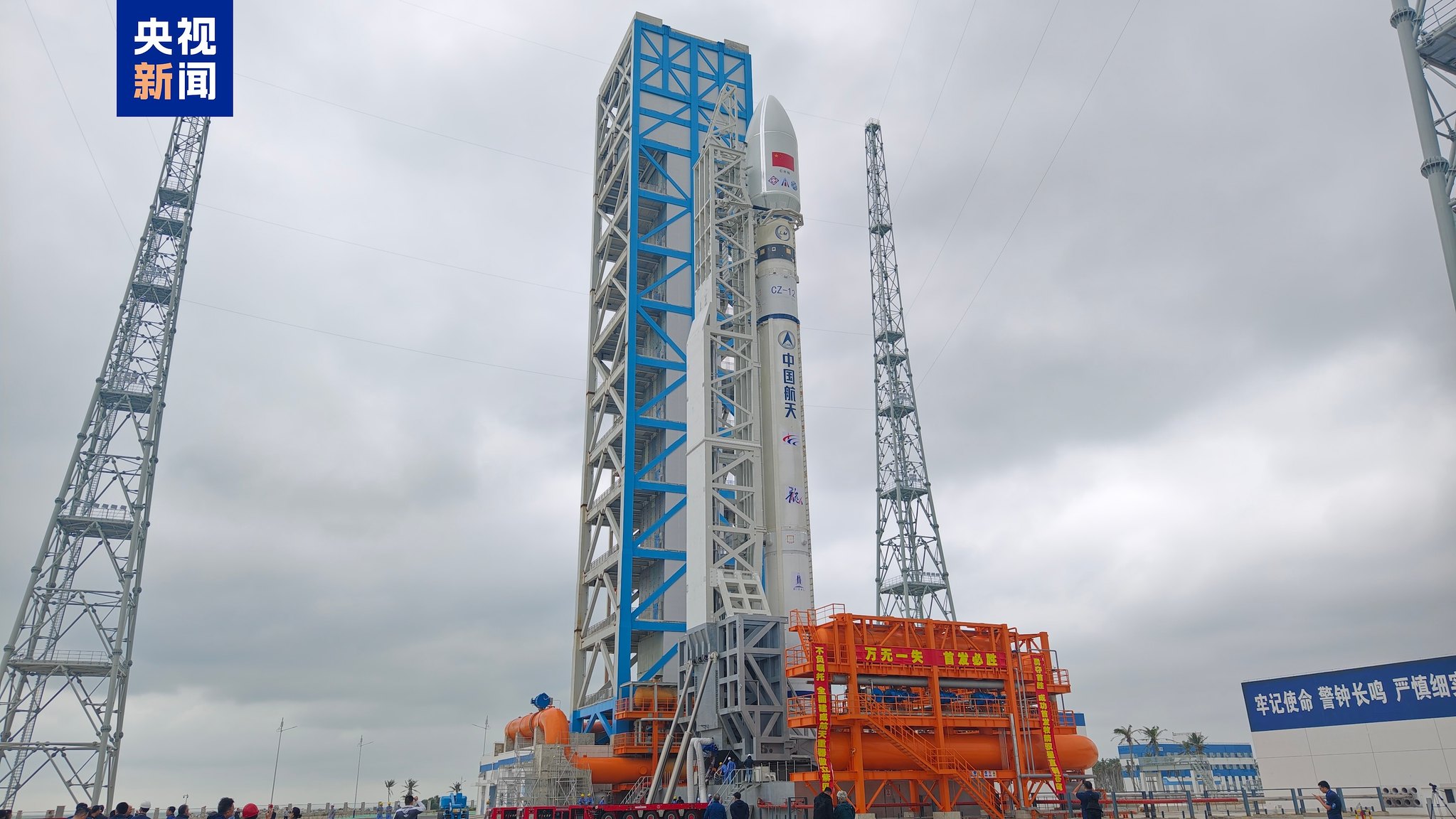
Launch facts
| Rocket | Long March 12 |
| Operator | China Aerospace Science and Technology Corporation |
| Pad | Commercial LC-2, Wenchang Space Launch Site, People's Republic of China |
| T-0 (UTC) | 17 June 2026 at 02:44 |
| Status | Success |
What happened?
A Long March 12 rocket successfully launched the SatNet LEO Group 22 batch of satellites on 17 June 2026 at 02:44 UTC from Commercial LC-2 at the Wenchang Space Launch Site in the People's Republic of China. The mission, operated by the China Aerospace Science and Technology Corporation (CASC), reached orbit as planned and was declared a success.
The Long March 12 is a two-stage, kerosene–liquid-oxygen rocket and the first Chinese launch vehicle built to the 3.8-meter diameter standard, capable of lofting roughly 12 tonnes to low Earth orbit. SatNet LEO satellites form part of China's national broadband megaconstellation, sometimes referred to as Guowang, planned to eventually number close to 13,000 spacecraft.
Did the launch succeed?
Yes. According to CASC, the vehicle performed nominally through both stages and deployed its payload into the intended low Earth orbit. This marks another operational flight for the Long March 12, which debuted from the same commercial pad at Wenchang and is central to China's push to scale up domestic satellite-internet deployment.
Launch summary
| Detail | Value |
|---|---|
| Rocket | Long March 12 |
| Payload | SatNet LEO Group 22 |
| Operator | China Aerospace Science and Technology Corporation |
| Launch site | Commercial LC-2, Wenchang, China |
| Date & time | 17 June 2026, 02:44 UTC |
| Result | Success |
What is the payload?
SatNet LEO Group 22 is a batch of broadband communications satellites bound for China's Guowang low Earth orbit constellation. The constellation is managed by China Satellite Network Group (China SatNet), a state-owned enterprise established specifically to build and operate a national LEO internet network. The filed system envisions roughly 13,000 satellites operating across multiple orbital shells, positioning it as China's direct answer to Western broadband constellations.
Low Earth orbit constellations rely on large numbers of satellites at altitudes typically between 500 and 1,200 km to deliver low-latency internet coverage. Each new group launched brings the network closer to continuous global service, and dedicated flights like this one steadily add capacity.
Why does the Long March 12 matter?
The Long March 12 was designed to raise China's payload throughput and support high-cadence constellation deployment. As the first vehicle in China's 3.8-meter-class family, it offers a larger fairing volume and higher LEO performance than earlier single-core Long March variants, making it well suited to batch satellite launches. Flying from the commercial pad at Wenchang — a coastal spaceport that allows spent stages to fall safely over water — supports the frequent launch tempo the Guowang program requires.
How Wenchang fits in
Wenchang Space Launch Site sits on Hainan Island in southern China and is the country's newest and lowest-latitude launch base. Its near-equatorial location provides an efficiency boost for orbital launches, and the addition of dedicated commercial pads has expanded China's ability to support both government and commercial missions.
How to track the satellites
Once catalogued, the SatNet LEO Group 22 satellites can be followed on Cosmik's live 3D satellite map, which shows every tracked object in orbit in real time. You can also explore upcoming missions on the rocket launch schedule and read more coverage in the latest launch news. To learn the basics of orbital tracking, see our guide on how to track satellites.
Where the data comes from
Launch details are drawn from public launch databases including The Space Devs Launch Library. Background on the vehicle and program is available via Long March 12, the China Aerospace Science and Technology Corporation, and the Wenchang Space Launch Site.
Follow it live on Cosmik
Watch the SatNet LEO Group 22 satellites and thousands of other spacecraft move in real time on the Cosmik 3D map, and turn on free launch alerts to get notified before the next Long March lifts off. Follow along at gocosmik.com/launches.
Follow this mission live in 3D and get a free alert before liftoff.
Open the live map →Sources
Next launches
- Dragon CRS-2 SpX-35 — launch time & how to watch — 13 October 2026, 10:33 UTC
- Martian Moon eXplorer (MMX) — launch time & how to watch — 19 October 2026, 19:41 UTC
- Amazon Leo (LV-01) — launch time & how to watch — 29 October 2026
More launch coverage
- Ariane 64 Block 2 Launches Amazon Leo LE-03 — 17 June 2026 Recap — 17 June 2026, 12:21 UTC
- Falcon 9 Launches AST SpaceMobile BlueBird Block 2 (17 June 2026) — 17 June 2026, 06:39 UTC
- Kuaizhou 11 Launches CentiSpace-1 Group 05 — 17 June 2026 Recap — 17 June 2026, 03:58 UTC
- Long March 3B/E Launches Shijian 31 — 16 June 2026 Recap — 16 June 2026, 09:45 UTC
- Falcon 9 Starlink Group 17-54 Launch Recap — 15 June 2026 — 15 June 2026, 15:34 UTC
- Kinetica 1 Launches 8 Jilin-1 Satellites — 15 June 2026 Recap — 15 June 2026, 03:44 UTC