Falcon 9 Launches AST SpaceMobile BlueBird Block 2 (17 June 2026)
Published · Updated
Falcon 9SpaceXBlueBird Block 2AST SpaceMobile✓ recap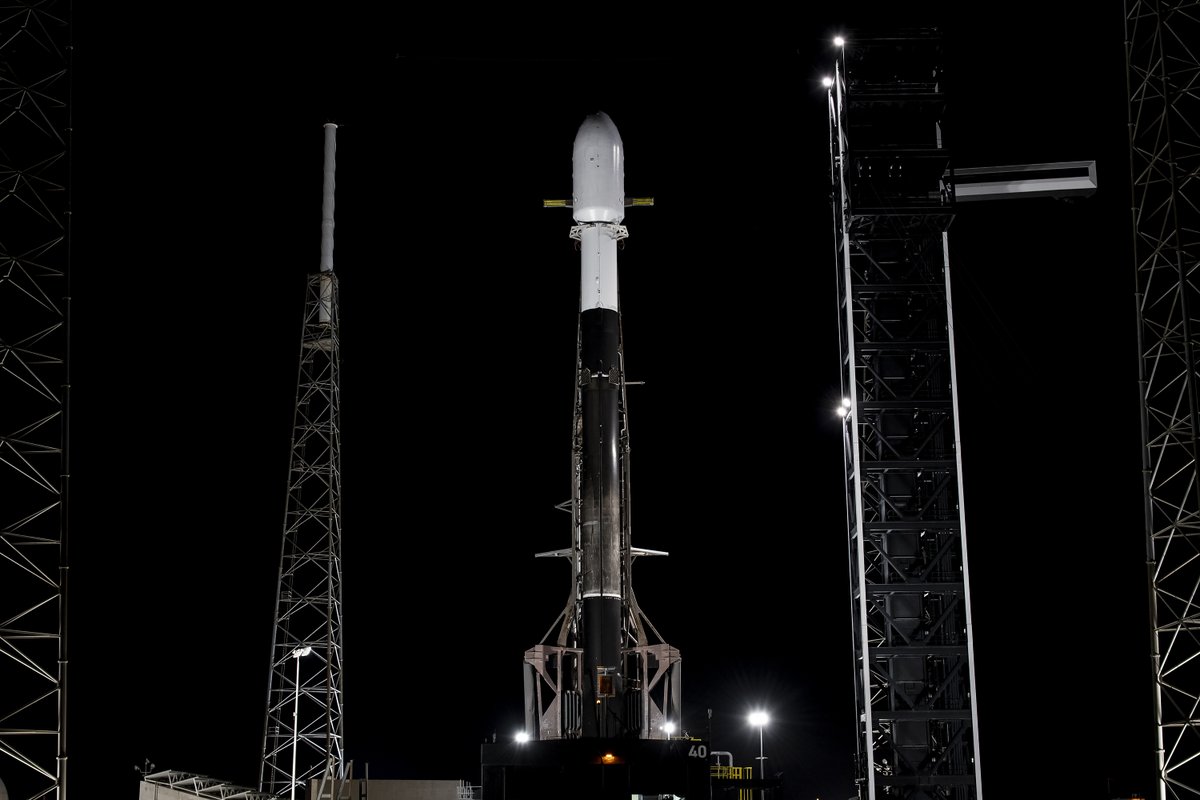
Launch facts
| Rocket | Falcon 9 Block 5 |
| Operator | SpaceX |
| Pad | Space Launch Complex 40, Cape Canaveral SFS, FL, USA |
| T-0 (UTC) | 17 June 2026 at 06:39 |
| Status | Success |
What just launched?
SpaceX successfully launched three BlueBird Block 2 satellites for AST SpaceMobile aboard a Falcon 9 Block 5 rocket on 17 June 2026 at 06:39 UTC from Space Launch Complex 40 at Cape Canaveral Space Force Station, Florida. BlueBird Block 2 satellites are large low-Earth-orbit spacecraft designed to deliver direct-to-cellphone broadband connectivity straight to unmodified smartphones.
The Falcon 9 Block 5 is a two-stage, partially reusable orbital rocket standing 70 meters tall, developed and operated by SpaceX. It remains the most-flown launch vehicle in the world, with a first stage rated for up to 15 or more flights.
Did the launch succeed?
Yes. According to SpaceX, the mission was a success, with the three BlueBird Block 2 satellites deployed to their target low-Earth orbit. The launch marked another step in AST SpaceMobile's plan to build a constellation capable of eliminating mobile dead zones globally.
Mission timeline
| Event | Detail |
|---|---|
| Liftoff (UTC) | 17 June 2026, 06:39 |
| Rocket | Falcon 9 Block 5 |
| Provider | SpaceX |
| Pad | SLC-40, Cape Canaveral SFS |
| Payload | BlueBird Block 2 #3–5 (3 satellites) |
| Status | Success |
What is the payload?
The BlueBird Block 2 satellites are the second-generation spacecraft in AST SpaceMobile's space-based cellular network. Each satellite carries a large phased-array antenna designed to communicate directly with standard 4G LTE and 5G smartphones from orbit, without any specialized hardware on the ground. This launch delivered the third through fifth Block 2 units, expanding coverage and network capacity.
AST SpaceMobile's goal is a global constellation that provides continuous broadband connectivity from space, targeting the billions of people worldwide who live or travel beyond terrestrial cellular coverage. The larger Block 2 antennas offer significantly higher throughput than the earlier BlueBird satellites.
Where did it launch from?
The mission lifted off from Space Launch Complex 40 (SLC-40) at Cape Canaveral Space Force Station in Florida, one of SpaceX's busiest East Coast pads. SLC-40 supports the majority of Falcon 9 flights from Florida, alongside Launch Complex 39A at neighboring Kennedy Space Center. You can explore every past and upcoming mission from this site on our Cape Canaveral launch hub.
Why this pad matters
Cape Canaveral's proximity to the equator provides an efficient eastward launch trajectory that maximizes payload capacity to low-Earth orbit. SLC-40 has been refurbished and upgraded repeatedly to sustain SpaceX's high launch cadence, which has climbed to well over 100 Falcon 9 flights per year.
How to track the satellites
Once cataloged, the three BlueBird Block 2 satellites can be followed in real time on the Cosmik live 3D satellite map, which visualizes every tracked object in orbit around Earth. You can watch their orbital paths, monitor passes over your location, and see how the growing AST SpaceMobile constellation is distributed across low-Earth orbit.
New to satellite tracking? Our guide to tracking satellites explains how orbital data is generated and how to interpret what you see on the map.
SpaceX's 2026 cadence
SpaceX continues to dominate global launch activity, flying Falcon 9 missions for both its own Starlink constellation and a broad roster of commercial and government customers. The company's reusable-booster model — landing and reflying first stages — has driven launch costs down and enabled the frequent flight rate that makes constellations like BlueBird economically viable. Track upcoming SpaceX missions on our SpaceX launch schedule, or browse the full rocket launch calendar for every provider worldwide.
Launch data for this article is sourced from The Space Devs Launch Library. For more background on the vehicle, see the Falcon 9 Wikipedia page and Cape Canaveral SFS.
Follow the mission live on Cosmik
Want to watch the BlueBird Block 2 satellites orbit in real time and never miss the next Falcon 9 flight? Track them now on the Cosmik live map, check the latest launch news, and enable free launch alerts so you get notified before every liftoff.
Follow this mission live in 3D and get a free alert before liftoff.
Open the live map →Sources
Next launches
- Dragon CRS-2 SpX-35 — launch time & how to watch — 13 October 2026, 10:33 UTC
- Martian Moon eXplorer (MMX) — launch time & how to watch — 19 October 2026, 19:41 UTC
- Amazon Leo (LV-01) — launch time & how to watch — 29 October 2026
More launch coverage
- Electron VICTUS HAZE Puma: Launch Succeeds 19 June 2026 — 19 June 2026, 10:19 UTC
- Falcon 9 NROL-179 Launch Recap: Success on 19 June 2026 — 19 June 2026, 08:50 UTC
- Ariane 64 Block 2 Launches Amazon Leo LE-03 — 17 June 2026 Recap — 17 June 2026, 12:21 UTC
- Kuaizhou 11 Launches CentiSpace-1 Group 05 — 17 June 2026 Recap — 17 June 2026, 03:58 UTC
- Long March 12 Launches SatNet LEO Group 22 — 17 June 2026 Recap — 17 June 2026, 02:44 UTC
- Long March 3B/E Launches Shijian 31 — 16 June 2026 Recap — 16 June 2026, 09:45 UTC