Electron VICTUS HAZE Puma: Launch Succeeds 19 June 2026
Published · Updated
ElectronRocket LabVICTUS HAZElaunch recap✓ recap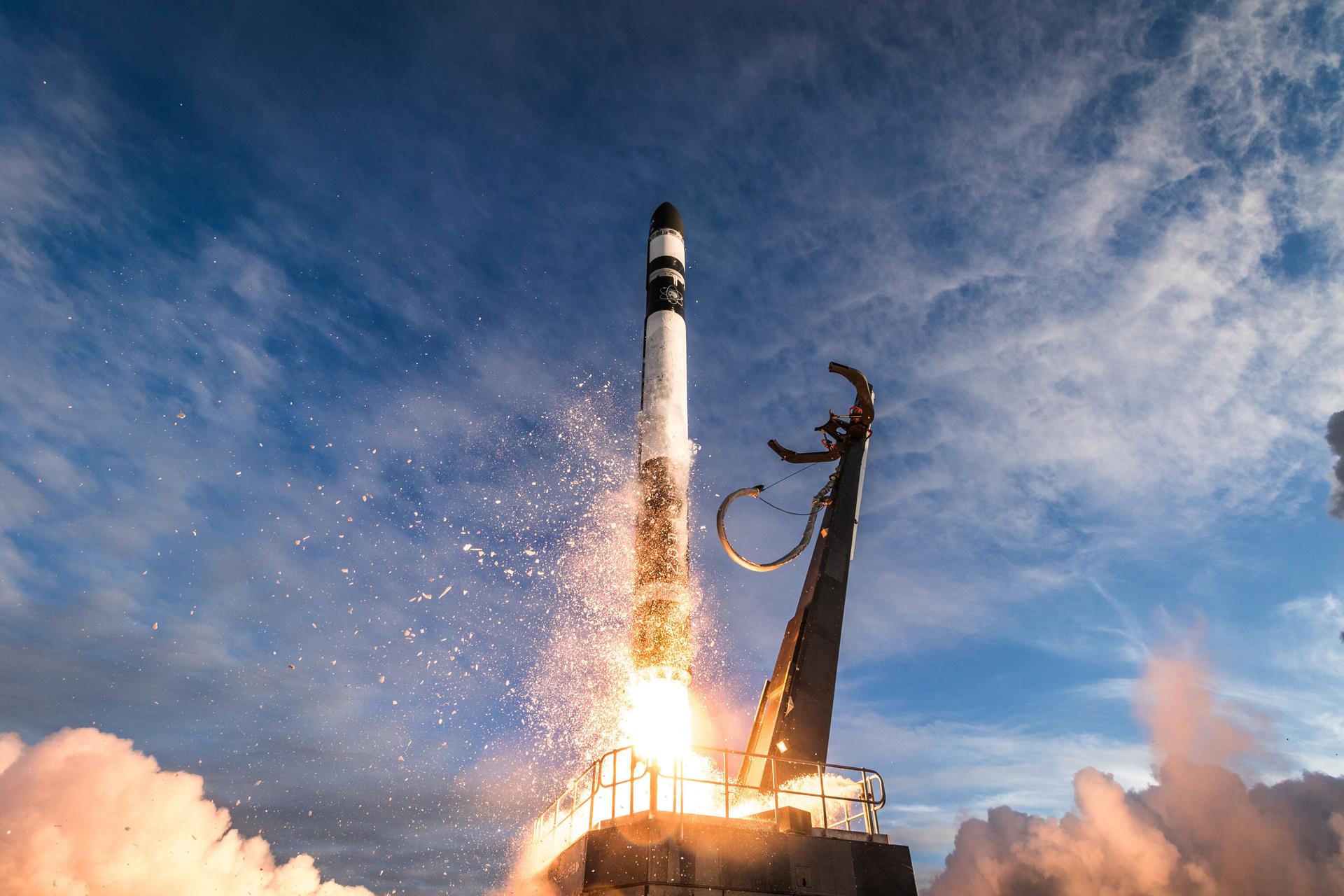
Launch facts
| Rocket | Electron |
| Operator | Rocket Lab |
| Pad | Rocket Lab Launch Complex 1A, Rocket Lab Launch Complex 1, Mahia Peninsula, New Zealand |
| T-0 (UTC) | 19 June 2026 at 10:19 |
| Status | Success |
Did the launch succeed?
Yes. Rocket Lab's Electron rocket successfully launched the VICTUS HAZE Puma mission at 10:19 UTC on 19 June 2026 from Launch Complex 1A on the Mahia Peninsula, New Zealand. Electron is a two-stage small-lift orbital rocket built by Rocket Lab to carry small satellites and dedicated payloads to low Earth orbit.
The flight lifted off on schedule and was declared a success by Rocket Lab, adding another mission to the company's growing 2026 manifest.
What is Electron?
Electron is a 18-meter-tall, carbon-composite launch vehicle that stands as the most-flown orbital rocket built outside the United States and China. Its first stage is powered by nine Rutherford engines — the first electric-pump-fed engines to reach orbit — producing roughly 224 kilonewtons of thrust at liftoff. Electron can deliver up to 300 kilograms to a Sun-synchronous orbit, making it a workhorse for dedicated small-satellite missions.
Since its 2017 debut, Electron has become Rocket Lab's flagship vehicle, offering responsive, dedicated access to space for government and commercial customers who need a specific orbit and schedule rather than a rideshare slot.
What was the payload?
VICTUS HAZE Puma is part of the U.S. Space Force's VICTUS series of tactically responsive space missions, which demonstrate the ability to rapidly integrate, launch, and operate satellites on compressed timelines. The VICTUS program is designed to prove the U.S. can respond to on-orbit threats and emerging needs in days rather than years.
Missions like VICTUS HAZE test the full responsive-space pipeline: fast payload integration, quick launch call-up, and rapid on-orbit operations. Rocket Lab's Electron, with its dedicated launch model and demonstrated ability to launch on short notice, is a natural fit for these tactically responsive requirements.
Where did it launch from?
The mission flew from Launch Complex 1A, part of Rocket Lab's Launch Complex 1 on the Mahia Peninsula in New Zealand. LC-1 is the world's first private orbital launch site and includes two pads, giving Rocket Lab the flexibility to support a high launch cadence from a single location.
The remote, uncongested airspace and southern-hemisphere location make Mahia especially well suited to reaching high-inclination and Sun-synchronous orbits with minimal range conflicts.
| Detail | Value |
|---|---|
| Rocket | Electron |
| Provider | Rocket Lab |
| Mission | VICTUS HAZE Puma |
| Launch time | 10:19 UTC, 19 June 2026 |
| Pad | Launch Complex 1A, Mahia Peninsula |
| Result | Success |
Why does this mission matter?
Tactically responsive launch is one of the fastest-growing priorities in national security space. Traditional satellite programs can take years from contract to orbit; the VICTUS missions aim to compress that to weeks or days. A successful VICTUS HAZE Puma flight demonstrates that both the rocket and the ground pipeline can meet those aggressive timelines.
For Rocket Lab, the mission reinforces Electron's position as a preferred vehicle for dedicated small-satellite deployment, where the customer controls the orbit, timing, and trajectory rather than sharing a launch with dozens of other payloads.
How to follow the deployed satellite
Once cataloged, the VICTUS HAZE Puma payload can be followed in orbit using Cosmik's real-time tracking tools. You can watch every tracked object move against a live 3D model of Earth and the solar system on the interactive satellite map, and learn the basics of orbital tracking through our guide to tracking satellites.
More Rocket Lab and launch coverage
Explore upcoming missions on the rocket launch schedule, browse the dedicated Rocket Lab launch hub, or catch up on the latest launch news. You can also see the ISS tracker to follow the most famous object in low Earth orbit.
Background references: Electron (Wikipedia), Rocket Lab (Wikipedia), and launch data via The Space Devs Launch Library.
Follow the mission live on Cosmik
Track the VICTUS HAZE Puma payload and every other satellite in orbit on Cosmik's free live 3D map — and enable free launch alerts so you never miss the next Electron liftoff.
Follow this mission live in 3D and get a free alert before liftoff.
Open the live map →Sources
Next launches
- Dragon CRS-2 SpX-35 — launch time & how to watch — 13 October 2026, 10:33 UTC
- Martian Moon eXplorer (MMX) — launch time & how to watch — 19 October 2026, 19:41 UTC
- Amazon Leo (LV-01) — launch time & how to watch — 29 October 2026
More launch coverage
- Falcon 9 Launches Project Starfall Demo — Success (23 June 2026) — 23 June 2026, 10:53 UTC
- Long March 7A Launches TJSW-26A: 23 June 2026 Recap — 23 June 2026, 02:10 UTC
- Falcon 9 Starlink Group 17-28: Launch Succeeds June 21, 2026 — 21 June 2026, 16:39 UTC
- Falcon 9 NROL-179 Launch Recap: Success on 19 June 2026 — 19 June 2026, 08:50 UTC
- Ariane 64 Block 2 Launches Amazon Leo LE-03 — 17 June 2026 Recap — 17 June 2026, 12:21 UTC
- Falcon 9 Launches AST SpaceMobile BlueBird Block 2 (17 June 2026) — 17 June 2026, 06:39 UTC