Falcon 9 Launches Project Starfall Demo — Success (23 June 2026)
Published · Updated
Falcon 9SpaceXProject StarfallCape Canaveral✓ recap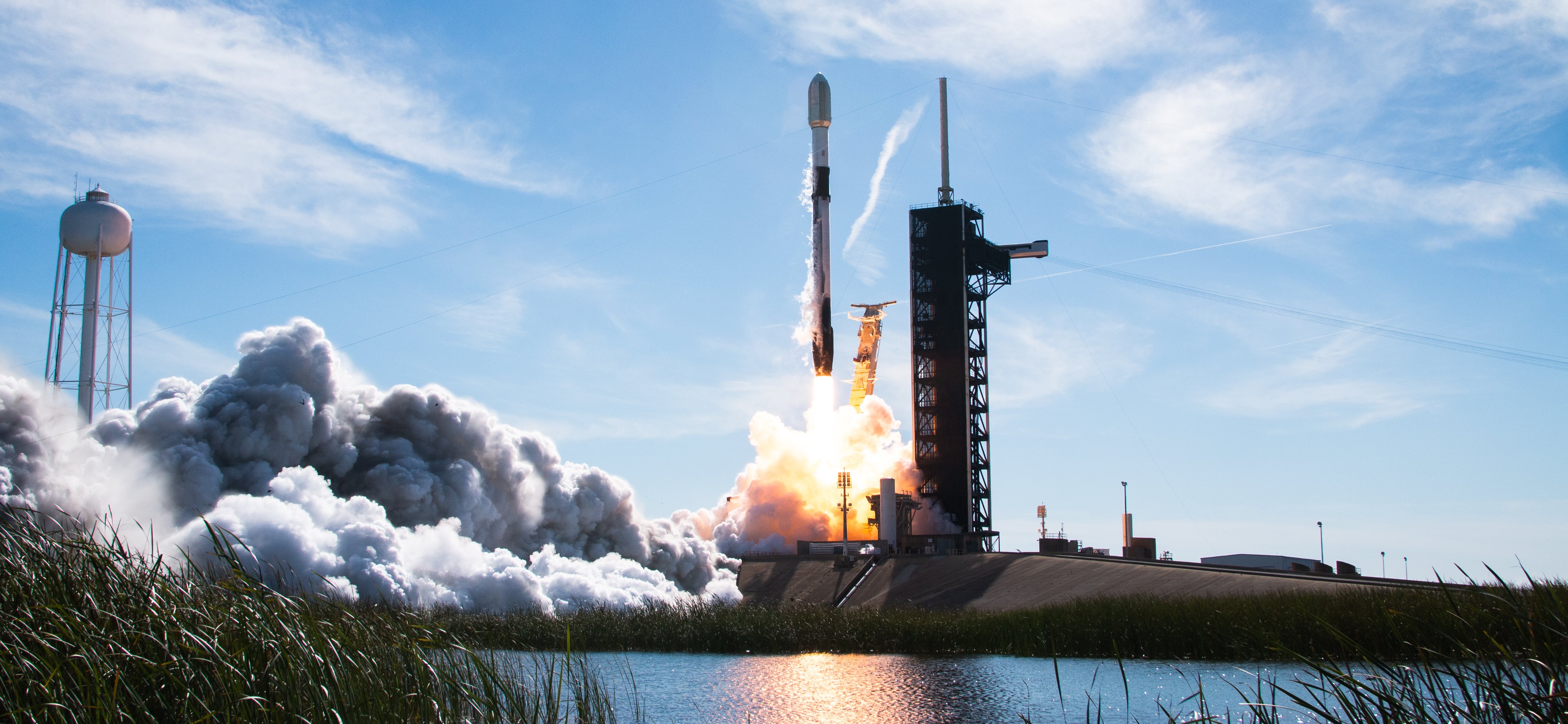
Launch facts
| Rocket | Falcon 9 Block 5 |
| Operator | SpaceX |
| Pad | Space Launch Complex 40, Cape Canaveral SFS, FL, USA |
| T-0 (UTC) | 23 June 2026 at 10:53 |
| Status | Success |
What happened?
SpaceX successfully launched the Project Starfall Demonstration Mission aboard a Falcon 9 Block 5 rocket on 23 June 2026 at 10:53 UTC from Space Launch Complex 40 (SLC-40) at Cape Canaveral Space Force Station, Florida. The mission was declared a success, according to SpaceX.
The Falcon 9 Block 5 is a two-stage, partially reusable orbital rocket built by SpaceX. It is the workhorse of the global launch industry, standing 70 meters tall and capable of lofting roughly 22,800 kg to low Earth orbit in its expendable configuration.
When did the launch happen?
Liftoff occurred at 10:53 UTC on 23 June 2026. Falcon 9 launches on this vehicle follow a tightly choreographed sequence: main engine cutoff and stage separation typically occur just under three minutes into flight, followed by second-stage ignition and payload deployment.
| Detail | Value |
|---|---|
| Mission | Project Starfall Demonstration Mission |
| Rocket | Falcon 9 Block 5 |
| Provider | SpaceX |
| Launch site | SLC-40, Cape Canaveral SFS, Florida |
| Date/time | 23 June 2026, 10:53 UTC |
| Result | Success |
Did the launch succeed?
Yes. The mission reached its target orbit and was confirmed as a success. Project Starfall was flown as a demonstration mission, meaning its primary objective was to validate systems, hardware, or operational procedures ahead of a fuller operational campaign.
Where did it launch from?
The launch used SLC-40 at Cape Canaveral Space Force Station on Florida's Space Coast. SLC-40 is one of SpaceX's busiest pads, supporting a large share of the company's annual Falcon 9 cadence alongside nearby LC-39A. SpaceX has surpassed 300 successful Falcon 9 flights since the vehicle's debut, and Block 5 boosters have flown more than 20 times each on the most-reused cores. Explore the full Cape Canaveral launch schedule and every upcoming SpaceX mission on Cosmik.
What is the Falcon 9 Block 5?
Block 5 is the fifth and final major iteration of the Falcon 9 family, introduced in 2018 to maximize reusability and rapid turnaround. Its key features include:
- Reusable first stage that returns to land on a droneship or ground pad after most missions.
- Nine Merlin 1D engines on the first stage generating over 7,600 kN of sea-level thrust.
- A recoverable payload fairing, with both halves routinely fished from the ocean and reflown.
- Turnaround times that SpaceX has driven below one month per individual booster.
This reuse model is the foundation of SpaceX's high launch cadence, which has repeatedly set annual records for orbital flights.
What was the payload?
Project Starfall flew as a demonstration mission. Demonstration flights are used to prove out new payloads, deployment mechanisms, or mission profiles before operators commit to a full operational series. Once the deployed spacecraft is cataloged and tracked, you will be able to follow it in orbit on Cosmik's live 3D satellite map.
How to track the mission now
With the payload in orbit, you can watch its ground track and orbital position in real time. Cosmik renders every tracked object in a 3D view of the solar system, updated continuously. To follow along:
- Open the live 3D map to see the satellite's current position.
- Check the rocket launch schedule for the next Falcon 9 flights.
- Learn the basics on how to track satellites.
Launch data is sourced from The Space Devs Launch Library. Background on the vehicle and operator is available via Falcon 9, SpaceX, and Cape Canaveral Space Force Station.
What's next?
SpaceX maintains one of the highest launch rates in the world, with Falcon 9 flights often occurring just days apart across its Florida and California pads. Follow the latest launch news for updates on Project Starfall's operational follow-on missions and the broader Falcon 9 manifest.
Track the Project Starfall payload and every satellite in orbit live on Cosmik's free 3D map, and enable free launch alerts on the launch tracker so you never miss the next Falcon 9 liftoff.
Follow this mission live in 3D and get a free alert before liftoff.
Open the live map →Sources
Next launches
- Dragon CRS-2 SpX-35 — launch time & how to watch — 13 October 2026, 10:33 UTC
- Martian Moon eXplorer (MMX) — launch time & how to watch — 19 October 2026, 19:41 UTC
- Amazon Leo (LV-01) — launch time & how to watch — 29 October 2026
More launch coverage
- Starlink Group 17-40 Recap: Falcon 9 Flew 28 June 2026 — 28 June 2026, 16:09 UTC
- Electron 'Ten Owl Of Ten' Launch Recap — 26 June 2026 Success — 26 June 2026, 17:43 UTC
- Falcon 9 Starlink Group 17-45 Launch Recap — 25 June 2026 — 25 June 2026, 03:30 UTC
- Long March 7A Launches TJSW-26A: 23 June 2026 Recap — 23 June 2026, 02:10 UTC
- Falcon 9 Starlink Group 17-28: Launch Succeeds June 21, 2026 — 21 June 2026, 16:39 UTC
- Electron VICTUS HAZE Puma: Launch Succeeds 19 June 2026 — 19 June 2026, 10:19 UTC