Electron 'Ten Owl Of Ten' Launch Recap — 26 June 2026 Success
Published · Updated
ElectronRocket LabStriXiQPS✓ recap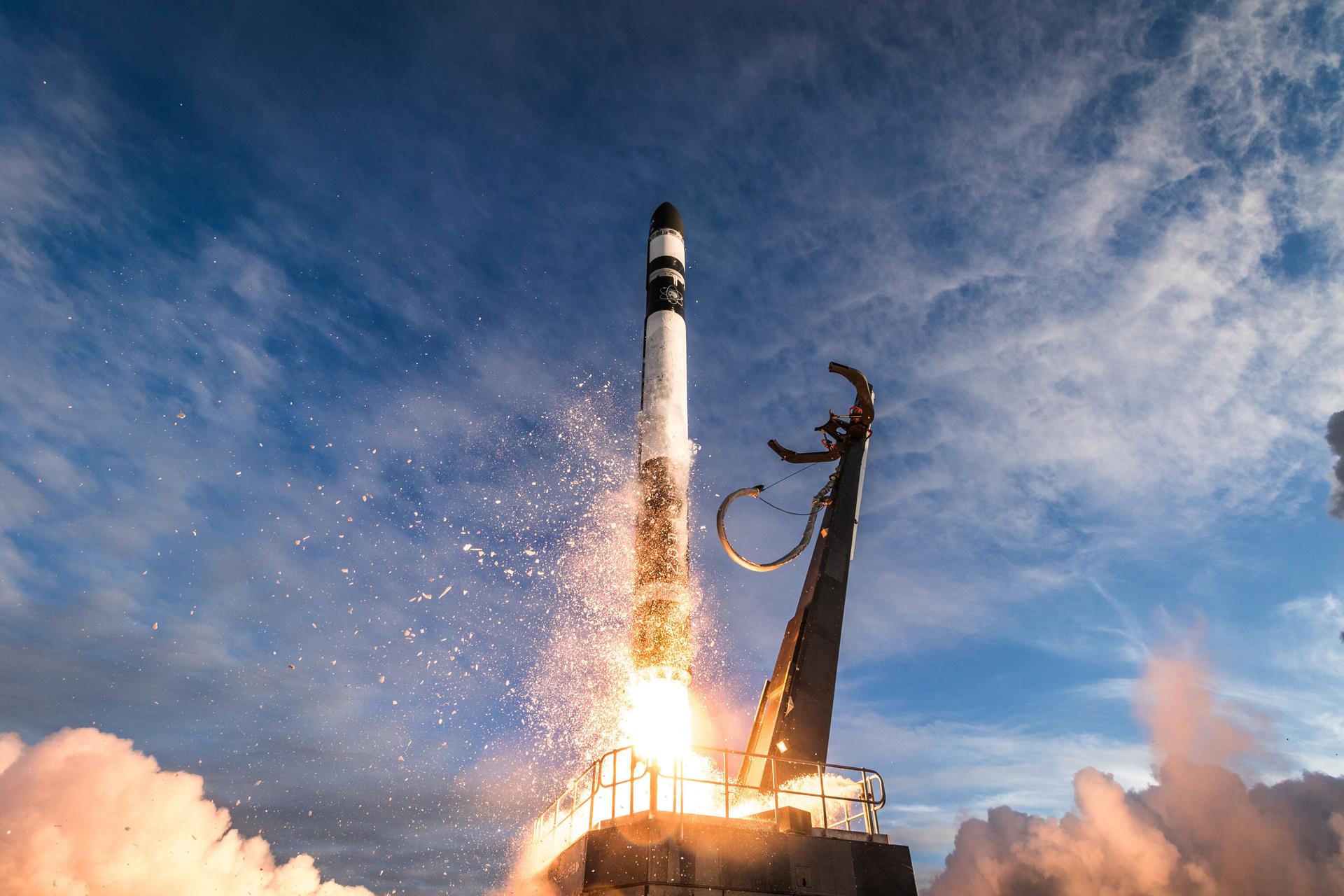
Launch facts
| Rocket | Electron |
| Operator | Rocket Lab |
| Pad | Rocket Lab Launch Complex 1B, Rocket Lab Launch Complex 1, Mahia Peninsula, New Zealand |
| T-0 (UTC) | 26 June 2026 at 17:43 |
| Status | Success |
What happened?
Rocket Lab's Electron rocket successfully launched the StriX (Ten Owl Of Ten) mission on 26 June 2026 at 17:43 UTC from Launch Complex 1B on the Mahia Peninsula, New Zealand. Electron is a two-stage small-lift orbital rocket built by Rocket Lab, and this flight delivered a single Japanese synthetic-aperture radar (SAR) satellite to low Earth orbit for iQPS.
According to Rocket Lab, the mission was declared a success, adding another clean deployment to the company's dedicated small-satellite manifest.
What is Electron?
Electron is a 18-meter-tall, roughly 1.2-meter-diameter carbon-composite launch vehicle capable of delivering about 300 kg to a typical sun-synchronous orbit. It is powered by nine 3D-printed, electric-pump-fed Rutherford engines on the first stage and a single vacuum-optimized Rutherford on the second stage. Electron is the world's most-flown dedicated small launcher and has become the workhorse for customers who need a specific orbit rather than a shared rideshare slot.
What was the payload?
The mission — one in Rocket Lab's ongoing series for iQPS — carried a StriX-class SAR satellite. StriX spacecraft use synthetic-aperture radar to image the Earth's surface in all weather conditions, day or night, penetrating cloud cover that defeats conventional optical imaging. The iQPS constellation is being built out to provide frequent revisit imaging of any point on Earth, targeting a fleet of dozens of satellites for near-continuous global coverage.
The mission's playful name, "Ten Owl Of Ten," continues Rocket Lab's tradition of themed mission callsigns and marks the tenth flight in this StriX launch campaign.
Where did it launch from?
The rocket lifted off from Rocket Lab Launch Complex 1B, part of the company's private orbital spaceport on the Mahia Peninsula on New Zealand's North Island. Launch Complex 1 is the only privately operated orbital launch site licensed to fly up to 120 times per year, and its two pads (1A and 1B) let Rocket Lab maintain a rapid launch cadence for dedicated missions.
Why launch from New Zealand?
Mahia's southerly, unobstructed maritime location provides direct access to a wide range of inclinations, from mid-inclination to sun-synchronous orbits, which are ideal for Earth-observation payloads like StriX. The remote site also minimizes range conflicts, supporting Rocket Lab's high-frequency scheduling.
Did the launch succeed?
Yes. The launch achieved a successful orbital insertion and payload deployment, per Rocket Lab. The single SAR satellite was released into its target orbit to begin commissioning and join the operational iQPS fleet.
Mission facts at a glance
| Detail | Value |
|---|---|
| Mission | StriX Launch 10 (Ten Owl Of Ten) |
| Rocket | Electron |
| Provider | Rocket Lab |
| Launch site | LC-1B, Mahia Peninsula, New Zealand |
| Launch time | 26 June 2026, 17:43 UTC |
| Payload | iQPS StriX SAR satellite |
| Result | Success |
How to track the deployed satellite
Once cataloged, the newly launched StriX satellite will appear among the tens of thousands of tracked objects in orbit. You can follow it and every other spacecraft on Cosmik's live 3D satellite map, and see what's coming next on the rocket launch schedule. For more Rocket Lab activity, visit the dedicated Rocket Lab launch hub, and read the latest launch news for post-mission updates.
Learn more about tracking
New to orbital tracking? See our guide on how to track satellites to understand how radar and observation spacecraft like StriX are cataloged and followed.
Sources and background
Follow the next launch live
Don't miss the next Electron flight. Track live launches and the newly deployed StriX satellite in real time on Cosmik, and enable free launch alerts so you're notified before liftoff.
Follow this mission live in 3D and get a free alert before liftoff.
Open the live map →Sources
Next launches
- Dragon CRS-2 SpX-35 — launch time & how to watch — 13 October 2026, 10:33 UTC
- Martian Moon eXplorer (MMX) — launch time & how to watch — 19 October 2026, 19:41 UTC
- Amazon Leo (LV-01) — launch time & how to watch — 29 October 2026
More launch coverage
- Long March 4B Launches Haiyang 2E — 1 July 2026 Recap — 1 July 2026, 23:46 UTC
- Falcon 9 Launches SiriusXM SXM-11: Recap (29 June 2026) — 29 June 2026, 02:25 UTC
- Starlink Group 17-40 Recap: Falcon 9 Flew 28 June 2026 — 28 June 2026, 16:09 UTC
- Falcon 9 Starlink Group 17-45 Launch Recap — 25 June 2026 — 25 June 2026, 03:30 UTC
- Falcon 9 Launches Project Starfall Demo — Success (23 June 2026) — 23 June 2026, 10:53 UTC
- Long March 7A Launches TJSW-26A: 23 June 2026 Recap — 23 June 2026, 02:10 UTC