Falcon 9 Launches SiriusXM SXM-11: Recap (29 June 2026)
Published · Updated
Falcon 9SpaceXSiriusXMSXM-11✓ recap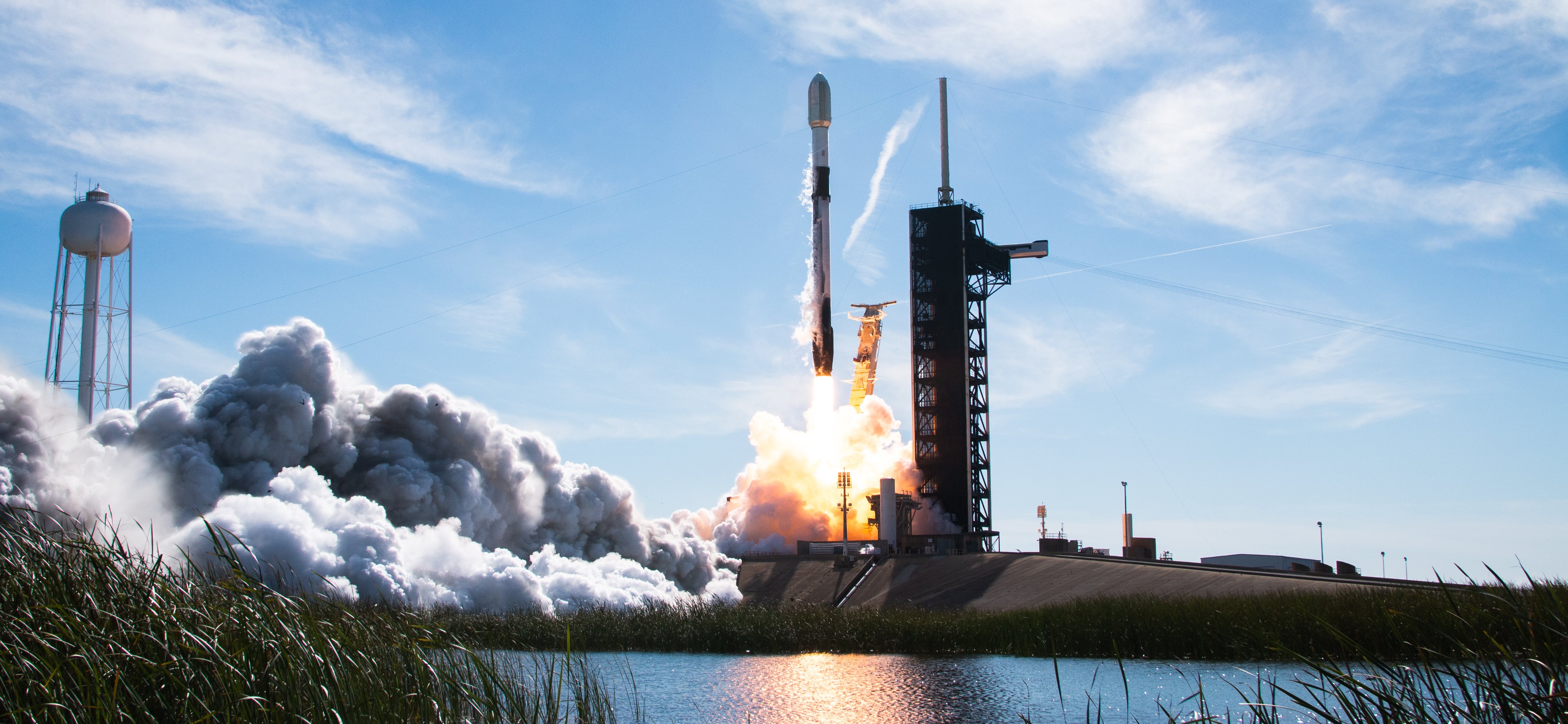
Launch facts
| Rocket | Falcon 9 Block 5 |
| Operator | SpaceX |
| Pad | Space Launch Complex 40, Cape Canaveral SFS, FL, USA |
| T-0 (UTC) | 29 June 2026 at 02:25 |
| Status | Success |
What launched and when?
SpaceX successfully launched the SiriusXM SXM-11 broadcasting satellite aboard a Falcon 9 Block 5 rocket on 29 June 2026 at 02:25 UTC from Space Launch Complex 40 (SLC-40) at Cape Canaveral Space Force Station, Florida. SpaceX confirmed the mission was a success, delivering the payload toward geostationary transfer orbit.
The Falcon 9 is a two-stage, partially reusable orbital rocket built and operated by SpaceX. SXM-11 is a high-power radio broadcasting satellite operated by SiriusXM, the North American satellite audio provider.
Did the launch succeed?
Yes. Per SpaceX, the mission reached a nominal orbit and the SXM-11 payload separated successfully. The Falcon 9 upper stage carried the satellite toward geostationary transfer orbit, from where SXM-11 will use its onboard propulsion to raise itself to a final geostationary position roughly 35,786 km above the equator.
Mission at a glance
| Detail | Value |
|---|---|
| Rocket | Falcon 9 Block 5 |
| Payload | SiriusXM SXM-11 |
| Operator | SpaceX / SiriusXM |
| Launch time | 29 June 2026, 02:25 UTC |
| Launch site | SLC-40, Cape Canaveral SFS, Florida |
| Target orbit | Geostationary transfer orbit (GTO) |
| Result | Success |
What is the SXM-11 payload?
SXM-11 is the latest addition to SiriusXM's fleet of geostationary broadcasting satellites, which beam digital audio to more than 150 million radio-equipped vehicles and receivers across North America. SiriusXM satellites are among the most powerful commercial spacecraft ever flown, using large unfurlable mesh antenna reflectors to deliver signal directly to compact consumer antennas. Recent SiriusXM satellites in this series are based on the high-power Maxar 1300-class platform and carry launch masses in the region of 6,000 kg, placing them at the heavier end of Falcon 9's GTO capability.
Once operational in its geostationary slot, SXM-11 will remain fixed relative to the ground, allowing continuous coast-to-coast coverage without the receiver needing to track a moving spacecraft. You can watch the satellite settle into its orbital slot on the Cosmik live 3D satellite map.
Where did it launch from?
The mission lifted off from SLC-40 at Cape Canaveral, one of SpaceX's two primary East Coast Falcon 9 pads. Cape Canaveral is ideal for geostationary missions because its low latitude and eastward launch trajectory over the Atlantic maximize the payload mass a rocket can send to equatorial orbits. See more missions from this site on the Cape Canaveral launch hub.
What happened to the Falcon 9 booster?
Falcon 9 Block 5 is the fifth and final major iteration of the vehicle, designed for rapid reuse with first stages that have flown well beyond 20 flights each. On heavy GTO missions like SXM-11, SpaceX typically recovers the first stage on the autonomous droneship stationed downrange in the Atlantic Ocean, since the demanding trajectory leaves insufficient propellant for a return-to-launch-site landing. Booster recovery allows SpaceX to refurbish and refly the stage, a practice that has driven the company's launch cadence to record highs across its fleet.
How to watch and track it
SpaceX streamed the launch live starting roughly 15 minutes before liftoff. Now that SXM-11 is in orbit, you can follow its climb to geostationary altitude and monitor SpaceX's upcoming missions in real time:
- Track live objects on the Cosmik 3D solar system and satellite map
- See what's flying next on the rocket launch schedule
- Browse all SpaceX missions
- Read the latest launch news
- Learn how to track satellites yourself
Launch and mission data is sourced from The Space Devs Launch Library. Background on the vehicle and site is drawn from the Falcon 9 and Cape Canaveral references.
Follow the mission live on Cosmik
Track SXM-11 and every satellite in orbit on the free Cosmik live 3D map, and enable free launch alerts on the launch tracker so you never miss the next Falcon 9 liftoff.
Follow this mission live in 3D and get a free alert before liftoff.
Open the live map →Sources
Next launches
- Dragon CRS-2 SpX-35 — launch time & how to watch — 13 October 2026, 10:33 UTC
- Martian Moon eXplorer (MMX) — launch time & how to watch — 19 October 2026, 19:41 UTC
- Amazon Leo (LV-01) — launch time & how to watch — 29 October 2026
More launch coverage
- Atlas V 551 Launches Amazon Leo LA-08 on 2 July 2026 — 2 July 2026, 04:30 UTC
- Falcon 9 Starlink Group 17-46: Launch Recap (July 2, 2026) — 2 July 2026, 02:58 UTC
- Long March 4B Launches Haiyang 2E — 1 July 2026 Recap — 1 July 2026, 23:46 UTC
- Starlink Group 17-40 Recap: Falcon 9 Flew 28 June 2026 — 28 June 2026, 16:09 UTC
- Electron 'Ten Owl Of Ten' Launch Recap — 26 June 2026 Success — 26 June 2026, 17:43 UTC
- Falcon 9 Starlink Group 17-45 Launch Recap — 25 June 2026 — 25 June 2026, 03:30 UTC