Atlas V 551 Launches Amazon Leo LA-08 on 2 July 2026
Published · Updated
Atlas V 551Amazon LeoUnited Launch AllianceULA✓ recap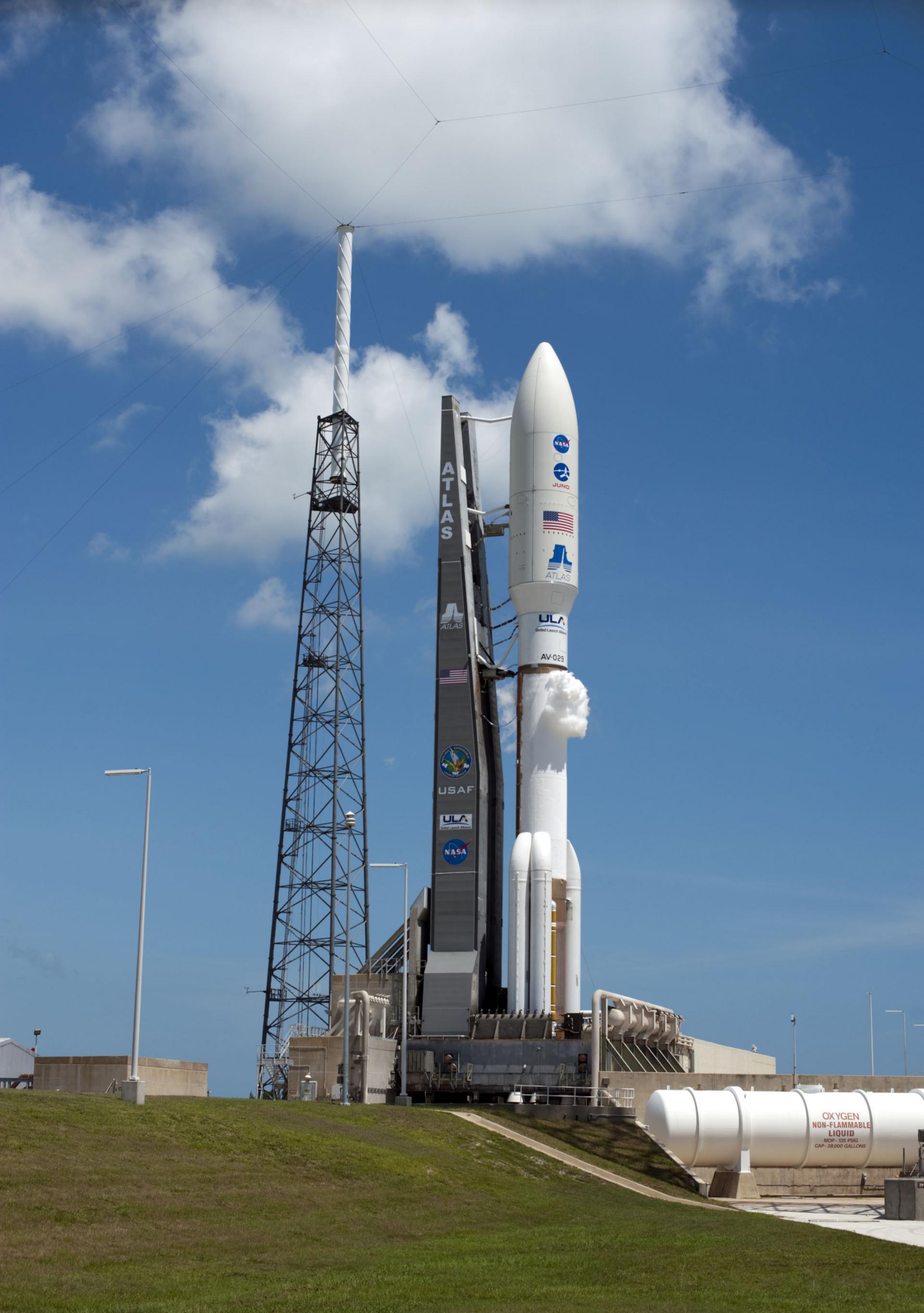
Launch facts
| Rocket | Atlas V 551 |
| Operator | United Launch Alliance |
| Pad | Space Launch Complex 41, Cape Canaveral SFS, FL, USA |
| T-0 (UTC) | 2 July 2026 at 04:30 |
| Status | Success |
What just happened?
United Launch Alliance successfully launched an Atlas V 551 rocket carrying the Amazon Leo (LA-08) broadband satellite batch at 04:30:15 UTC on 2 July 2026 from Space Launch Complex 41 at Cape Canaveral Space Force Station, Florida. The mission was declared a success by ULA. The Atlas V 551 is the most powerful configuration of the Atlas V family, distinguished by its 5-meter payload fairing and five strap-on solid rocket boosters.
What is Amazon Leo?
Amazon Leo — formerly branded Project Kuiper — is Amazon's low Earth orbit broadband megaconstellation, designed to deliver global internet connectivity in direct competition with SpaceX's Starlink. The full constellation is authorized for 3,236 satellites operating in low Earth orbit, and Amazon has secured one of the largest commercial launch contracts in history to deploy them across multiple rocket families, including ULA's Atlas V and Vulcan Centaur.
The LA-08 designation marks another dedicated Atlas V flight in Amazon's deployment campaign, adding a fresh batch of production satellites to the growing network.
What rocket launched the mission?
The Atlas V 551 represents the top-end variant of the Atlas V rocket, which has flown since 2002 and is being retired in favor of the newer Vulcan Centaur. The three digits in "551" encode the vehicle's configuration:
| Digit | Meaning |
|---|---|
| 5 | 5-meter payload fairing |
| 5 | Five solid rocket boosters |
| 1 | Single-engine Centaur upper stage |
With five solid rocket boosters lit at liftoff, the 551 configuration generates roughly 2.5 million pounds of thrust off the pad, making it well suited to lofting heavy batches of Amazon Leo satellites into orbit.
Where did it launch from?
The rocket lifted off from Space Launch Complex 41 at Cape Canaveral Space Force Station in Florida. SLC-41 has been the primary East Coast launch site for the Atlas V throughout its career and now supports ULA's Vulcan Centaur as well. It is one of the busiest orbital launch pads on the Space Coast.
Key mission facts
- Rocket: Atlas V 551
- Provider: United Launch Alliance
- Payload: Amazon Leo (LA-08)
- Launch time: 04:30:15 UTC, 2 July 2026
- Launch site: SLC-41, Cape Canaveral SFS, Florida
- Result: Success
Did the launch succeed?
Yes. ULA confirmed the mission was a success, with the Atlas V 551 delivering its Amazon Leo payload to the intended low Earth orbit. Amazon's satellites are deployed into LEO before using their onboard propulsion to raise themselves to operational altitudes around 590 to 630 kilometers, where the constellation is designed to operate.
Why does this mission matter?
Every Amazon Leo launch chips away at a demanding regulatory timeline: under its U.S. FCC license, Amazon must deploy roughly half of its 3,236-satellite constellation to maintain full authorization. Dedicated Atlas V flights like LA-08 are central to that push, using up ULA's remaining stockpile of Atlas V vehicles before the rocket is fully retired. Each successful launch expands the on-orbit network toward the point where Amazon can begin broad commercial broadband service.
How to follow the satellites
You can watch the newly deployed Amazon Leo satellites and thousands of other spacecraft move in real time on Cosmik's live 3D solar system and satellite map. Explore upcoming missions on our rocket launch schedule, browse recent Cape Canaveral launches, and keep up with the latest launch news. You can also see how orbital tracking works on our guide to tracking satellites.
Background on the vehicle and operator is available via the Atlas V and United Launch Alliance Wikipedia pages, and mission data is sourced from The Space Devs Launch Library.
Follow the next launch live on Cosmik
Track Amazon Leo and every satellite in orbit in real time on Cosmik's free 3D map, and enable free launch alerts so you never miss the next Atlas V, Vulcan, or Amazon Leo mission. Head to our launch tracker to set your reminders now.
Follow this mission live in 3D and get a free alert before liftoff.
Open the live map →Sources
Next launches
- Dragon CRS-2 SpX-35 — launch time & how to watch — 13 October 2026, 10:33 UTC
- Martian Moon eXplorer (MMX) — launch time & how to watch — 19 October 2026, 19:41 UTC
- Amazon Leo (LV-01) — launch time & how to watch — 29 October 2026
More launch coverage
- Falcon 9 Starlink Group 10-50 Launch Recap — 5 July 2026 — 5 July 2026, 10:50 UTC
- Long March 6A Launches SpaceSail Polar Group #13 — 4 July 2026 Recap — 4 July 2026, 09:30 UTC
- Pegasus XL Launches Swift Boost Mission: 3 July 2026 Recap — 3 July 2026, 08:36 UTC
- Falcon 9 Starlink Group 17-46: Launch Recap (July 2, 2026) — 2 July 2026, 02:58 UTC
- Long March 4B Launches Haiyang 2E — 1 July 2026 Recap — 1 July 2026, 23:46 UTC
- Falcon 9 Launches SiriusXM SXM-11: Recap (29 June 2026) — 29 June 2026, 02:25 UTC