Pegasus XL Launches Swift Boost Mission: 3 July 2026 Recap
Published · Updated
Pegasus XLNorthrop GrummanSwift Boost Missionair launch✓ recap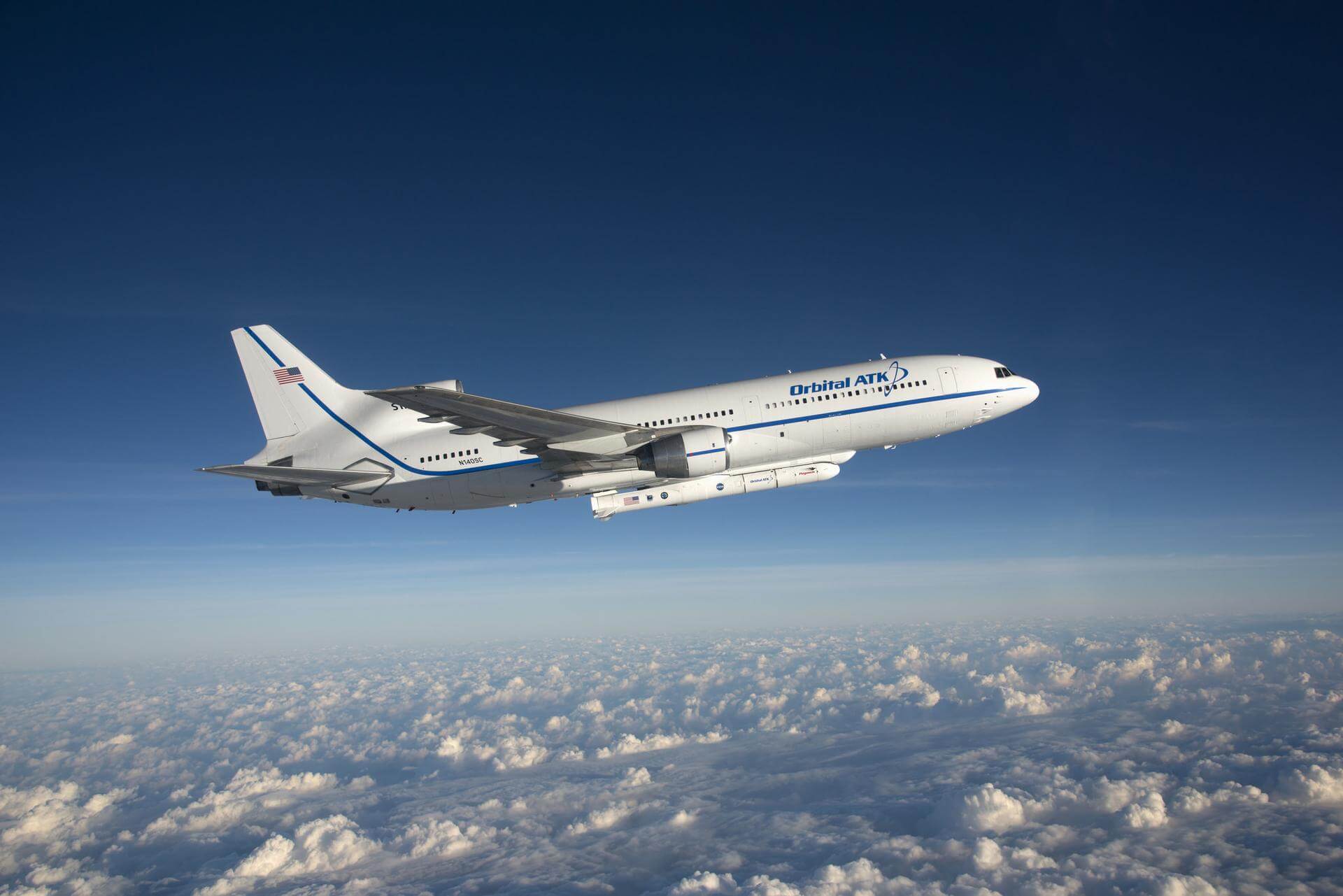
Launch facts
| Rocket | Pegasus XL |
| Operator | Northrop Grumman Space Systems |
| Pad | Kwajalein Atoll, Air launch to orbit |
| T-0 (UTC) | 3 July 2026 at 08:36 |
| Status | Success |
What happened?
Northrop Grumman Space Systems successfully launched the Swift Boost Mission aboard a Pegasus XL rocket on 3 July 2026 at 08:36 UTC, with the vehicle air-dropped over Kwajalein Atoll in the Pacific. The Pegasus XL is a three-stage, solid-fuel rocket released from beneath a carrier aircraft at roughly 12,000 meters (about 40,000 feet) rather than from a traditional ground pad.
According to Northrop Grumman, the mission achieved orbit as planned, marking another operational flight for the veteran air-launch system that has flown more than 40 times since its debut in 1990.
Did the launch succeed?
Yes. The launch status is confirmed as Success. After release from the L-1011 "Stargazer" carrier aircraft, the first-stage motor ignited approximately five seconds into free fall, and the winged Pegasus XL climbed through its three burn phases to deliver its payload to orbit.
How the air-launch works
Unlike vertically launched rockets, Pegasus XL uses a distinctive drop-and-ignite sequence:
- The carrier aircraft climbs to about 12,000 m over the ocean drop zone.
- The rocket is released and free-falls for roughly 5 seconds.
- The first-stage solid motor ignites, and a delta wing provides lift for the initial pitch-up.
- Three solid-fuel stages fire in sequence to reach orbital velocity.
Where did it launch from?
The mission staged from Kwajalein Atoll in the Marshall Islands, using an air-launch-to-orbit profile. Because Pegasus is dropped from an aircraft, its "launch site" is effectively wherever the carrier plane reaches the designated drop point, giving the system unusual flexibility in choosing launch azimuths and orbital inclinations. Kwajalein's equatorial-adjacent location and clear Pacific ranges make it a favored staging area for missions targeting a variety of orbits.
What is Pegasus XL?
Pegasus XL is the extended-length variant of Orbital Sciences' (now Northrop Grumman) Pegasus rocket, designed to place small satellites weighing up to roughly 450 kilograms into low Earth orbit. It remains the world's most-flown dedicated air-launch orbital system and has historically served NASA science missions, government payloads, and small commercial satellites.
Key facts at a glance
| Item | Detail |
|---|---|
| Mission | Swift Boost Mission |
| Rocket | Pegasus XL |
| Provider | Northrop Grumman Space Systems |
| Staging area | Kwajalein Atoll (air launch) |
| Launch time | 3 July 2026, 08:36 UTC |
| Result | Success |
| Stages | 3 (all solid fuel) |
Why does this mission matter?
Air-launch systems like Pegasus XL fill a specific niche: rapid, flexible deployment of small satellites without dependence on a fixed ground pad. Being launched from an aircraft, the rocket can reach different inclinations by simply flying to the right drop point, a capability that ground-based small launchers cannot match as easily. The successful Swift Boost flight reinforces Pegasus XL's role as a reliable option for the small-satellite market even as newer dedicated small launchers have entered service.
How to watch and track the mission
While the launch itself has concluded, you can follow the deployed payload and thousands of other objects in orbit on Cosmik's live 3D satellite map. Explore upcoming missions on our rocket launch schedule and catch the latest coverage on the launch news feed. For more on how orbital tracking works, see our guide on how to track satellites.
More about the operator and vehicle
Launch and vehicle data referenced here originate from the public Launch Library API. For deeper background, see the following authoritative references:
Follow the mission live
Track the Swift Boost payload and every active satellite in real time on Cosmik's free 3D map, and enable free launch alerts so you never miss the next Pegasus XL or small-satellite mission. Head to our launch tracker to see what's flying next.
Follow this mission live in 3D and get a free alert before liftoff.
Open the live map →Sources
Next launches
- Dragon CRS-2 SpX-35 — launch time & how to watch — 13 October 2026, 10:33 UTC
- Martian Moon eXplorer (MMX) — launch time & how to watch — 19 October 2026, 19:41 UTC
- Amazon Leo (LV-01) — launch time & how to watch — 29 October 2026
More launch coverage
- Long March 8A Launches SpaceSail Polar #14 — July 5, 2026 — 5 July 2026, 13:43 UTC
- Falcon 9 Starlink Group 10-50 Launch Recap — 5 July 2026 — 5 July 2026, 10:50 UTC
- Long March 6A Launches SpaceSail Polar Group #13 — 4 July 2026 Recap — 4 July 2026, 09:30 UTC
- Atlas V 551 Launches Amazon Leo LA-08 on 2 July 2026 — 2 July 2026, 04:30 UTC
- Falcon 9 Starlink Group 17-46: Launch Recap (July 2, 2026) — 2 July 2026, 02:58 UTC
- Long March 4B Launches Haiyang 2E — 1 July 2026 Recap — 1 July 2026, 23:46 UTC