Long March 4B Launches Haiyang 2E — 1 July 2026 Recap
Published · Updated
Long March 4BHaiyang 2ECASCJiuquan✓ recap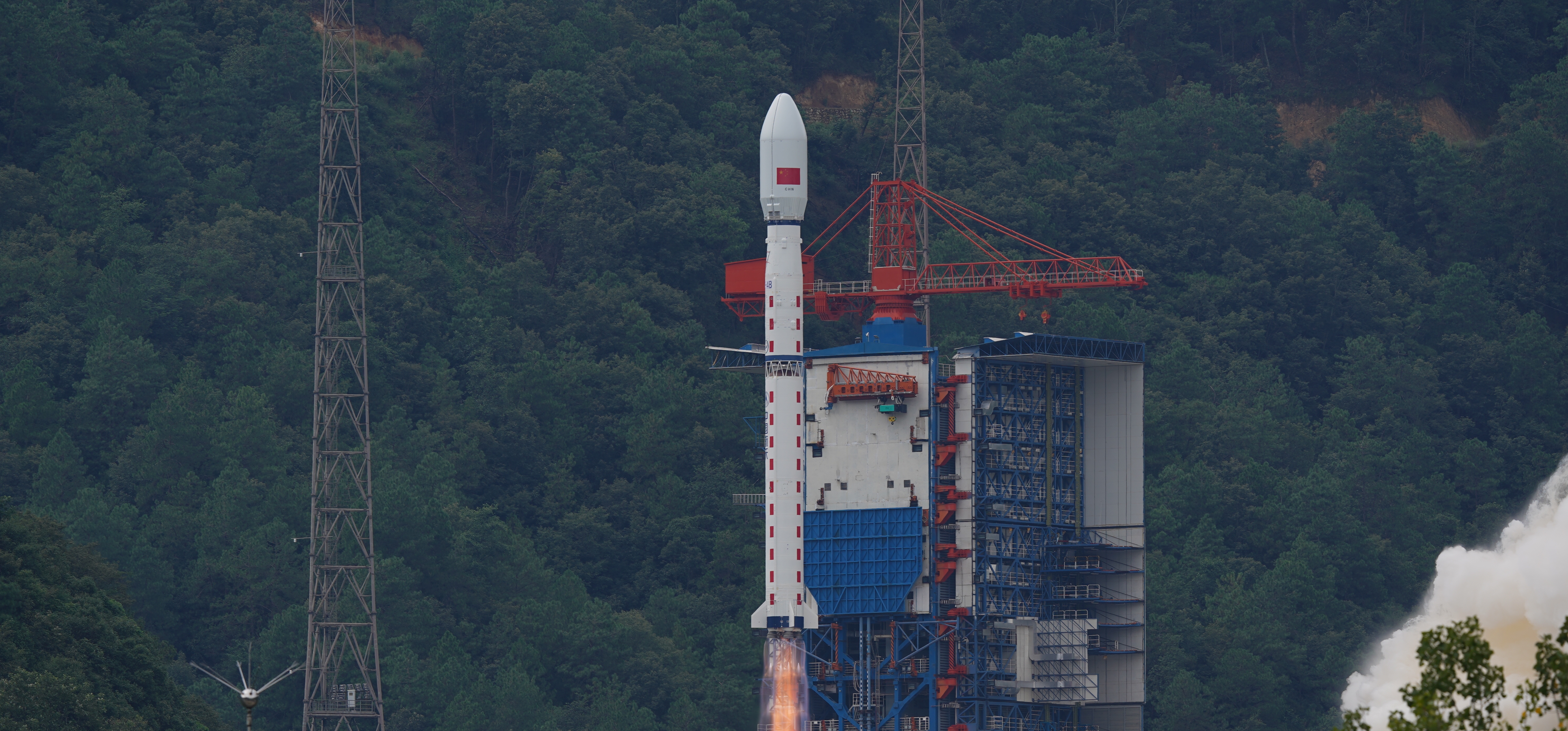
Launch facts
| Rocket | Long March 4B |
| Operator | China Aerospace Science and Technology Corporation |
| Pad | Launch Area 94 (SLS-2 / 603), Jiuquan Satellite Launch Center, People's Republic of China |
| T-0 (UTC) | 1 July 2026 at 23:46 |
| Status | Success |
What happened?
A Long March 4B rocket successfully launched the Haiyang 2E ocean-observation satellite from Launch Area 94 (SLS-2 / 603) at the Jiuquan Satellite Launch Center on 1 July 2026 at 23:46 UTC. The mission, operated by the China Aerospace Science and Technology Corporation (CASC), was confirmed a success.
The Long March 4B is a three-stage liquid-fueled launch vehicle in China's long-running Long March family, standing roughly 45 meters tall and capable of delivering around 2,800 kg to sun-synchronous orbit. Haiyang 2E is part of China's Haiyang ("Ocean") series of marine environmental monitoring satellites, which measure sea-surface height, wind fields, and wave conditions.
Did the launch succeed?
Yes. According to CASC, the Long March 4B performed nominally through all three stages and delivered Haiyang 2E to its planned orbit. The launch marked another successful flight for one of the most frequently flown vehicles in the Long March fleet, which has recorded dozens of missions since its introduction in the late 1990s.
What is the payload?
Haiyang 2E belongs to China's HY-2 dynamic ocean-monitoring constellation. These satellites carry radar altimeters, microwave scatterometers, and microwave radiometers to observe the marine environment. Key capabilities of the HY-2 series include:
- Sea-surface height measurement via radar altimetry, supporting ocean-current and tide models
- Ocean wind fields from a Ku-band scatterometer
- Significant wave height and sea-surface temperature data
The data feeds marine forecasting, typhoon and storm-surge warning, fisheries, and climate research. HY-2 satellites typically operate in a sun-synchronous orbit around 970 km altitude, working alongside earlier satellites in the series to improve global ocean coverage and revisit times.
Where did it launch from?
The mission lifted off from Launch Area 94 (SLS-2 / 603) at the Jiuquan Satellite Launch Center in the Gobi Desert, one of China's oldest and busiest spaceports. Jiuquan supports both crewed and uncrewed missions and is the primary site for many Long March flights heading to polar and sun-synchronous orbits.
About the Long March 4B
The Long March 4B is a workhorse for China's Earth-observation and meteorological programs. Key facts:
| Attribute | Detail |
|---|---|
| Stages | 3 (liquid-fueled) |
| Height | ~45 m |
| SSO payload | ~2,800 kg |
| Operator | CASC |
| Primary use | Earth observation, meteorology |
The vehicle burns storable hypergolic propellants (nitrogen tetroxide and unsymmetrical dimethylhydrazine) across its core stages, a legacy design that gives it reliability and flexibility for a wide range of missions.
Why does this mission matter?
Ocean-monitoring satellites like Haiyang 2E are critical for weather forecasting and disaster preparedness across the Asia-Pacific region, where typhoons and storm surges pose recurring threats. By adding another altimetry and scatterometry platform to the HY-2 constellation, China strengthens its ability to track sea state in near-real time and contribute to global oceanographic datasets.
The launch also continues China's high annual cadence of orbital missions. The Long March family remains the backbone of that effort, with multiple variants flying from Jiuquan, Xichang, Taiyuan, and Wenchang.
How to track the satellite
You can follow Haiyang 2E and thousands of other active satellites in orbit on Cosmik's live 3D satellite map. Explore upcoming missions on the rocket launch schedule, catch the latest updates on our launch news feed, and learn the basics with our guide to tracking satellites.
For background on the vehicle and operator, see the Long March 4B, Jiuquan Satellite Launch Center, and CASC Wikipedia pages. Launch data is sourced from The Space Devs Launch Library API.
Follow the mission live on Cosmik
Track Haiyang 2E as it circles Earth and watch every upcoming launch in real time on Cosmik. Enable free launch alerts so you never miss a liftoff, and follow the newly deployed satellite on our interactive 3D map.
Follow this mission live in 3D and get a free alert before liftoff.
Open the live map →Sources
Next launches
- Dragon CRS-2 SpX-35 — launch time & how to watch — 13 October 2026, 10:33 UTC
- Martian Moon eXplorer (MMX) — launch time & how to watch — 19 October 2026, 19:41 UTC
- Amazon Leo (LV-01) — launch time & how to watch — 29 October 2026
More launch coverage
- Pegasus XL Launches Swift Boost Mission: 3 July 2026 Recap — 3 July 2026, 08:36 UTC
- Atlas V 551 Launches Amazon Leo LA-08 on 2 July 2026 — 2 July 2026, 04:30 UTC
- Falcon 9 Starlink Group 17-46: Launch Recap (July 2, 2026) — 2 July 2026, 02:58 UTC
- Falcon 9 Launches SiriusXM SXM-11: Recap (29 June 2026) — 29 June 2026, 02:25 UTC
- Starlink Group 17-40 Recap: Falcon 9 Flew 28 June 2026 — 28 June 2026, 16:09 UTC
- Electron 'Ten Owl Of Ten' Launch Recap — 26 June 2026 Success — 26 June 2026, 17:43 UTC