Long March 6A Launches SpaceSail Polar Group #13 — 4 July 2026 Recap
Published · Updated
Long March 6ASpaceSailQianfanCASC✓ recap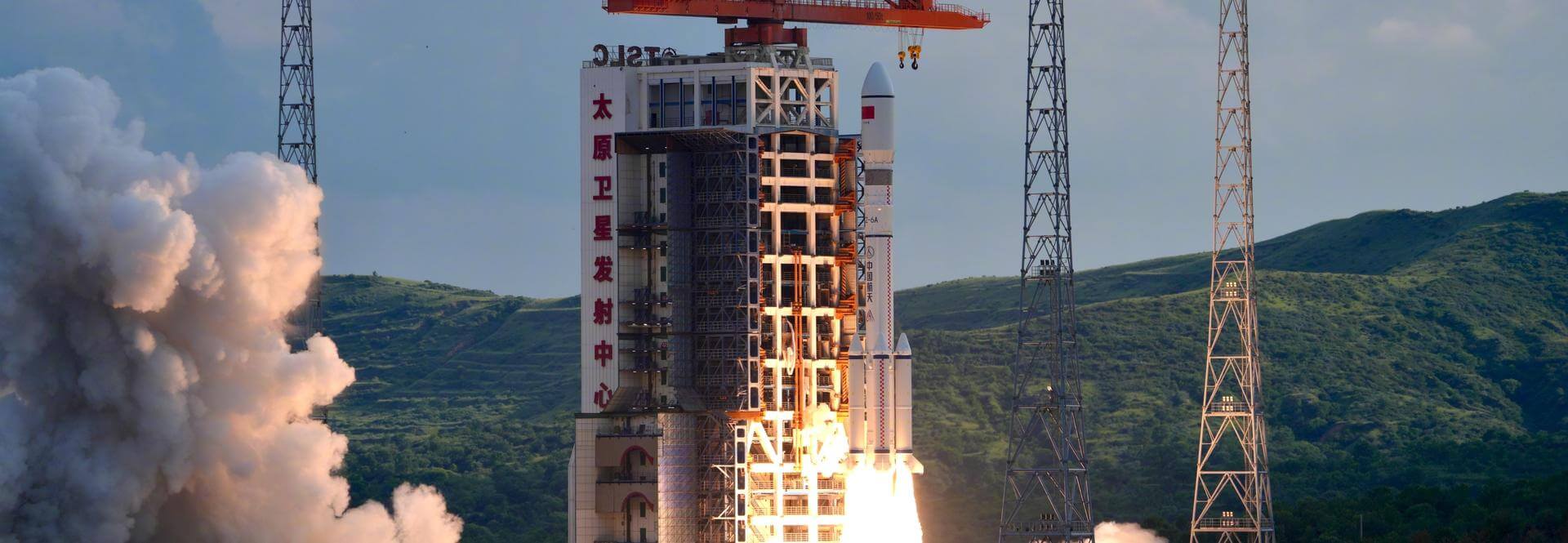
Launch facts
| Rocket | Long March 6A |
| Operator | China Aerospace Science and Technology Corporation |
| Pad | Launch Complex 9A, Taiyuan Satellite Launch Center, People's Republic of China |
| T-0 (UTC) | 4 July 2026 at 09:30 |
| Status | Success |
What happened?
A Long March 6A rocket successfully launched the SpaceSail Polar Group #13 satellites on 4 July 2026 at 09:30 UTC from Launch Complex 9A at the Taiyuan Satellite Launch Center in the People's Republic of China. The mission, operated by the China Aerospace Science and Technology Corporation (CASC), was confirmed a success, adding another batch to China's growing polar-orbiting broadband constellation.
The Long March 6A is a two-stage liquid-fuelled launch vehicle augmented by four solid strap-on boosters — China's first rocket to combine liquid and solid propulsion. It stands roughly 50 metres tall and can deliver about 4,500 kg to a 700 km Sun-synchronous orbit, making it well suited to deploying flat-packed communications satellites into polar planes.
What was the payload?
The payload was another group of SpaceSail (Qianfan / "Thousand Sails") satellites, part of the broadband megaconstellation operated by Shanghai Spacecom Satellite Technology (SSST). The constellation is planned to reach over 14,000 satellites in its full build-out, positioning it as one of China's principal answers to SpaceX's Starlink network.
Each Qianfan launch typically carries around 18 satellites into low Earth orbit, where they raise to operational polar shells near 800 km altitude. The "Polar Group" designation confirms this batch targets high-inclination planes that provide global coverage, including the high latitudes underserved by lower-inclination constellations.
Why polar orbits?
Polar and near-polar orbits let each satellite pass over the entire rotating Earth over the course of a day, which is essential for a constellation aiming to deliver continuous worldwide broadband. Building out multiple inclined planes is a standard megaconstellation strategy, mirroring how other operators layer their networks for seamless coverage.
Where did it launch from?
The mission lifted off from Launch Complex 9A at the Taiyuan Satellite Launch Center in Shanxi Province, northern China. Taiyuan is China's primary site for Sun-synchronous and polar launches, favoured for its downrange trajectory over unpopulated terrain. LC-9A was purpose-built to support the Long March 6A and its high launch cadence for constellation deployment.
| Detail | Value |
|---|---|
| Mission | SpaceSail Polar Group #13 |
| Rocket | Long March 6A |
| Operator | CASC |
| Launch site | LC-9A, Taiyuan, China |
| Launch time | 4 July 2026, 09:30 UTC |
| Result | Success |
Did the launch succeed?
Yes. The launch was confirmed as a success, with the Long March 6A delivering its SpaceSail satellites to the intended polar transfer orbit. From there, the satellites use onboard propulsion to reach their operational altitude and spread into their assigned orbital plane over the following weeks.
Long March 6A track record
The Long March 6A debuted in March 2022 and has become a workhorse for China's constellation ambitions. Its four solid boosters give it substantially more lift than the baseline Long March 6, while its liquid core stages burn kerolox for efficient upper-stage performance.
How to watch and track the satellites
Chinese state launches are typically confirmed after liftoff rather than broadcast live, so the most reliable way to follow the mission's aftermath is to track the deployed hardware directly. Once cataloged, the SpaceSail satellites appear as new objects in the low-Earth-orbit population.
- Watch the fleet spread across their orbital plane on the Cosmik live 3D satellite map.
- See what's flying next on the rocket launch schedule.
- Read the latest launch news for more constellation updates.
- Learn the basics with our guide to tracking satellites.
Launch data for this mission is sourced from The Space Devs Launch Library. Background on the vehicle, operator and site is available via Long March 6A, the China Aerospace Science and Technology Corporation, and the Taiyuan Satellite Launch Center.
Follow it live on Cosmik
Track the newly deployed SpaceSail satellites in real time on the Cosmik 3D solar-system and satellite map, and turn on free launch alerts so you never miss the next Long March liftoff. Explore upcoming missions on the Cosmik launch tracker today.
Follow this mission live in 3D and get a free alert before liftoff.
Open the live map →Sources
Next launches
- Dragon CRS-2 SpX-35 — launch time & how to watch — 13 October 2026, 10:33 UTC
- Martian Moon eXplorer (MMX) — launch time & how to watch — 19 October 2026, 19:41 UTC
- Amazon Leo (LV-01) — launch time & how to watch — 29 October 2026
More launch coverage
- Falcon 9 Transporter-17 Rideshare: Launch Recap (7 July 2026) — 7 July 2026, 07:12 UTC
- Long March 8A Launches SpaceSail Polar #14 — July 5, 2026 — 5 July 2026, 13:43 UTC
- Falcon 9 Starlink Group 10-50 Launch Recap — 5 July 2026 — 5 July 2026, 10:50 UTC
- Pegasus XL Launches Swift Boost Mission: 3 July 2026 Recap — 3 July 2026, 08:36 UTC
- Atlas V 551 Launches Amazon Leo LA-08 on 2 July 2026 — 2 July 2026, 04:30 UTC
- Falcon 9 Starlink Group 17-46: Launch Recap (July 2, 2026) — 2 July 2026, 02:58 UTC