Falcon 9 Dragon CRS-2 SpX-34 Launch Success — 15 May 2026
Published · Updated
SpaceXFalcon 9DragonCRS-2✓ recap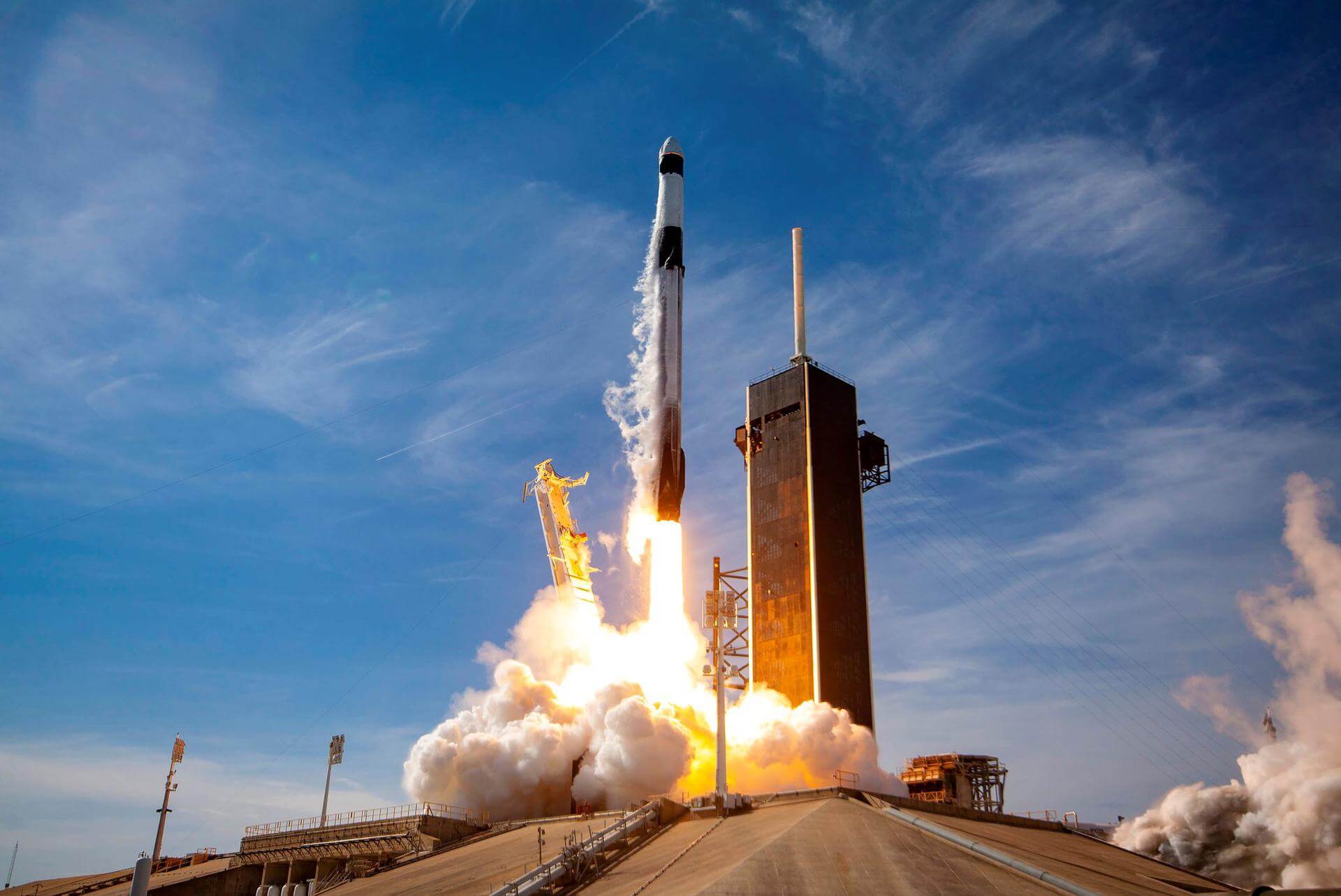
Launch facts
| Rocket | Falcon 9 Block 5 |
| Operator | SpaceX |
| Pad | Space Launch Complex 40, Cape Canaveral SFS, FL, USA |
| T-0 (UTC) | 15 May 2026 at 22:05 |
| Status | Success |
Did the launch succeed?
Yes. SpaceX successfully launched the Dragon CRS-2 SpX-34 resupply mission to the International Space Station aboard a Falcon 9 Block 5 rocket on 15 May 2026 at 22:05:41 UTC from Space Launch Complex 40 at Cape Canaveral Space Force Station, Florida. The Cargo Dragon separated from the second stage on its way to orbit and began its automated approach to the orbiting laboratory.
The CRS-2 (Commercial Resupply Services) program is NASA's contract under which SpaceX flies cargo, science experiments, and crew supplies to the ISS using its reusable Cargo Dragon spacecraft. SpX-34 marks the 34th such Dragon resupply flight to the station.
What launched, and when?
The mission details as flown:
| Item | Detail |
|---|---|
| Rocket | Falcon 9 Block 5 |
| Mission | Dragon CRS-2 SpX-34 |
| Operator | SpaceX (for NASA) |
| Launch site | SLC-40, Cape Canaveral SFS, Florida |
| Liftoff | 15 May 2026, 22:05:41 UTC |
| Outcome | Success |
What is the payload?
Cargo Dragon carries a mix of pressurized and unpressurized cargo: crew provisions, hardware, and dozens of scientific experiments for the seven-member Expedition crew aboard the ISS. Under the CRS-2 contract, each Dragon can deliver roughly several thousand kilograms of cargo to the station and return experiments and equipment to Earth, a capability unique among current cargo vehicles that can bring significant downmass home intact.
According to NASA's Commercial Resupply Services framework, the CRS-2 contract covers a series of Dragon missions supporting continuous research operations aboard the station, which orbits Earth at roughly 400 km altitude and circles the planet about 16 times per day.
How does the Falcon 9 work?
Falcon 9 Block 5 is a two-stage, partially reusable rocket standing 70 meters tall and powered by nine Merlin 1D engines on the first stage. The booster is designed for rapid reuse, with SpaceX having flown individual first stages more than 20 times each across the fleet. After stage separation, the first stage performs a propulsive landing — either on a droneship in the Atlantic or back at Cape Canaveral — enabling recovery and refurbishment for future flights.
The Cape Canaveral launch pad, SLC-40, is one of SpaceX's primary East Coast launch sites and has hosted the majority of Falcon 9's cargo and Starlink missions. You can explore the pad and every active launch site on the Cape Canaveral launch hub.
How to track Dragon and the ISS
Following separation, Cargo Dragon uses its Draco thrusters to raise its orbit and phase toward the ISS over roughly a day, culminating in an autonomous docking to a Harmony module port. Once berthed, the crew opens the hatch and begins unloading cargo.
You can watch the spacecraft chase down the station in real time and see the ISS pass overhead using our tools:
- Track the ISS live as Dragon approaches
- Cosmik's live 3D map of every satellite in orbit
- How to track satellites from your location
Why this mission matters
Resupply flights are the logistical backbone of the ISS program. Without regular cargo deliveries, the station could not sustain its crew or its research schedule. Dragon's ability to return cargo to Earth — rather than burning up on reentry like most cargo vehicles — makes it especially valuable for retrieving completed experiments and failed hardware for analysis.
SpaceX has now flown Dragon to the ISS 34 times under the resupply programs, a cadence that has made low-cost, routine station logistics a reality. See more from SpaceX on our SpaceX launch hub and NASA missions on the NASA launch hub.
Sources and background
- Falcon 9 (Wikipedia)
- SpaceX Dragon 2 (Wikipedia)
- SLC-40 (Wikipedia)
- The Space Devs Launch Library (data source)
Follow Dragon CRS-2 SpX-34 as it docks with the station and track the ISS in real time on Cosmik. Browse the full rocket launch schedule, catch up on the latest launch news, and enable free launch alerts so you never miss the next liftoff.
Follow this mission live in 3D and get a free alert before liftoff.
Open the live map →Sources
Next launches
- Dragon CRS-2 SpX-35 — launch time & how to watch — 13 October 2026, 10:33 UTC
- Martian Moon eXplorer (MMX) — launch time & how to watch — 19 October 2026, 19:41 UTC
- Amazon Leo (LV-01) — launch time & how to watch — 29 October 2026
More launch coverage
- Starlink Group 17-42 Launch Recap: Falcon 9 Succeeds May 20, 2026 — 20 May 2026, 02:46 UTC
- Vega-C Launches SMILE Mission for ESA — 19 May 2026 Recap — 19 May 2026, 03:52 UTC
- Long March 8 Launches SpaceSail Polar Group #9 — 17 May 2026 Recap — 17 May 2026, 14:42 UTC
- Kinetica 1 Launches 5 Satellites — 15 May 2026 Recap — 15 May 2026, 04:33 UTC
- Zhuque-2E Block 2 Launch Recap: LandSpace Succeeds 14 May 2026 — 14 May 2026, 03:00 UTC
- Long March 6A Launches SpaceSail Polar Group #8 — 12 May 2026 Recap — 12 May 2026, 11:59 UTC