Long March 6A Launches SpaceSail Polar Group #8 — 12 May 2026 Recap
Published · Updated
Long March 6ASpaceSailQianfanChina launch✓ recap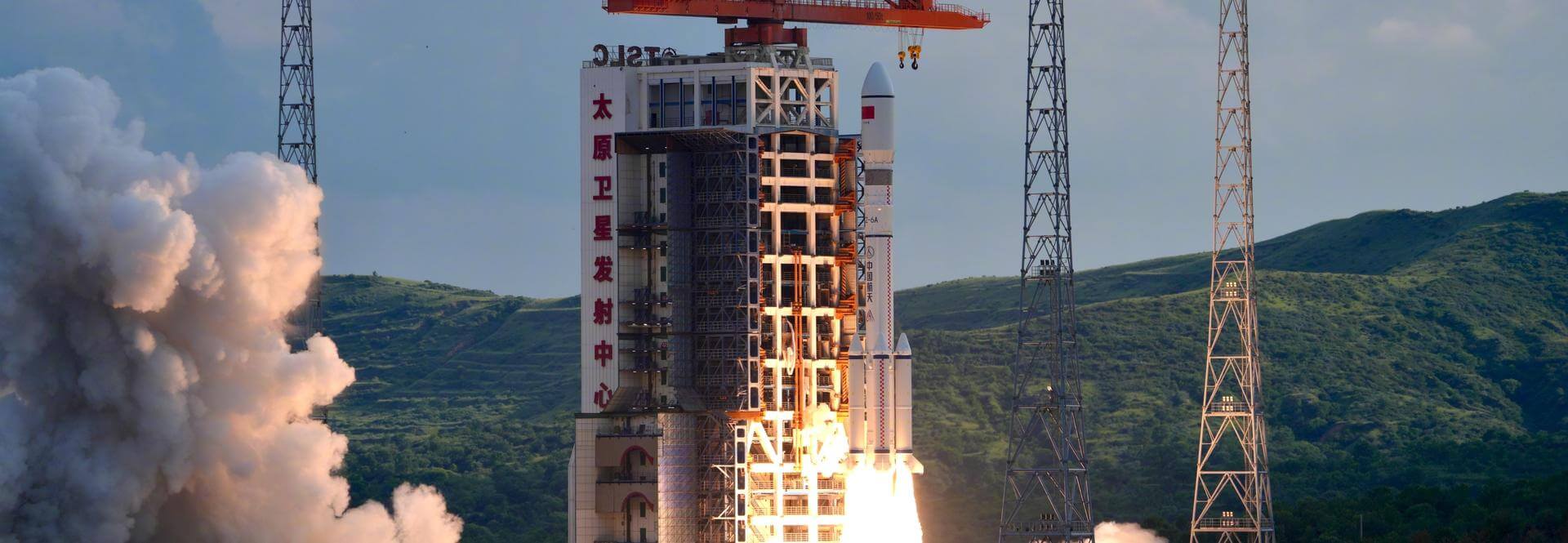
Launch facts
| Rocket | Long March 6A |
| Operator | China Aerospace Science and Technology Corporation |
| Pad | Launch Complex 9A, Taiyuan Satellite Launch Center, People's Republic of China |
| T-0 (UTC) | 12 May 2026 at 11:59 |
| Status | Success |
What just launched?
A Long March 6A rocket successfully launched the SpaceSail Polar Group #8 batch of satellites on 12 May 2026 at 11:59 UTC from Launch Complex 9A at the Taiyuan Satellite Launch Center in northern China. The Long March 6A is a two-stage liquid-fueled launch vehicle augmented by four solid strap-on boosters, developed by the China Aerospace Science and Technology Corporation (CASC) for medium-lift missions into sun-synchronous and polar orbits.
The launch was declared a success by mission controllers, continuing the steady deployment of China's SpaceSail (Qianfan / "Thousand Sails") broadband megaconstellation.
Did the launch succeed?
Yes. According to launch data aggregated from The Space Devs Launch Library, the Long March 6A lifted off on schedule and delivered the SpaceSail Polar Group #8 payload to orbit. The vehicle's four solid boosters and hydrogen-free kerosene/liquid-oxygen core carried the batch toward a polar orbit, the target regime for this segment of the constellation.
What is the payload?
The payload is the eighth polar-orbit group of the SpaceSail (Qianfan) constellation, a Chinese low-Earth-orbit broadband internet network operated by Shanghai Spacecom Satellite Technology (SSST). The full constellation is planned to reach more than 14,000 satellites, with an initial phase targeting roughly 1,300 spacecraft to establish global coverage. Each Qianfan batch typically flies around 18 flat-panel satellites designed for mass production and stacked deployment, mirroring the approach pioneered by large Western constellations.
SpaceSail is one of several Chinese megaconstellation programs competing for orbital and spectrum resources in low Earth orbit, alongside the Guowang network. The polar-inclination groups extend high-latitude coverage that lower-inclination shells cannot reach.
Where did it launch from?
The mission flew from Launch Complex 9A at the Taiyuan Satellite Launch Center in Shanxi Province. Taiyuan is China's primary inland site for sun-synchronous and polar launches, thanks to its latitude and the safe downrange corridors it offers for southward trajectories. The Long March 6A specifically operates from a dedicated pad configured for its solid-booster architecture.
About the Long March 6A
The Long March 6A (Chang Zheng 6A) first flew in 2022 and is notable as China's first launch vehicle to combine a liquid-propellant core stage with solid rocket boosters. It stands roughly 50 meters tall and can deliver on the order of 4,000 kg to a 700 km sun-synchronous orbit, making it a workhorse for constellation deployment where repeatable medium-lift performance matters more than heavy payload capacity.
| Detail | Value |
|---|---|
| Rocket | Long March 6A |
| Mission | SpaceSail Polar Group #8 |
| Operator | CASC / SSST |
| Launch site | LC-9A, Taiyuan, China |
| Launch time | 12 May 2026, 11:59 UTC |
| Orbit | Polar / near-polar LEO |
| Result | Success |
How to watch and track the satellites
Chinese state launches are typically confirmed after the fact rather than carried on a public live webcast, so the most reliable way to follow the mission is through orbital tracking once the satellites are cataloged. You can watch the newly deployed SpaceSail spacecraft move across their orbital planes on the Cosmik live 3D satellite map as tracking data becomes available.
For more launches from this vehicle family and site, see the rocket launch schedule and the latest coverage on Cosmik launch news. If you want to understand how orbital tracking works, our guide to tracking satellites explains the basics.
Why this launch matters
Each SpaceSail batch narrows the gap between China's megaconstellation ambitions and the operational networks already in orbit. With a target well above 14,000 satellites, sustained high-cadence launches on vehicles like the Long March 6A are essential to reach usable coverage, and polar groups in particular fill in high-latitude service. Group #8 adds another orbital plane to that buildout.
Learn more about the launch vehicle and operator on Wikipedia's Long March 6A page, the Taiyuan Satellite Launch Center, and the Qianfan constellation.
Follow the next launch live
Track the SpaceSail satellites and every other object in orbit in real time on Cosmik, and enable free launch alerts so you never miss the next Long March liftoff. Explore the full upcoming launch schedule to plan ahead.
Follow this mission live in 3D and get a free alert before liftoff.
Open the live map →Sources
Next launches
- Dragon CRS-2 SpX-35 — launch time & how to watch — 13 October 2026, 10:33 UTC
- Martian Moon eXplorer (MMX) — launch time & how to watch — 19 October 2026, 19:41 UTC
- Amazon Leo (LV-01) — launch time & how to watch — 29 October 2026
More launch coverage
- Falcon 9 Dragon CRS-2 SpX-34 Launch Success — 15 May 2026 — 15 May 2026, 22:05 UTC
- Kinetica 1 Launches 5 Satellites — 15 May 2026 Recap — 15 May 2026, 04:33 UTC
- Zhuque-2E Block 2 Launch Recap: LandSpace Succeeds 14 May 2026 — 14 May 2026, 03:00 UTC
- Falcon 9 NROL-172 Launch Recap: Success on 12 May 2026 — 12 May 2026, 02:13 UTC
- Long March 7 Tianzhou-10: Launch Recap (11 May 2026) — 11 May 2026, 00:14 UTC
- Falcon 9 Starlink Group 17-29: Launch Success on 6 May 2026 — 6 May 2026, 03:59 UTC