Kinetica 1 Launches 5 Satellites — 15 May 2026 Recap
Published · Updated
Kinetica 1CAS SpaceJiuquanlaunch recap✓ recap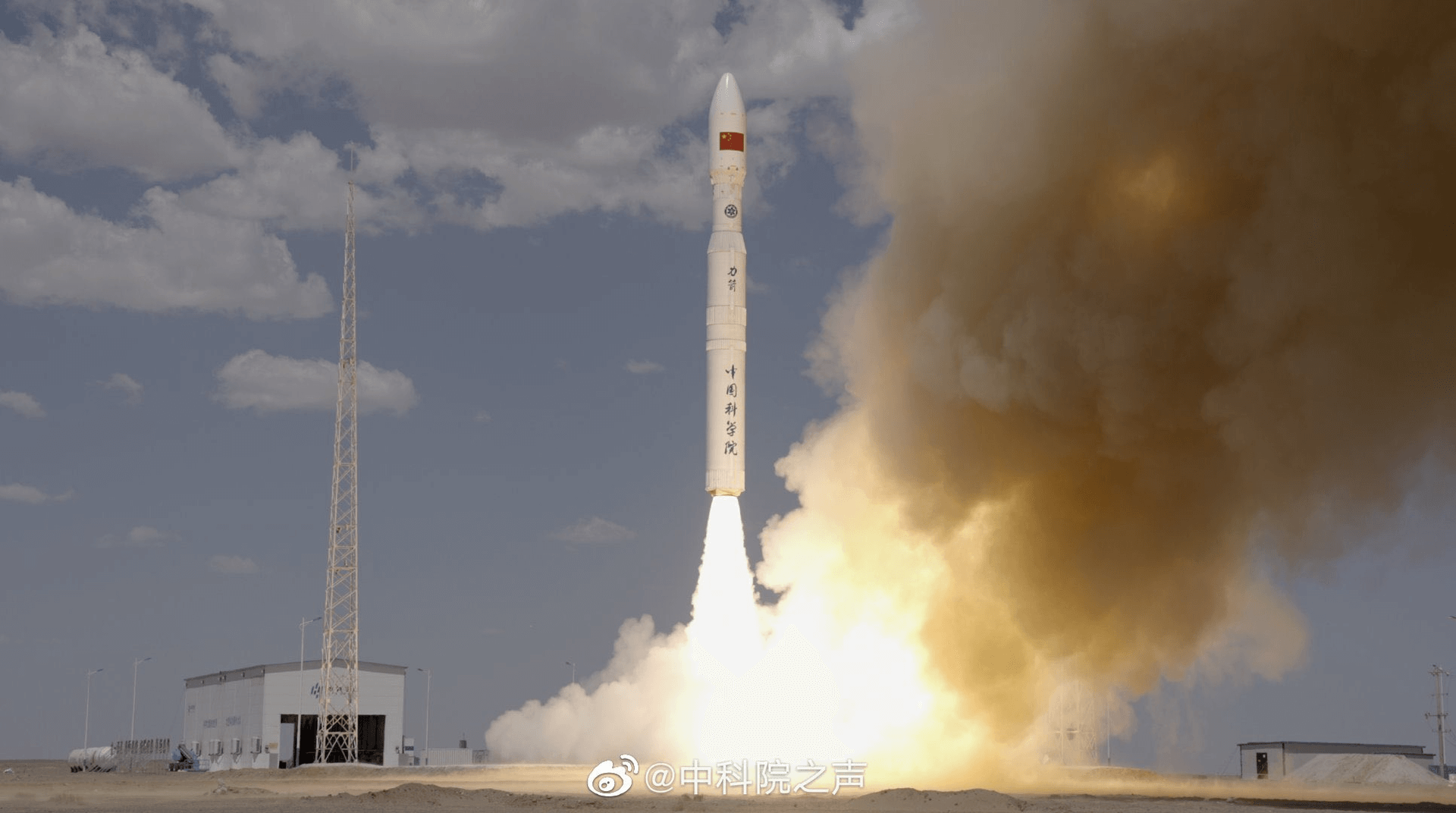
Launch facts
| Rocket | Kinetica 1 |
| Operator | CAS Space |
| Pad | Launch Area 130, Jiuquan Satellite Launch Center, People's Republic of China |
| T-0 (UTC) | 15 May 2026 at 04:33 |
| Status | Success |
What happened?
CAS Space successfully launched its Kinetica 1 solid-fueled rocket carrying 5 satellites from Launch Area 130 at the Jiuquan Satellite Launch Center in the People's Republic of China on 15 May 2026 at 04:33 UTC. The mission was declared a success, adding to the growing flight record of one of China's most active commercial launch vehicles.
Kinetica 1 (Lijian-1) is a four-stage solid-propellant orbital launch vehicle developed by CAS Space, a commercial spin-off of the Chinese Academy of Sciences. It is designed to deliver small and medium satellite payloads to low Earth and sun-synchronous orbits.
Did the launch succeed?
Yes. The launch was confirmed as a Success. Kinetica 1 lifted off on schedule and deployed its 5-satellite payload as planned, according to CAS Space. The mission continues the vehicle's strong operational streak since its 2022 debut.
What is Kinetica 1?
Kinetica 1 is China's most powerful solid-fueled commercial rocket to date. Key characteristics of the vehicle include:
- Stages: Four solid-propellant stages
- Payload capacity: Roughly 1,500 kg to a 500 km sun-synchronous orbit
- Height: About 30 meters
- Operator: CAS Space (Zhongke Aerospace), founded 2018
Solid-fueled rockets like Kinetica 1 offer rapid turnaround and simplified logistics compared with liquid-fueled boosters, making them well suited to responsive small-satellite deployment. The vehicle first flew in July 2022, delivering multiple satellites to orbit on its maiden mission.
What was the payload?
This mission carried 5 satellites to orbit. Rideshare flights of this type are typical for Kinetica 1, which frequently launches clusters of small commercial, scientific, and technology-demonstration satellites for Chinese and international customers on a single flight.
Multi-satellite rideshare missions maximize the use of available payload mass and reduce per-satellite launch costs, a model that has driven the rapid expansion of small-satellite constellations worldwide.
Where did it launch from?
The rocket flew from Launch Area 130 at the Jiuquan Satellite Launch Center, located in the Gobi Desert in northwestern China. Jiuquan is China's oldest and most-used launch complex, operational since 1958, and serves as the primary base for the country's human spaceflight program as well as a growing number of commercial launches.
| Detail | Value |
|---|---|
| Rocket | Kinetica 1 |
| Provider | CAS Space |
| Payload | 5 satellites |
| Launch site | Launch Area 130, Jiuquan, China |
| Date & time | 15 May 2026, 04:33 UTC |
| Result | Success |
How to watch and track the mission
While the launch itself is complete, you can follow the deployed satellites as they settle into orbit using Cosmik's live 3D satellite map. New objects from this mission will appear in tracking catalogs in the days following launch as ground stations refine their orbital data.
To keep up with upcoming Chinese commercial flights and every other mission worldwide, check the full rocket launch schedule and browse the latest launch news on Cosmik. If you want to learn the basics of following objects in orbit, our guide to tracking satellites explains how.
Why this launch matters
The success reinforces CAS Space's position as a leading player in China's fast-growing commercial launch sector. With reliable solid-fueled vehicles offering quick deployment, operators like CAS Space are helping expand global access to orbit for small-satellite operators.
Learn more about the vehicle and its operator via the Kinetica 1 Wikipedia page and the Jiuquan Satellite Launch Center. Launch data for this recap was sourced from The Space Devs Launch Library.
Follow it live on Cosmik
Track the newly deployed satellites in real time on the Cosmik 3D live map, explore the full launch calendar, and enable free launch alerts so you never miss the next liftoff.
Follow this mission live in 3D and get a free alert before liftoff.
Open the live map →Sources
Next launches
- Dragon CRS-2 SpX-35 — launch time & how to watch — 13 October 2026, 10:33 UTC
- Martian Moon eXplorer (MMX) — launch time & how to watch — 19 October 2026, 19:41 UTC
- Amazon Leo (LV-01) — launch time & how to watch — 29 October 2026
More launch coverage
- Vega-C Launches SMILE Mission for ESA — 19 May 2026 Recap — 19 May 2026, 03:52 UTC
- Long March 8 Launches SpaceSail Polar Group #9 — 17 May 2026 Recap — 17 May 2026, 14:42 UTC
- Falcon 9 Dragon CRS-2 SpX-34 Launch Success — 15 May 2026 — 15 May 2026, 22:05 UTC
- Zhuque-2E Block 2 Launch Recap: LandSpace Succeeds 14 May 2026 — 14 May 2026, 03:00 UTC
- Long March 6A Launches SpaceSail Polar Group #8 — 12 May 2026 Recap — 12 May 2026, 11:59 UTC
- Falcon 9 NROL-172 Launch Recap: Success on 12 May 2026 — 12 May 2026, 02:13 UTC