Long March 8 Launches SpaceSail Polar Group #9 — 17 May 2026 Recap
Published · Updated
Long March 8SpaceSailQianfanCASC✓ recap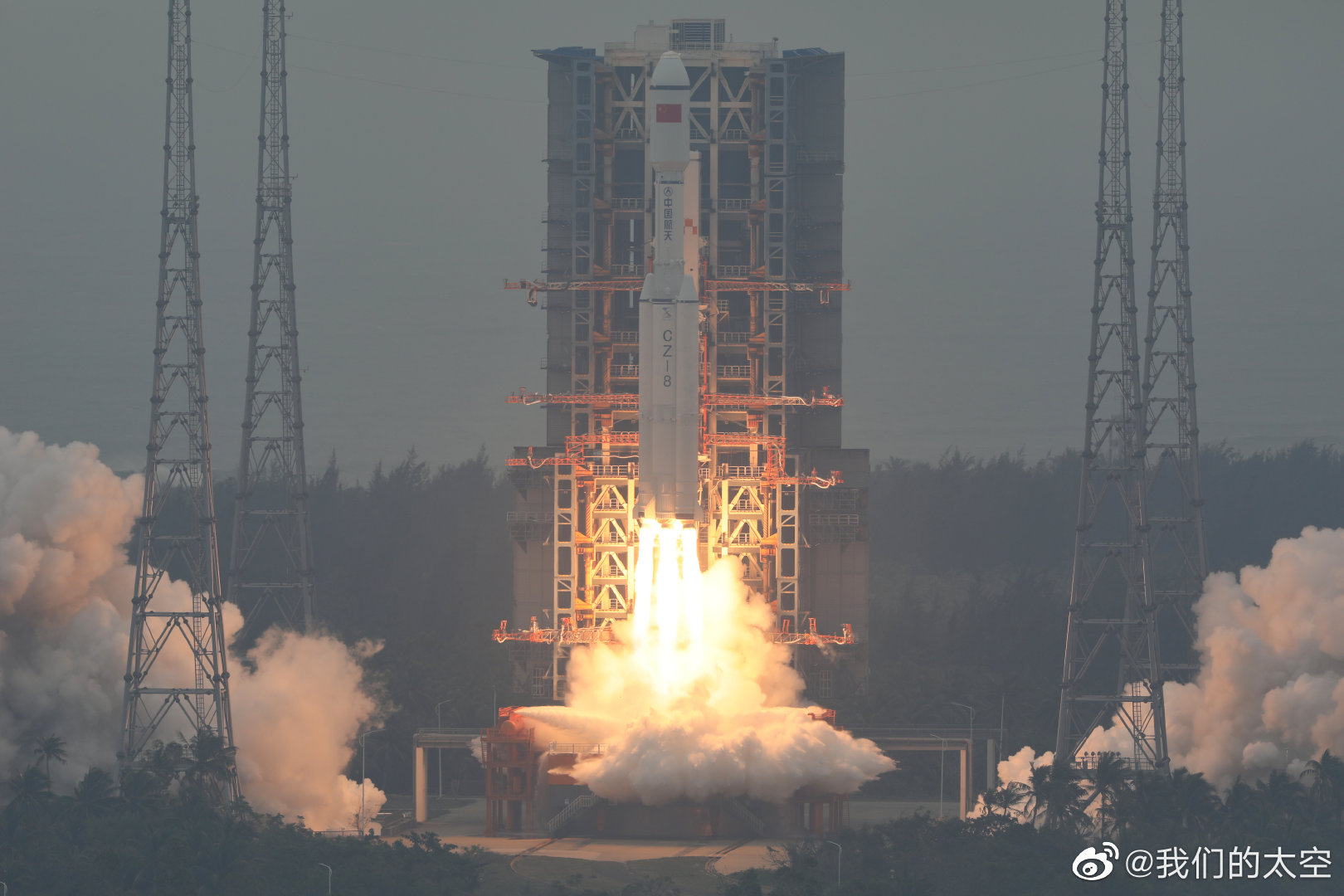
Launch facts
| Rocket | Long March 8 |
| Operator | China Aerospace Science and Technology Corporation |
| Pad | Commercial LC-1, Wenchang Space Launch Site, People's Republic of China |
| T-0 (UTC) | 17 May 2026 at 14:42 |
| Status | Success |
What happened?
A Long March 8 rocket successfully launched the SpaceSail Polar Group #9 batch of satellites on 17 May 2026 at 14:42 UTC from Commercial LC-1 at the Wenchang Space Launch Site in the People's Republic of China. The mission was confirmed a success by the operator, the China Aerospace Science and Technology Corporation (CASC).
The Long March 8 is a two-stage, kerolox-and-cryogenic medium-lift launch vehicle designed by CASC specifically for sun-synchronous and polar orbit missions, the exact regime targeted by this deployment.
What was the payload?
The payload was another group of satellites for the SpaceSail (Qianfan / "Thousand Sails") constellation, a Chinese low-Earth-orbit broadband internet network operated by Shanghai Spacecom Satellite Technology. The constellation is planned to eventually reach more than 14,000 satellites, making it China's flagship answer to Western megaconstellations.
SpaceSail satellites operate in polar and near-polar orbits to provide global coverage, and Wenchang's coastal position on Hainan Island supports the range of azimuths required for these deployments. Each Polar Group batch adds capacity toward the network's near-term milestone of over 600 operational spacecraft.
Why polar orbits matter
Polar orbits allow the constellation to service high-latitude regions that geostationary satellites cannot reach effectively. By spreading satellites across multiple orbital planes, SpaceSail builds the dense mesh needed for low-latency broadband, mirroring the architecture used by other LEO internet networks.
When and where did it launch?
| Detail | Value |
|---|---|
| Mission | SpaceSail Polar Group #9 |
| Rocket | Long March 8 |
| Operator | China Aerospace Science and Technology Corporation |
| Launch time | 17 May 2026, 14:42 UTC |
| Pad | Commercial LC-1, Wenchang Space Launch Site |
| Result | Success |
Commercial LC-1 is a dedicated commercial launch complex at Wenchang, built to increase China's cadence for constellation deployment and commercial missions. The Long March 8 has become one of the primary workhorses flying from this pad.
Did the launch succeed?
Yes. CASC confirmed the mission reached its target orbit and the satellites were deployed successfully. This continues the Long March 8's track record as a reliable medium-lift vehicle for China's expanding LEO broadband effort.
About the Long March 8
The Long March 8 first flew in December 2020. It combines a core stage derived from the Long March 7 with a cryogenic upper stage, and can carry roughly 5,000 kg to sun-synchronous orbit at around 700 km altitude. Variants with and without strap-on boosters give CASC flexibility across payload classes. The rocket is a central part of China's plan to boost launch cadence for its two major megaconstellations, Guowang and SpaceSail/Qianfan.
How to watch and track the satellites
Chinese state launches are typically confirmed after liftoff rather than carried on a full public live webcast, so post-launch orbital tracking is the best way to follow the deployed spacecraft. Once the SpaceSail satellites are cataloged, you can watch them circle Earth in real time.
- Follow the deployed satellites on the Cosmik live 3D satellite map.
- Check upcoming Chinese missions on the rocket launch schedule.
- Read more coverage on the latest launch news page.
- Learn the basics with our guide to tracking satellites.
Why this launch matters
SpaceSail is one of the largest satellite internet programs outside the United States. Each successful batch, like Polar Group #9, tightens the timeline toward operational broadband service and reinforces the Long March 8's role as a dependable deployment vehicle. As launch cadence rises, tracking these constellations in real time becomes increasingly valuable for understanding how crowded low-Earth orbit is becoming.
Background on the vehicle, operator, and spaceport is available via Long March 8, CASC, and Wenchang Space Launch Site. Launch data is sourced from The Space Devs Launch Library.
Track it live on Cosmik
Want to see where the SpaceSail satellites are right now? Open the Cosmik 3D map to follow them live, and enable free launch alerts so you never miss the next Long March 8 mission or constellation deployment.
Follow this mission live in 3D and get a free alert before liftoff.
Open the live map →Sources
Next launches
- Dragon CRS-2 SpX-35 — launch time & how to watch — 13 October 2026, 10:33 UTC
- Martian Moon eXplorer (MMX) — launch time & how to watch — 19 October 2026, 19:41 UTC
- Amazon Leo (LV-01) — launch time & how to watch — 29 October 2026
More launch coverage
- Falcon 9 Starlink Group 10-31: Launch Success (21 May 2026) — 21 May 2026, 10:04 UTC
- Starlink Group 17-42 Launch Recap: Falcon 9 Succeeds May 20, 2026 — 20 May 2026, 02:46 UTC
- Vega-C Launches SMILE Mission for ESA — 19 May 2026 Recap — 19 May 2026, 03:52 UTC
- Falcon 9 Dragon CRS-2 SpX-34 Launch Success — 15 May 2026 — 15 May 2026, 22:05 UTC
- Kinetica 1 Launches 5 Satellites — 15 May 2026 Recap — 15 May 2026, 04:33 UTC
- Zhuque-2E Block 2 Launch Recap: LandSpace Succeeds 14 May 2026 — 14 May 2026, 03:00 UTC