Sentinel-3C & FLEX on Vega-C — launch time & how to watch
Published · Updated
Vega-CSentinel-3CFLEXAviopreview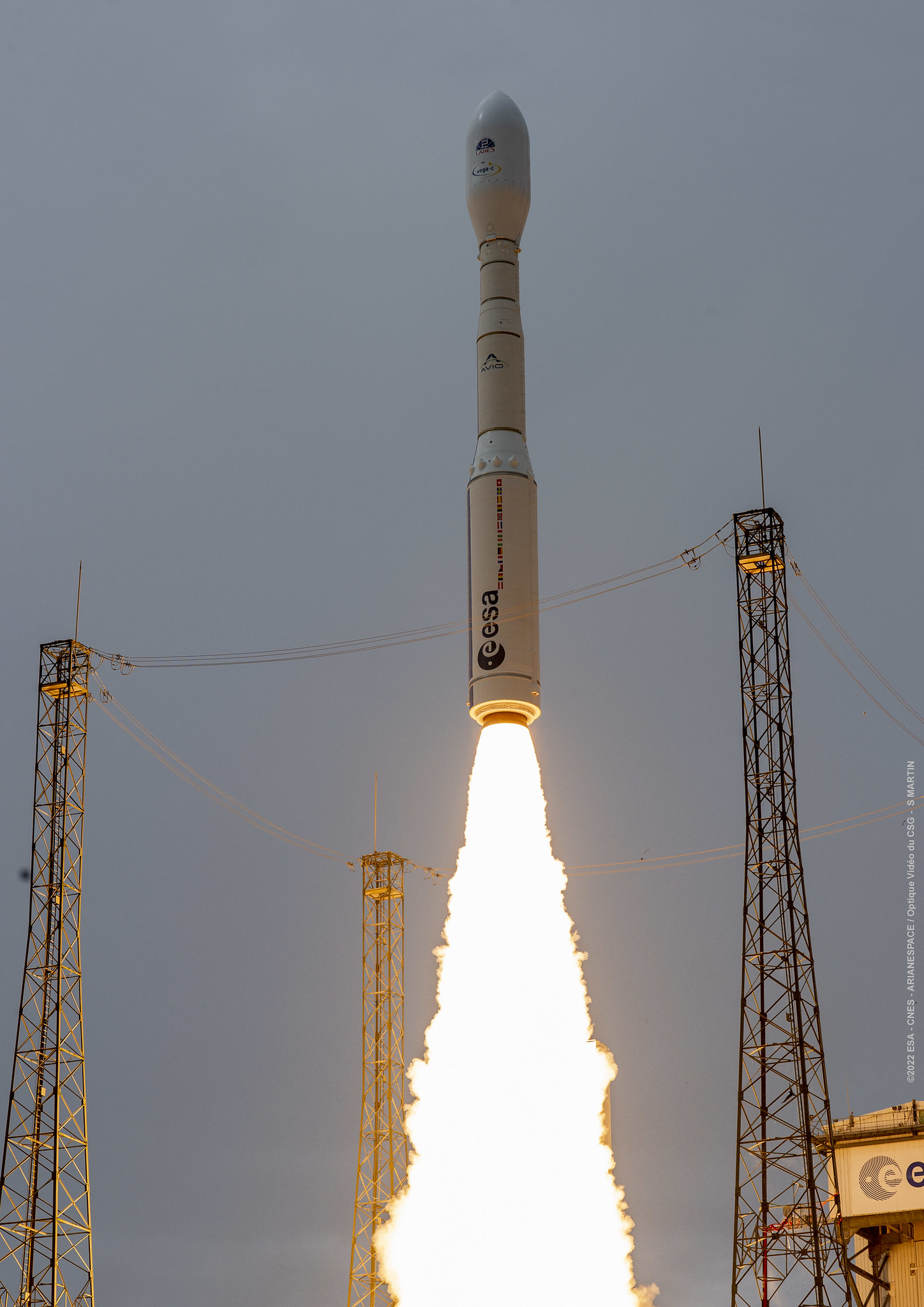
Launch facts
| Rocket | Vega-C |
| Operator | Avio S.p.A |
| Pad | Ariane Launch Area 1 (ELV), Guiana Space Centre, French Guiana |
| T-0 (UTC) | 15 September 2026 at 01:21 |
| Status | Success |
A Vega-C rocket is scheduled to launch the Sentinel-3C and FLEX Earth-observation satellites on 11 September 2026 at 00:00 UTC from the Ariane Launch Area 1 (ELV) at the Guiana Space Centre in French Guiana. Vega-C is a four-stage European small-lift launch vehicle operated by Avio S.p.A, capable of delivering roughly 2,300 kg to a polar orbit.
What is the mission?
Vega-C is the upgraded successor to the original Vega rocket, standing about 35 metres tall with a first stage (P120C) that also serves as a strap-on booster for the larger Ariane 6. This flight carries two dedicated Earth-science payloads for Europe's Copernicus and climate-monitoring programmes.
What is the payload?
Sentinel-3C is part of the European Union's Copernicus Sentinel-3 series, which measures sea-surface temperature, ocean colour, and land-surface conditions to support environmental and marine forecasting. It continues the observational record established by Sentinel-3A and Sentinel-3B.
FLEX (FLuorescence EXplorer) is the European Space Agency's eighth Earth Explorer mission. According to ESA's mission overview, FLEX will map vegetation fluorescence from orbit to gauge global plant health and photosynthetic activity, providing a first-of-its-kind global picture of how efficiently plants convert sunlight into growth.
When is the launch?
The launch is currently targeted for 11 September 2026 at 00:00 UTC. The status is listed as TBD, meaning the date and time may shift as the launch campaign progresses. Both satellites will be delivered to a Sun-synchronous polar orbit, the standard orbit for Earth-observation platforms because it lets a spacecraft pass over the same point on Earth at a consistent local solar time.
| Detail | Information |
|---|---|
| Rocket | Vega-C |
| Provider | Avio S.p.A |
| Payloads | Sentinel-3C & FLEX |
| Launch site | Ariane Launch Area 1 (ELV), Guiana Space Centre |
| Target date (UTC) | 11 September 2026, 00:00 |
| Target orbit | Sun-synchronous polar orbit |
Where is it launching from?
The mission lifts off from the Guiana Space Centre near Kourou, French Guiana — Europe's primary spaceport, located just north of the equator. The site's near-equatorial position (about 5 degrees north latitude) provides an energy advantage for many launch profiles, and the Ariane Launch Area 1 pad is the dedicated facility for Vega and Vega-C flights.
How to watch live
Avio and ESA typically provide a live webcast beginning shortly before liftoff. You can also follow the mission in an interactive 3D view on Cosmik:
- Track the countdown on our rocket launch schedule.
- Watch the rocket and its orbit render live on the 3D solar system and satellite map.
- Read the latest updates in our launch news feed.
Once Sentinel-3C and FLEX separate and begin orbit-raising and commissioning, you can locate them on the map alongside thousands of other tracked spacecraft. If you're new to orbital tracking, our guide to tracking satellites explains how to find any object in real time.
Why this launch matters
These two payloads strengthen the world's most comprehensive open Earth-observation network. Sentinel-3C safeguards the continuity of Copernicus ocean and land data, while FLEX opens an entirely new measurement — global vegetation fluorescence — that scientists will use to refine carbon-cycle and food-security models. Both spacecraft are designed for multi-year operations in polar orbit.
Background: the Vega-C programme
Vega-C debuted in 2022 as Europe's answer to the growing demand for dedicated small-satellite launches. Its more powerful P120C first stage and enlarged fairing increased payload capacity by roughly 60% over the original Vega. The vehicle is a cornerstone of Europe's independent access to space for institutional and commercial Earth-observation customers.
Launch data for this mission is sourced from The Space Devs Launch Library. Background on the vehicle and payloads draws on public references including Vega-C, the Guiana Space Centre, and FLEX.
Follow the Vega-C launch live on Cosmik. Watch the countdown, see Sentinel-3C and FLEX enter orbit in our 3D map, and enable free launch alerts so you never miss liftoff — start at our launch tracker.
Follow this mission live in 3D and get a free alert before liftoff.
Open the live map →Sources
Next launches
- Dragon CRS-2 SpX-35 — launch time & how to watch — 13 October 2026, 10:33 UTC
- Martian Moon eXplorer (MMX) — launch time & how to watch — 19 October 2026, 19:41 UTC
- Amazon Leo (LV-01) — launch time & how to watch — 29 October 2026
More launch coverage
- Owl By The Dozen (StriX Launch 12) — launch time & how to — 19 September 2026, 03:22 UTC
- Glonass-K1 No. 20 (?) — launch time & how to watch — 17 September 2026, 16:50 UTC
- Progress MS-35 (96P) — launch time & how to watch — 16 September 2026, 13:33 UTC
- O3b mPower 11-13 — launch time & how to watch — 13 September 2026, 18:49 UTC
- Happily Ever Faster (BlackSky Gen-3 5) — launch time & how — 11 September 2026, 03:28 UTC
- SpaceX Falcon 9 USSF-xxx ("R-2") Launch: Sept 10, 2026 — 10 September 2026, 15:42 UTC