Long March 12B Debut Succeeds: SpaceSail Polar Group #10 Launch Recap (1 June 2026)
Published · Updated
Long March 12BSpaceSailQianfanCASC✓ recap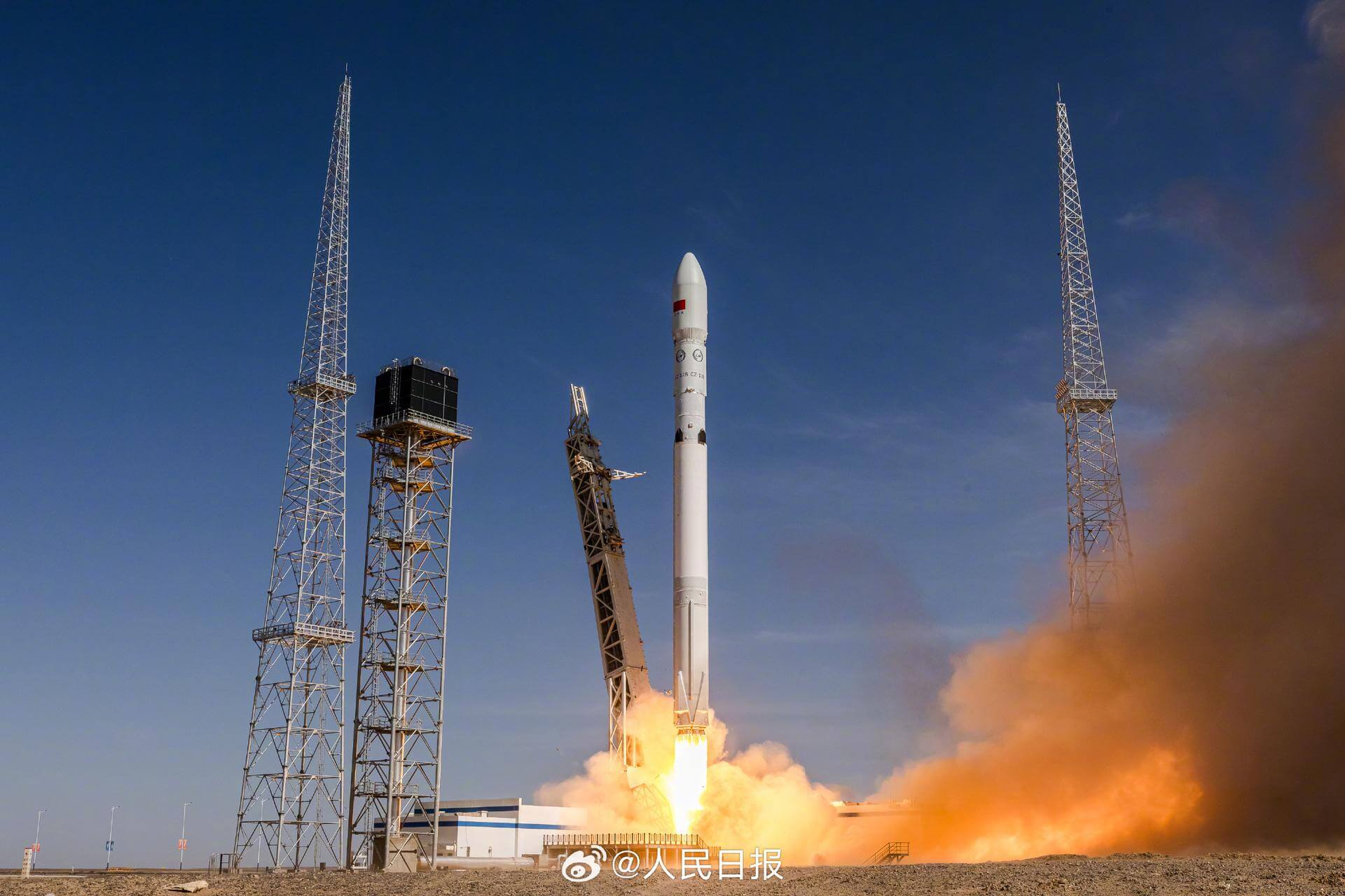
Launch facts
| Rocket | Long March 12B |
| Operator | China Aerospace Science and Technology Corporation |
| Pad | Long March 12 series Pad, Jiuquan Satellite Launch Center, People's Republic of China |
| T-0 (UTC) | 1 June 2026 at 08:40 |
| Status | Success |
What happened?
China's Long March 12B rocket completed a successful debut demo flight on 1 June 2026 at 08:40 UTC, lifting off from the Long March 12 series pad at the Jiuquan Satellite Launch Center and deploying the SpaceSail Polar Group #10 payload. The Long March 12B is a new two-stage kerosene/liquid-oxygen medium-lift launch vehicle developed by the China Aerospace Science and Technology Corporation (CASC), and this mission marked its first flight to orbit.
The launch was declared a Success by the operator, adding another orbital variant to China's expanding Long March family, which has flown hundreds of missions across dozens of configurations since 1970.
When did the launch happen?
Liftoff occurred at 08:40 UTC (16:40 China Standard Time) on 1 June 2026 from Jiuquan Satellite Launch Center in the Gobi Desert, Inner Mongolia. Jiuquan is China's oldest and busiest launch complex, having supported the country's first satellite and its first crewed spaceflight.
| Detail | Value |
|---|---|
| Rocket | Long March 12B |
| Mission | Demo Flight (SpaceSail Polar Group #10) |
| Provider | CASC |
| Launch site | Jiuquan Satellite Launch Center, China |
| Date/Time | 1 June 2026, 08:40 UTC |
| Result | Success |
What is the Long March 12B?
The Long March 12B is the latest addition to the Long March 12 series, a family of modern liquid-fuelled boosters designed to increase China's cadence of medium-lift launches. Like other members of the series, it burns RP-1 kerosene and liquid oxygen, propellants that offer higher performance and cleaner operations than the hydrazine-based fuels used by many older Long March variants. A successful demo flight is a critical milestone, qualifying the vehicle for operational payload deliveries.
What was the payload?
The rocket carried a batch belonging to SpaceSail Polar Group #10, part of China's SpaceSail (Qianfan / "Thousand Sails") broadband megaconstellation. SpaceSail is one of China's flagship low-Earth-orbit internet networks, with plans that call for more than 14,000 satellites across multiple phases to deliver global connectivity. Polar-group launches place spacecraft into high-inclination orbits, filling out the constellation's coverage over higher latitudes.
The SpaceSail network is frequently compared to Western LEO constellations and represents a core element of China's strategy to establish a domestic and international satellite-broadband service. Each launch incrementally builds the operational fleet toward the full constellation target.
Why polar orbits matter
Satellites in polar and near-polar orbits pass over the entire surface of the Earth as the planet rotates beneath them, making them ideal for constellations that need worldwide, high-latitude coverage. Grouping deployments by orbital plane, as the "Polar Group" naming suggests, is how large constellations efficiently populate their shells.
Did the launch succeed?
Yes. The operator confirmed the mission as a Success, meaning the Long March 12B reached orbit and released its SpaceSail payload on its inaugural flight. First flights carry elevated risk, so a clean demo is a strong result for CASC and the Long March 12 program.
How to track the satellites
You can follow the newly deployed SpaceSail spacecraft and thousands of other objects in orbit on Cosmik's live 3D satellite map. To see what China and other operators are launching next, check the full rocket launch schedule and the latest launch news. If you're new to orbital tracking, our guide on how to track satellites explains how to spot passes overhead.
Background and sources
Launch timing and status data are drawn from The Space Devs Launch Library. For further background, see the Long March rocket family, China Aerospace Science and Technology Corporation, and the Jiuquan Satellite Launch Center.
Follow the mission live on Cosmik
Watch the SpaceSail Polar Group #10 satellites orbit Earth in real time on Cosmik's 3D solar-system and satellite map, and enable free launch alerts so you never miss the next Long March liftoff or constellation deployment.
Follow this mission live in 3D and get a free alert before liftoff.
Open the live map →Sources
Next launches
- Dragon CRS-2 SpX-35 — launch time & how to watch — 13 October 2026, 10:33 UTC
- Martian Moon eXplorer (MMX) — launch time & how to watch — 19 October 2026, 19:41 UTC
- Amazon Leo (LV-01) — launch time & how to watch — 29 October 2026
More launch coverage
- Long March 6A Launches SpaceSail Polar #11 — 4 June 2026 — 4 June 2026, 11:39 UTC
- Starlink Group 10-43 Launch Recap: Falcon 9 Success June 4, 2026 — 4 June 2026, 10:26 UTC
- Falcon 9 Starlink Group 17-47 Recap: Success on 3 June 2026 — 3 June 2026, 15:40 UTC
- Long March 2D Launches 4 SatNet Satellites — 30 May 2026 — 30 May 2026, 18:07 UTC
- Falcon 9 Starlink Group 17-41 Launch Recap — 30 May 2026 — 30 May 2026, 15:25 UTC
- Atlas V 551 Launches Amazon Leo (LA-07): 29 May 2026 Recap — 29 May 2026, 23:53 UTC