Long March 2D Launches 4 SatNet Satellites — 30 May 2026
Published · Updated
Long March 2DSatNetGuowangCASC✓ recap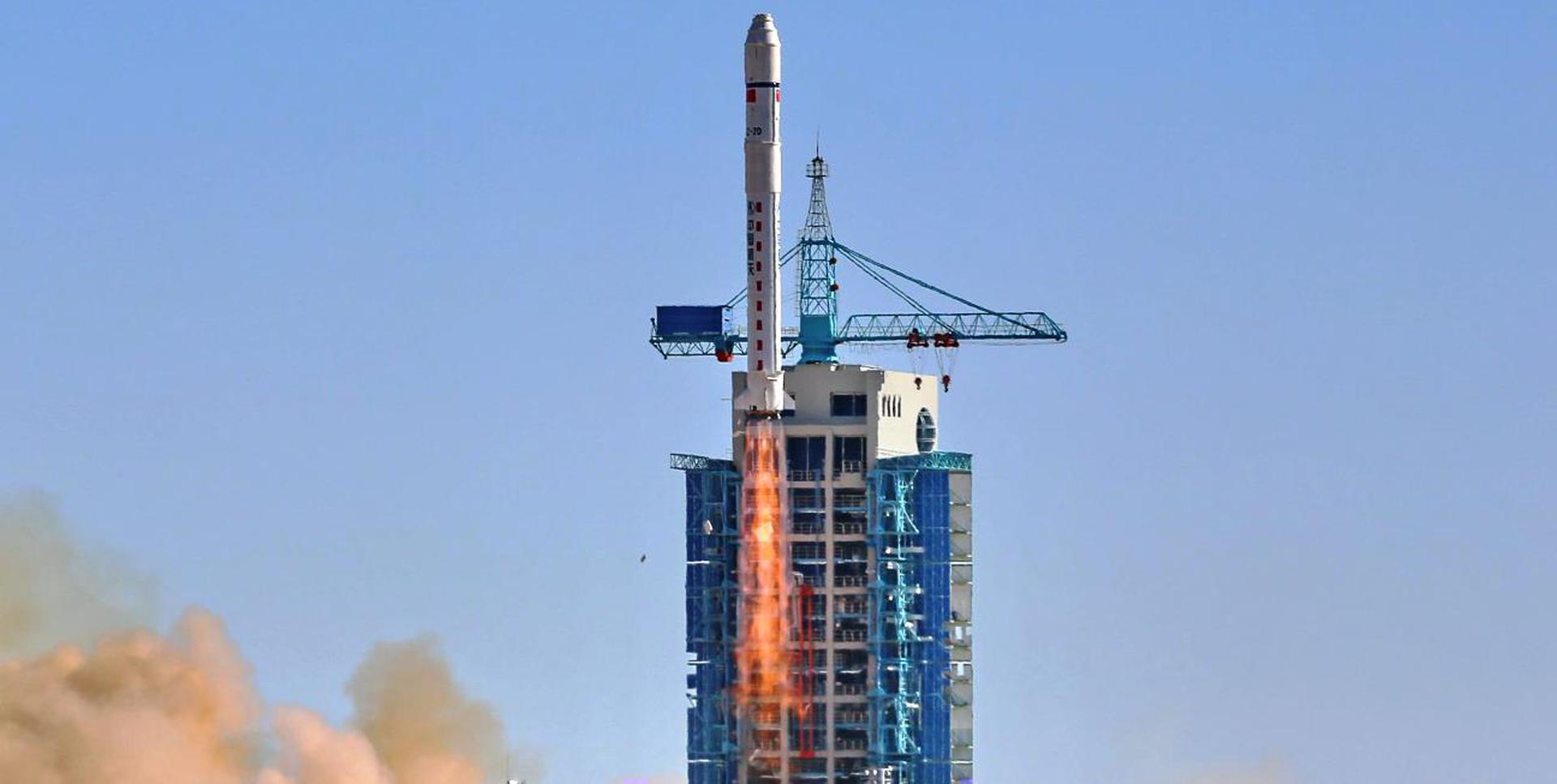
Launch facts
| Rocket | Long March 2D |
| Operator | China Aerospace Science and Technology Corporation |
| Pad | Launch Complex 3 (LC-3/LA-1), Xichang Satellite Launch Center, People's Republic of China |
| T-0 (UTC) | 30 May 2026 at 18:07 |
| Status | Success |
What happened?
A Chinese Long March 2D rocket successfully launched four SatNet test satellites at 18:07 UTC on 30 May 2026 from Launch Complex 3 (LC-3/LA-1) at the Xichang Satellite Launch Center in the People's Republic of China. The mission, operated by the China Aerospace Science and Technology Corporation (CASC), reached orbit and was declared a success.
The Long March 2D is a two-stage, hypergolic-fueled orbital launch vehicle that has flown since 1992, primarily lofting satellites into low Earth orbit and Sun-synchronous orbit from China's inland spaceports.
Did the launch succeed?
Yes. The launch was confirmed successful, with all four SatNet test satellites delivered to orbit. Xichang, located in Sichuan province, is one of China's four primary launch centers and has historically specialized in geostationary and communications missions, though the Long March 2D is a workhorse for lower-orbit deployments.
Launch summary
| Detail | Value |
|---|---|
| Mission | 4 x SatNet test satellites |
| Rocket | Long March 2D |
| Provider | China Aerospace Science and Technology Corporation (CASC) |
| Launch site | LC-3 (LA-1), Xichang Satellite Launch Center |
| Launch time | 30 May 2026, 18:07 UTC |
| Result | Success |
What is the payload?
The payload consisted of four SatNet test satellites. SatNet refers to China's national satellite internet effort managed under China SatNet (China Satellite Network Group), which is building the Guowang megaconstellation — a planned network of roughly 13,000 satellites intended to deliver broadband connectivity from low Earth orbit. Test satellites like these validate hardware, communications payloads, and orbital operations ahead of full-scale constellation deployment.
China's satellite internet program is one of two major domestic broadband constellations, alongside the commercial Qianfan (Thousand Sails) network, positioning it as a direct competitor to Western systems in the global LEO broadband market.
About the Long March 2D
The Long March 2D is a reliable medium-lift rocket that stands about 41 meters tall and can carry payloads of up to approximately 3,500 kg to low Earth orbit. Powered by storable hypergolic propellants — nitrogen tetroxide and unsymmetrical dimethylhydrazine — it does not require the complex cryogenic handling of newer methane or hydrogen vehicles, contributing to its high launch cadence. The vehicle has completed well over 100 flights across its operational history.
Why launch from Xichang?
Xichang Satellite Launch Center sits deep in southwestern China and has decades of experience supporting a wide range of orbital missions. As CASC ramps up SatNet deployments, launches are being distributed across multiple pads and centers to sustain the pace needed to build a constellation of tens of thousands of satellites.
How to track the satellites
Once catalogued, the four SatNet test satellites can be followed in real time on Cosmik's live 3D solar system and satellite map. You can watch their orbital paths, altitude, and ground track update continuously. To understand how orbital tracking works, see our guide on how to track satellites.
For upcoming Chinese and global missions, check the full rocket launch schedule and stay current with the latest launch news.
Background and sources
Launch timing and status data are drawn from The Space Devs Launch Library. Additional context on the vehicle and program comes from established public knowledge.
Follow it live on Cosmik
Track the newly launched SatNet satellites and thousands of others in real time on Cosmik's free 3D map, and enable free launch alerts so you never miss the next mission to orbit.
Follow this mission live in 3D and get a free alert before liftoff.
Open the live map →Sources
Next launches
- Dragon CRS-2 SpX-35 — launch time & how to watch — 13 October 2026, 10:33 UTC
- Martian Moon eXplorer (MMX) — launch time & how to watch — 19 October 2026, 19:41 UTC
- Amazon Leo (LV-01) — launch time & how to watch — 29 October 2026
More launch coverage
- Starlink Group 10-43 Launch Recap: Falcon 9 Success June 4, 2026 — 4 June 2026, 10:26 UTC
- Falcon 9 Starlink Group 17-47 Recap: Success on 3 June 2026 — 3 June 2026, 15:40 UTC
- Long March 12B Debut Succeeds: SpaceSail Polar Group #10 Launch Recap (1 June 2026) — 1 June 2026, 08:40 UTC
- Falcon 9 Starlink Group 17-41 Launch Recap — 30 May 2026 — 30 May 2026, 15:25 UTC
- Atlas V 551 Launches Amazon Leo (LA-07): 29 May 2026 Recap — 29 May 2026, 23:53 UTC
- Falcon 9 Starlink Group 10-53 Launch Recap — 29 May 2026 — 29 May 2026, 12:57 UTC