Rocket Lab HASTE 'Bubbles' Launch Recap — 22 April 2026
Published · Updated
Rocket LabHASTEBubblesWallops Flight Facility✓ recap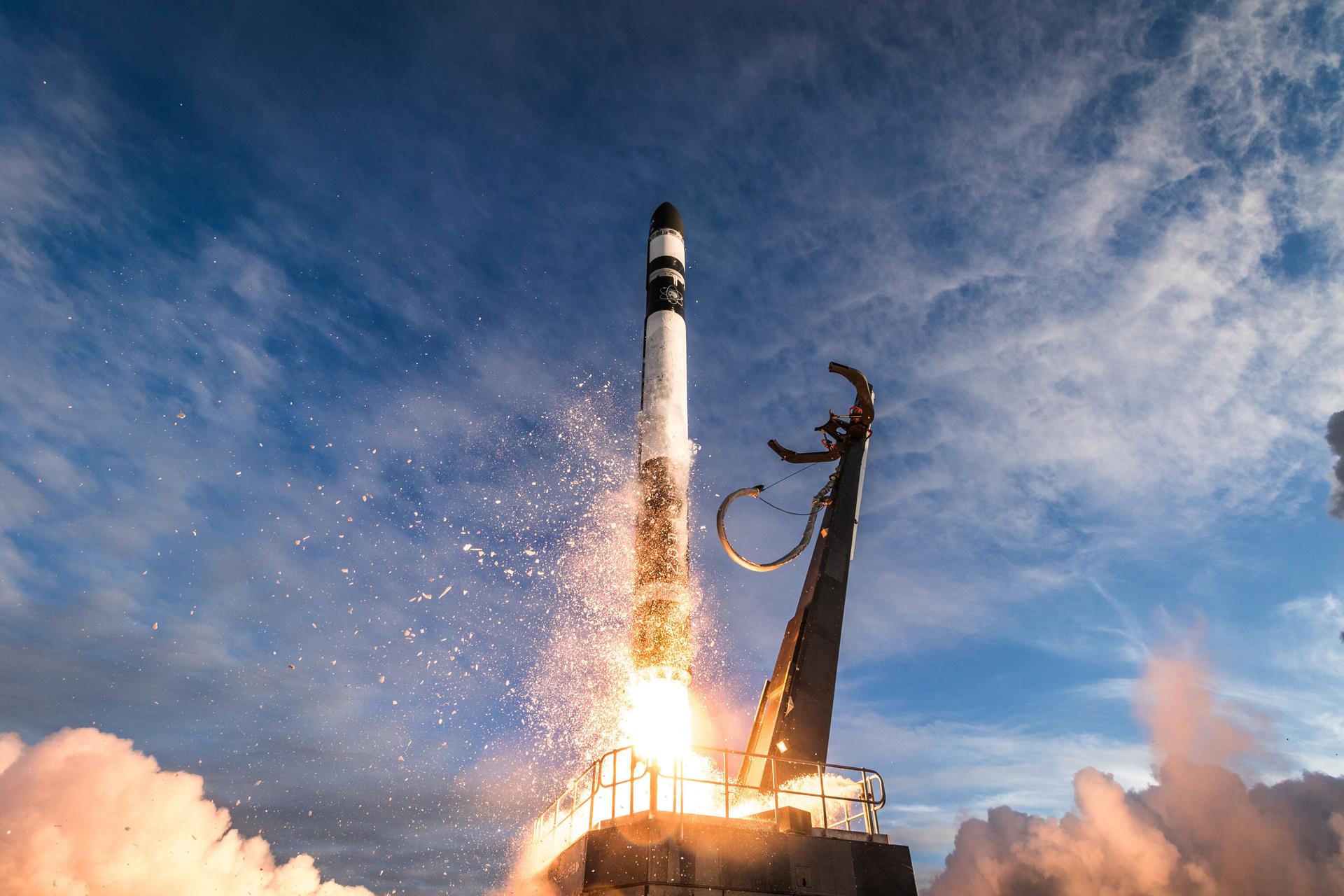
Launch facts
| Rocket | HASTE |
| Operator | Rocket Lab |
| Pad | Rocket Lab Launch Complex 2 (Launch Area 0 C), Wallops Flight Facility, Virginia, USA |
| T-0 (UTC) | 22 April 2026 at 01:36 |
| Status | Success |
What happened?
Rocket Lab successfully launched its HASTE suborbital rocket on the Bubbles mission on 22 April 2026 at 01:36 UTC from Launch Complex 2 (Launch Area 0 C) at NASA's Wallops Flight Facility in Virginia. The flight was declared a success, adding another win to Rocket Lab's growing suborbital test-flight cadence.
HASTE — the Hypersonic Accelerator Suborbital Test Electron — is a suborbital variant of Rocket Lab's Electron rocket, purpose-built to deliver hypersonic and suborbital test payloads on high-energy trajectories. It uses the same two-stage architecture as the orbital Electron but a modified upper stage optimized for suborbital delivery.
When did the launch happen?
The launch occurred at 01:36 UTC on 22 April 2026 (the evening of 21 April local U.S. Eastern time). Rocket Lab operates its U.S. launch site, Launch Complex 2, at the Mid-Atlantic Regional Spaceport co-located with Wallops Flight Facility on Virginia's Eastern Shore.
What is HASTE?
HASTE is derived from the flight-proven Electron, which stands roughly 18 meters tall and is powered by nine 3D-printed, electric-pump-fed Rutherford engines on its first stage. Where the orbital Electron carries small satellites to low Earth orbit, HASTE trades that payload capacity for the ability to fly hypersonic test articles along suborbital trajectories.
According to Rocket Lab, HASTE can carry payloads of up to roughly 700 kg and reach speeds relevant to hypersonic research — far exceeding Mach 5. This makes it a cost-effective testbed for the U.S. government and commercial customers developing hypersonic vehicles, reentry systems and related technologies.
Why launch from Wallops?
Launch Complex 2 is Rocket Lab's dedicated U.S. pad and the primary base for HASTE operations. Its location on the Atlantic coast supports downrange suborbital trajectories out over open ocean, ideal for hypersonic test profiles that would be impractical from other sites. Wallops has hosted Rocket Lab Electron and HASTE flights since the company's U.S. debut in early 2023.
What was the payload?
The mission was designated Bubbles. HASTE flights typically carry hypersonic and suborbital test payloads for defense and research customers, and specific payload details for such missions are frequently withheld. What the flight data confirms is that the mission was completed successfully, delivering its payload on the planned suborbital trajectory.
Did the launch succeed?
Yes. The Bubbles mission is logged as a Success. Successful HASTE flights continue to build Rocket Lab's track record as a provider of rapid, repeatable suborbital access, complementing its orbital Electron and the in-development Neutron rocket.
Mission at a glance
| Detail | Value |
|---|---|
| Mission | Bubbles |
| Rocket | HASTE (suborbital Electron) |
| Provider | Rocket Lab |
| Launch site | LC-2, Wallops Flight Facility, Virginia |
| Date/time | 22 April 2026, 01:36 UTC |
| Outcome | Success |
How does this fit Rocket Lab's cadence?
Rocket Lab has become one of the most active small-launch providers in the world, flying both orbital Electron missions from New Zealand and Virginia and HASTE suborbital flights from Wallops. Each successful HASTE mission strengthens the case for suborbital hypersonic testing as a distinct, high-demand market segment. You can browse the company's upcoming and past missions on our Rocket Lab launch hub and see all activity from the site on our U.S. East Coast launch pages.
How to follow future launches
Cosmik tracks every upcoming rocket launch and lets you watch objects in orbit in real time. Explore the full rocket launch schedule, catch the latest launch news, or open the live 3D satellite map to see thousands of tracked objects circling Earth right now. For more on tracking, see our guide on how to track satellites.
Launch data is sourced from The Space Devs Launch Library. Background on the vehicle and operator is available via Rocket Lab, the Electron rocket, and Wallops Flight Facility on Wikipedia.
Track it live on Cosmik
Follow every Rocket Lab mission and watch the satellites already in orbit on Cosmik's free live 3D map. Enable free launch alerts so you never miss the next HASTE or Electron liftoff — see what's launching next.
Follow this mission live in 3D and get a free alert before liftoff.
Open the live map →Sources
Next launches
- Dragon CRS-2 SpX-35 — launch time & how to watch — 13 October 2026, 10:33 UTC
- Martian Moon eXplorer (MMX) — launch time & how to watch — 19 October 2026, 19:41 UTC
- Amazon Leo (LV-01) — launch time & how to watch — 29 October 2026
More launch coverage
- Angara 1.2 Launches Kosmos Payload from Plesetsk — 23 April 2026 — 23 April 2026, 08:29 UTC
- Starlink Group 17-14: Falcon 9 Launch Recap (23 April 2026) — 23 April 2026, 03:23 UTC
- Electron 'Kakushin Rising' Launch Recap — 23 April 2026 Success — 23 April 2026, 03:09 UTC
- Falcon 9 Launches GPS III SV10 — Recap of 21 April 2026 Flight — 21 April 2026, 06:53 UTC
- Falcon 9 Starlink Group 17-22: Launch Success on 19 April 2026 — 19 April 2026, 16:03 UTC
- New Glenn Fails Carrying BlueBird Block 2 — 19 April 2026 Recap — 19 April 2026, 11:25 UTC