Angara 1.2 Launches Kosmos Payload from Plesetsk — 23 April 2026
Published · Updated
Angara 1.2KosmosRussian Space ForcesPlesetsk Cosmodrome✓ recap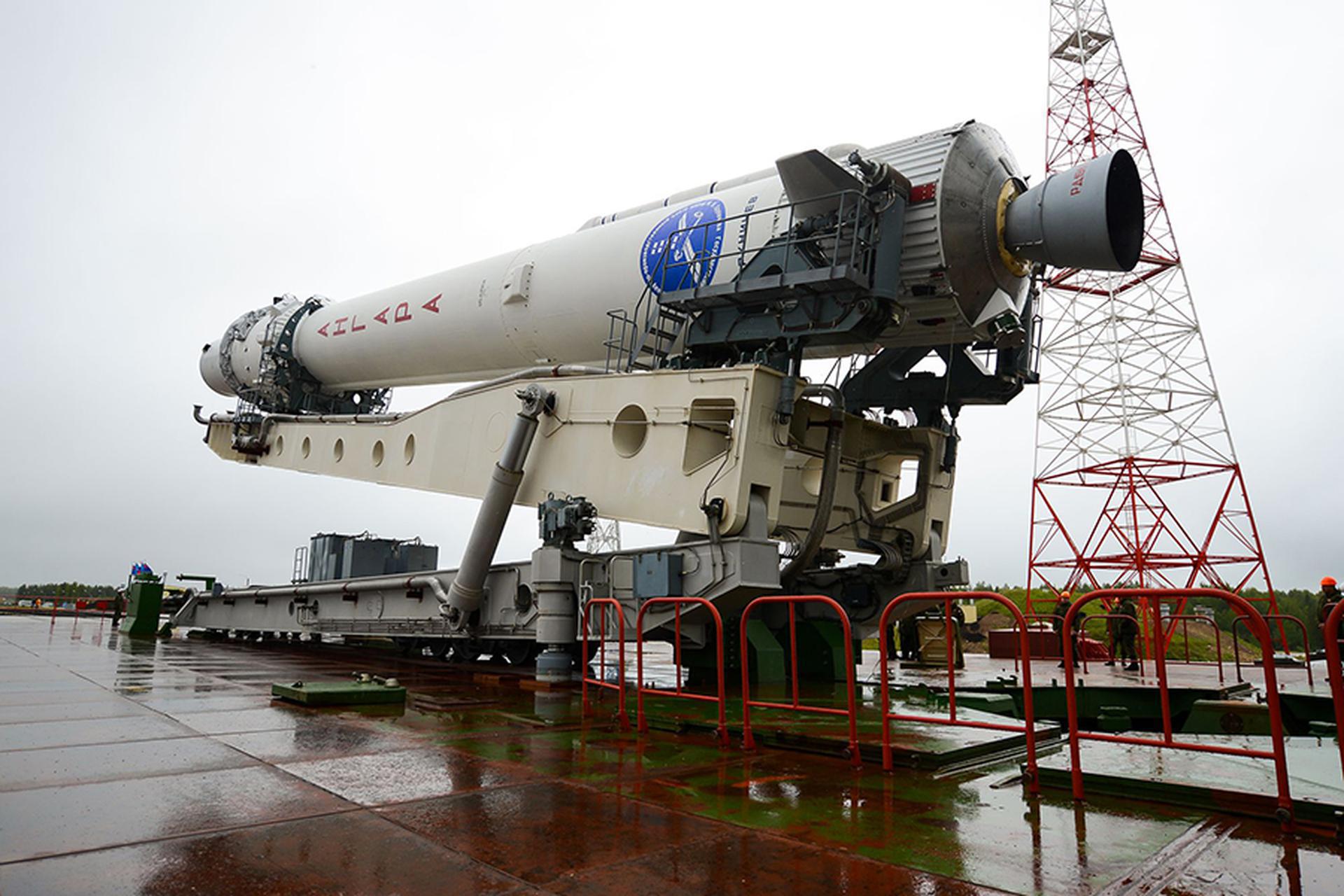
Launch facts
| Rocket | Angara 1.2 |
| Operator | Russian Space Forces |
| Pad | 35/1, Plesetsk Cosmodrome, Russian Federation |
| T-0 (UTC) | 23 April 2026 at 08:29 |
| Status | Success |
What happened?
Russia's Angara 1.2 rocket successfully launched a classified Kosmos military payload from Site 35/1 at Plesetsk Cosmodrome on 23 April 2026 at 08:29 UTC. The mission, operated by the Russian Space Forces, reached orbit and was declared a success.
The Angara 1.2 is the smallest member of Russia's Angara rocket family, a two-stage light-lift launch vehicle designed to replace older Soviet-era rockets such as the Rokot and Kosmos-3M. It burns a clean kerosene and liquid-oxygen propellant combination across both stages.
When did the launch happen?
Liftoff occurred at 08:29 UTC on 23 April 2026 from the dedicated Angara pad at Plesetsk Cosmodrome in northwestern Russia. According to the Russian Ministry of Defence's naming convention, payloads of this type receive a sequential Kosmos designation once safely in orbit, a practice that has been used since 1962 and covers well over 2,500 satellites.
What is the Angara 1.2?
The Angara 1.2 stands roughly 42 meters tall and is capable of delivering approximately 3,800 kg to a low Earth orbit. It uses a single URM-1 universal rocket module powered by the RD-191 engine as its first stage, paired with a URM-2 upper stage driven by the RD-0124A engine.
The Angara family is the backbone of Russia's next-generation launch capability, with variants scaling from the light 1.2 up to the heavy-lift Angara A5, which can lift more than 24,000 kg to low Earth orbit. Plesetsk serves as the primary launch site for military Angara flights, while Vostochny handles civil and heavier missions.
What was the payload?
The payload was not publicly disclosed. Russian military launches routinely fly under the generic Kosmos label, with mission objectives kept classified. Such payloads have historically included reconnaissance, navigation, early-warning, and signals-intelligence satellites.
| Detail | Value |
|---|---|
| Rocket | Angara 1.2 |
| Provider | Russian Space Forces |
| Launch site | Site 35/1, Plesetsk Cosmodrome |
| Liftoff | 23 April 2026, 08:29 UTC |
| Payload | Kosmos (undisclosed) |
| Result | Success |
Did the launch succeed?
Yes. The mission was confirmed as a success. The Angara 1.2 delivered its payload to the intended orbit, continuing the light-lift variant's operational track record following its debut orbital flight in April 2022.
Why does this launch matter?
Each successful Angara flight reinforces Russia's transition away from legacy rockets and toward a modular, domestically produced launch family. The 1.2 configuration is specifically tailored to smaller military and government satellites that previously flew on the retired Rokot, which itself was based on repurposed intercontinental ballistic missiles.
Plesetsk Cosmodrome, located about 800 km north of Moscow, is one of the busiest spaceports in the world for military missions and holds the record for the most orbital launches of any single site historically.
How to track the payload
You can follow the newly deployed satellite and thousands of other objects in orbit on Cosmik's live 3D satellite map. Browse upcoming missions on the rocket launch schedule, catch the latest launch news, and learn more about orbital tracking with our guide to tracking satellites.
Launch data for this mission is sourced from The Space Devs Launch Library. Background on the vehicle and site is drawn from public references including the Angara rocket family and Plesetsk Cosmodrome.
Follow the next launch live
Track this Kosmos satellite and every object above you in real time on Cosmik, and enable free launch alerts so you never miss the next Angara liftoff. Explore the full solar system and orbital fleet — all in your browser, completely free.
Follow this mission live in 3D and get a free alert before liftoff.
Open the live map →Sources
Next launches
- Dragon CRS-2 SpX-35 — launch time & how to watch — 13 October 2026, 10:33 UTC
- Martian Moon eXplorer (MMX) — launch time & how to watch — 19 October 2026, 19:41 UTC
- Amazon Leo (LV-01) — launch time & how to watch — 29 October 2026
More launch coverage
- Soyuz 2.1a Progress MS-34 Launch Success — 25 April 2026 — 25 April 2026, 22:21 UTC
- Long March 6 Launches PRSC-EO3 — 25 April 2026 Recap — 25 April 2026, 12:15 UTC
- Long March 2D Launches 4 SatNet Test Satellites — 24 April 2026 — 24 April 2026, 06:35 UTC
- Starlink Group 17-14: Falcon 9 Launch Recap (23 April 2026) — 23 April 2026, 03:23 UTC
- Electron 'Kakushin Rising' Launch Recap — 23 April 2026 Success — 23 April 2026, 03:09 UTC
- Rocket Lab HASTE 'Bubbles' Launch Recap — 22 April 2026 — 22 April 2026, 01:36 UTC