Long March 2D Launches 4 SatNet Test Satellites — 24 April 2026
Published · Updated
Long March 2DSatNetGuowangChina Aerospace Science and Technology Corporation✓ recap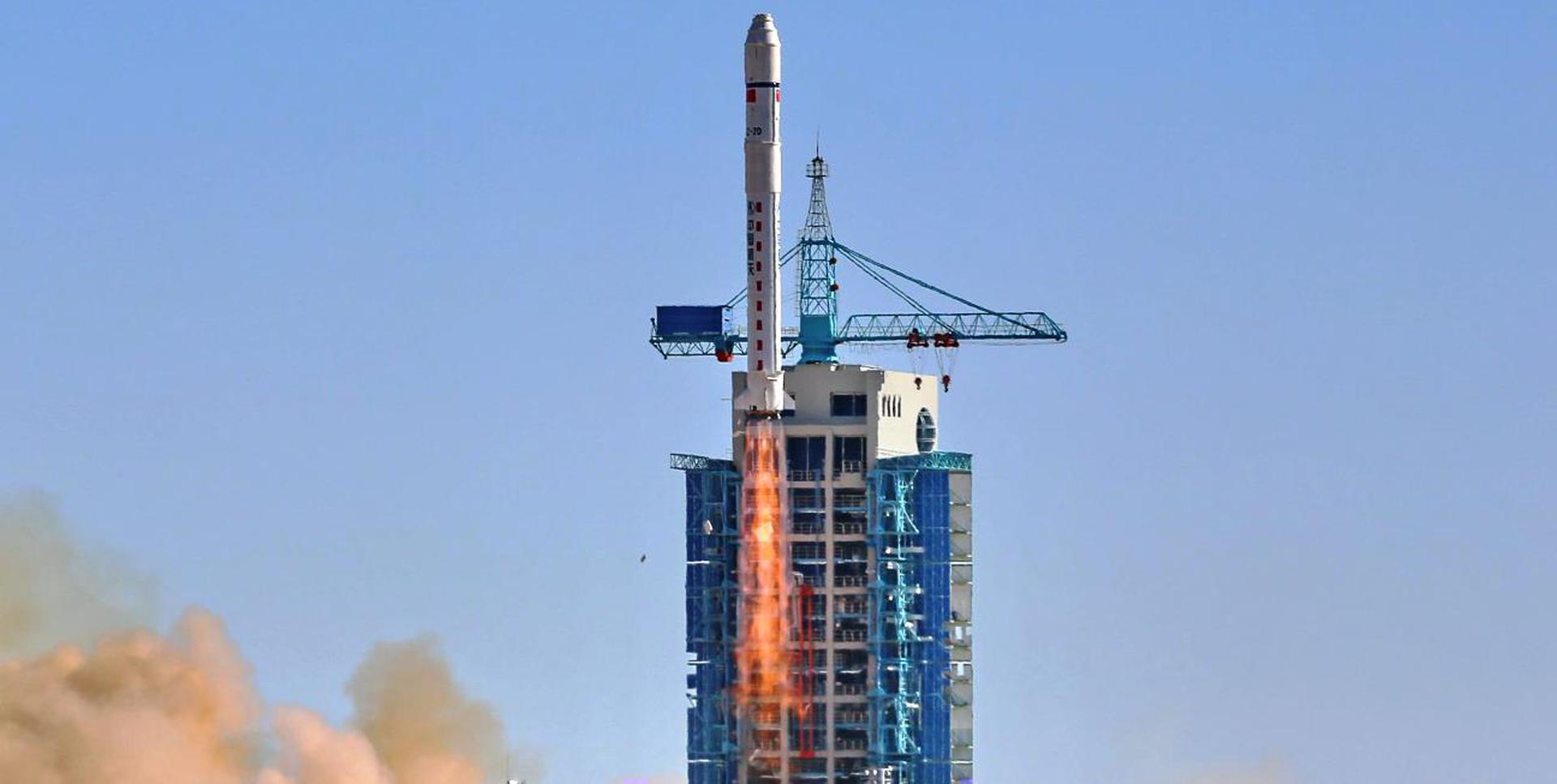
Launch facts
| Rocket | Long March 2D |
| Operator | China Aerospace Science and Technology Corporation |
| Pad | Launch Complex 3 (LC-3/LA-1), Xichang Satellite Launch Center, People's Republic of China |
| T-0 (UTC) | 24 April 2026 at 06:35 |
| Status | Success |
What launched?
A Long March 2D rocket successfully launched four SatNet test satellites from the Xichang Satellite Launch Center in China on 24 April 2026 at 06:35 UTC, according to the China Aerospace Science and Technology Corporation (CASC). The Long March 2D is a two-stage, hypergolic-fueled expendable launch vehicle that has served as one of China's most reliable orbital workhorses since its debut in 1992.
The mission lifted off from Launch Complex 3 (LC-3/LA-1) and was declared a success, adding another flight to the Long March family's extensive launch record.
Did the launch succeed?
Yes. The launch was confirmed as a success, with the four SatNet test satellites delivered to orbit as planned. The Long March 2D has flown dozens of missions with a strong reliability record, making it a trusted choice for deploying test and technology-demonstration payloads.
What is the payload?
The payload consisted of four SatNet test satellites. SatNet — operated through China SatNet (China Satellite Network Group) — is the entity behind China's planned Guowang megaconstellation, a low-Earth-orbit broadband network filed with the International Telecommunication Union for roughly 13,000 satellites.
Test satellites like these are used to validate platform designs, inter-satellite links, propulsion, and communications payloads before large-scale operational deployment. Verifying hardware on orbit is a standard step for any broadband constellation aiming to scale into the thousands of spacecraft.
Why do these test satellites matter?
China's Guowang constellation is positioned as a strategic competitor to Western LEO broadband networks. Each successful test batch reduces technical risk ahead of full-rate production launches. Establishing reliable satellite buses and networking hardware early is essential when the target constellation size runs into five figures.
Where did it launch from?
The mission flew from the Xichang Satellite Launch Center in Sichuan Province, southwestern China. Xichang has historically supported geostationary and deep-space missions but is increasingly used for a broad range of orbital deployments. The Long March 2D's hypergolic propellants — nitrogen tetroxide and unsymmetrical dimethylhydrazine — allow flexible, storable fueling suited to China's inland launch sites.
Long March 2D at a glance
| Parameter | Detail |
|---|---|
| Vehicle | Long March 2D |
| Stages | 2 (hypergolic) |
| Provider | China Aerospace Science and Technology Corporation |
| Launch site | LC-3/LA-1, Xichang, China |
| Payload | 4 SatNet test satellites |
| Liftoff | 24 April 2026, 06:35 UTC |
| Status | Success |
How to track the satellites
Once cataloged, the four SatNet test satellites can be followed on Cosmik's live 3D satellite map, which renders every tracked object in orbit in real time. You can also explore the full rocket launch schedule and browse upcoming missions from major launch sites worldwide. If you're new to orbital tracking, our guide on how to track satellites explains how orbital elements translate into the positions you see on the map.
How to watch launches live
Chinese launches from Xichang are typically confirmed after the fact rather than broadcast live. For missions that do stream, Cosmik's real-time launch tracker follows the countdown and ascent so you don't miss liftoff. Keep an eye on our latest launch news for updates on future SatNet and Guowang deployments.
What's next for SatNet?
With this test batch on orbit, China is expected to continue ramping toward operational Guowang launches. The constellation's scale — targeting roughly 13,000 satellites — will require a sustained, high-cadence launch campaign across multiple vehicle types and launch centers over the coming years.
Launch data for this mission is sourced from The Space Devs Launch Library. Background on the vehicle and operator is available via Long March 2D and the Xichang Satellite Launch Center on Wikipedia.
Follow it live on Cosmik
Track the newly deployed SatNet test satellites and every other object in orbit on Cosmik's free live 3D map, and enable free launch alerts so you're notified the moment the next Long March or Guowang mission lifts off.
Follow this mission live in 3D and get a free alert before liftoff.
Open the live map →Sources
Next launches
- Dragon CRS-2 SpX-35 — launch time & how to watch — 13 October 2026, 10:33 UTC
- Martian Moon eXplorer (MMX) — launch time & how to watch — 19 October 2026, 19:41 UTC
- Amazon Leo (LV-01) — launch time & how to watch — 29 October 2026
More launch coverage
- Falcon 9 Starlink 17-16 Launch Recap: Success on 26 April 2026 — 26 April 2026, 14:37 UTC
- Soyuz 2.1a Progress MS-34 Launch Success — 25 April 2026 — 25 April 2026, 22:21 UTC
- Long March 6 Launches PRSC-EO3 — 25 April 2026 Recap — 25 April 2026, 12:15 UTC
- Angara 1.2 Launches Kosmos Payload from Plesetsk — 23 April 2026 — 23 April 2026, 08:29 UTC
- Starlink Group 17-14: Falcon 9 Launch Recap (23 April 2026) — 23 April 2026, 03:23 UTC
- Electron 'Kakushin Rising' Launch Recap — 23 April 2026 Success — 23 April 2026, 03:09 UTC