Long March 6 Launches PRSC-EO3 — 25 April 2026 Recap
Published · Updated
Long March 6PRSC-EO3ChinaCASC✓ recap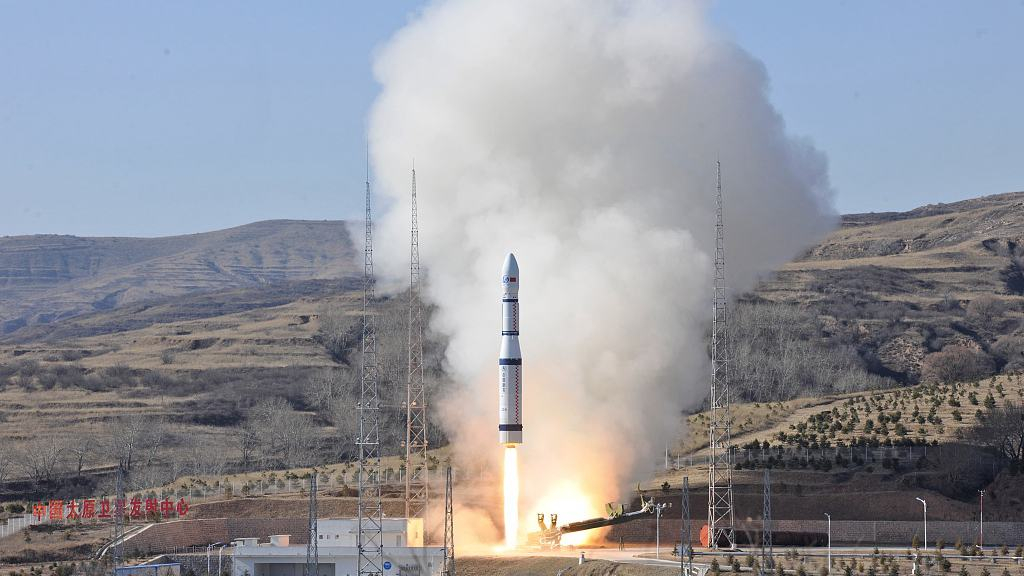
Launch facts
| Rocket | Long March 6 |
| Operator | China Aerospace Science and Technology Corporation |
| Pad | Launch Complex 16, Taiyuan Satellite Launch Center, People's Republic of China |
| T-0 (UTC) | 25 April 2026 at 12:15 |
| Status | Success |
What just happened?
A Chinese Long March 6 rocket successfully launched the PRSC-EO3 Earth-observation satellite on 25 April 2026 at 12:15 UTC from Launch Complex 16 at the Taiyuan Satellite Launch Center in northern China. The flight, operated by the China Aerospace Science and Technology Corporation (CASC), was declared a success, delivering its payload to orbit.
The Long March 6 is a Chinese liquid-fueled orbital launch vehicle designed for small and medium satellites, using a kerosene/liquid-oxygen first stage that burns cleaner than the hypergolic propellants of older Long March rockets.
Did the launch succeed?
Yes. According to CASC, the mission reached orbit as planned and was confirmed a success. The PRSC-EO3 satellite separated nominally from the upper stage following the ascent from Taiyuan.
What is the Long March 6?
The Long March 6 (Chang Zheng 6) first flew in September 2015, when it set a record by deploying 20 satellites on a single mission. Key characteristics of the base variant:
- A three-stage design roughly 29 meters tall with a core diameter of 3.35 meters.
- A first stage powered by a YF-100 kerolox engine producing around 1,200 kN of thrust.
- A payload capacity of roughly 1,080 kg to a 700 km sun-synchronous orbit.
The rocket was developed by the Shanghai Academy of Spaceflight Technology (SAST) as part of China's new generation of environmentally cleaner launch vehicles, replacing the toxic hydrazine-based propellants that dominated earlier Long March families.
What is the payload?
PRSC-EO3 is an Earth-observation spacecraft. Earth-observation satellites carry optical, radar, or multispectral instruments used for mapping, agriculture monitoring, disaster response, urban planning, and environmental surveillance. Payloads of this class are typically placed into sun-synchronous orbits, which cross the equator at the same local solar time on every pass — a configuration that keeps lighting conditions consistent for imaging and comparison over time.
Specific instrument details for PRSC-EO3 were not disclosed in the mission data available at publication.
Where did it launch from?
The mission lifted off from Launch Complex 16 at the Taiyuan Satellite Launch Center, located in Shanxi Province. Taiyuan is one of China's primary spaceports and specializes in launches into sun-synchronous and polar orbits, thanks to its inland northern location that supports southward launch trajectories over sparsely populated terrain.
| Detail | Value |
|---|---|
| Mission | PRSC-EO3 |
| Rocket | Long March 6 |
| Operator | China Aerospace Science and Technology Corporation |
| Launch date/time | 25 April 2026, 12:15 UTC |
| Launch site | LC-16, Taiyuan Satellite Launch Center |
| Result | Success |
Why does this launch matter?
China has maintained one of the world's highest annual launch cadences, routinely exceeding 60 orbital attempts per year across its Long March family and commercial vehicles. Earth-observation constellations are a central pillar of that activity, supporting both civil and strategic remote-sensing needs. Each new satellite of the PRSC-EO series expands coverage and revisit frequency, allowing more frequent imaging of any given point on Earth.
The Long March 6 remains a workhorse for these dedicated small-satellite missions, filling the gap between China's larger heavy-lift rockets and its emerging commercial small launchers.
How to track the satellite
Once cataloged, PRSC-EO3 can be followed on the Cosmik live 3D satellite map, which renders every tracked object in orbit in real time. You can also browse upcoming missions on the rocket launch schedule and read more coverage on the latest launch news page. If you want to learn the basics, see our guide on how to track satellites.
For more on China's launch program, see the Long March 6 and Taiyuan Satellite Launch Center pages on Wikipedia. Launch data is sourced from The Space Devs Launch Library.
Follow the mission on Cosmik
Track PRSC-EO3 and thousands of other satellites live on Cosmik's 3D solar system map, and enable free launch alerts so you never miss the next Long March liftoff. Explore what's flying next on our launch tracker.
Follow this mission live in 3D and get a free alert before liftoff.
Open the live map →Sources
Next launches
- Dragon CRS-2 SpX-35 — launch time & how to watch — 13 October 2026, 10:33 UTC
- Martian Moon eXplorer (MMX) — launch time & how to watch — 19 October 2026, 19:41 UTC
- Amazon Leo (LV-01) — launch time & how to watch — 29 October 2026
More launch coverage
- Atlas V 551 Launches Amazon Leo (LA-06) — April 28, 2026 Recap — 28 April 2026, 00:53 UTC
- Falcon 9 Starlink 17-16 Launch Recap: Success on 26 April 2026 — 26 April 2026, 14:37 UTC
- Soyuz 2.1a Progress MS-34 Launch Success — 25 April 2026 — 25 April 2026, 22:21 UTC
- Long March 2D Launches 4 SatNet Test Satellites — 24 April 2026 — 24 April 2026, 06:35 UTC
- Angara 1.2 Launches Kosmos Payload from Plesetsk — 23 April 2026 — 23 April 2026, 08:29 UTC
- Starlink Group 17-14: Falcon 9 Launch Recap (23 April 2026) — 23 April 2026, 03:23 UTC