Atlas V 551 Launches Amazon Leo (LA-06) — April 28, 2026 Recap
Published · Updated
Atlas V 551United Launch AllianceULAAmazon Leo✓ recap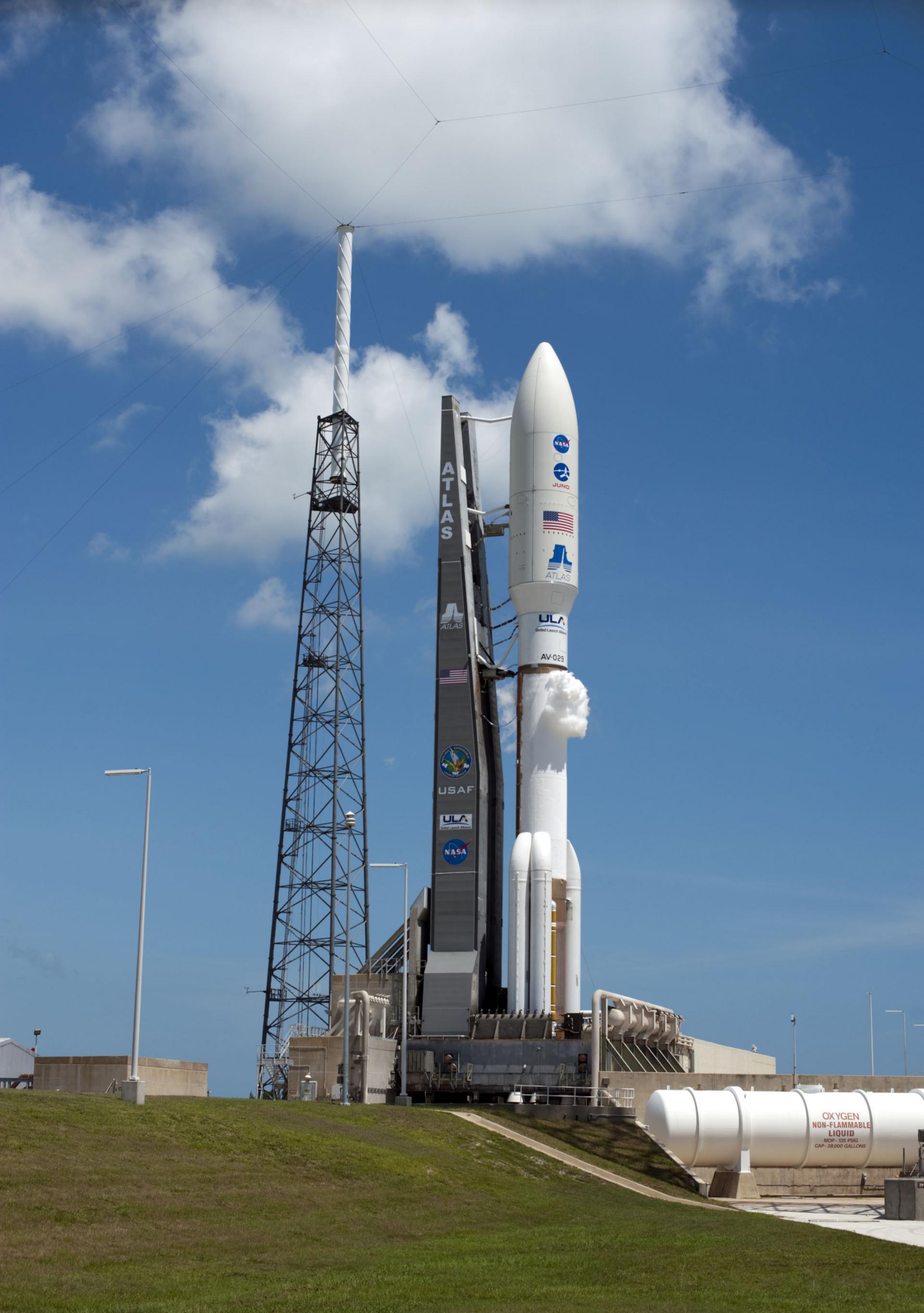
Launch facts
| Rocket | Atlas V 551 |
| Operator | United Launch Alliance |
| Pad | Space Launch Complex 41, Cape Canaveral SFS, FL, USA |
| T-0 (UTC) | 28 April 2026 at 00:53 |
| Status | Success |
What happened?
A United Launch Alliance Atlas V 551 rocket successfully launched a batch of Amazon Leo (LA-06) broadband satellites from Space Launch Complex 41 at Cape Canaveral Space Force Station, Florida, on April 28, 2026, at 00:53:30 UTC. The Atlas V 551 is the most powerful variant of ULA's workhorse rocket, and the mission was declared a success.
Amazon Leo — formerly branded Project Kuiper — is Amazon's low Earth orbit satellite constellation designed to deliver high-speed, low-latency internet to customers worldwide, competing directly with SpaceX's Starlink.
Did the launch succeed?
Yes. According to United Launch Alliance, the Atlas V 551 completed a nominal ascent and deployed its Amazon Leo payload as planned. The launch marks another step in Amazon's effort to build out an initial constellation authorized by the U.S. FCC to contain more than 3,200 satellites.
What is the Atlas V 551?
The Atlas V 551 is the highest-thrust configuration in the Atlas V family, distinguished by three key numbers in its designation:
- 5-meter diameter payload fairing
- 5 AJ-60A solid rocket boosters strapped to the first stage
- 1 RL10-powered Centaur upper-stage engine
This combination gives the 551 configuration the muscle to loft heavy payloads to low Earth orbit — precisely what the dense Amazon Leo satellites require. The first stage is powered by a Russian-built RD-180 engine burning kerosene and liquid oxygen.
What was the payload?
The mission, designated LA-06, carried a batch of Amazon Leo satellites to low Earth orbit. The satellites are built by Amazon and feature phased-array antennas, custom processors, and optical inter-satellite links to route traffic across the network. Once fully operational, Amazon Leo aims to provide broadband coverage to underserved and remote regions around the globe.
Amazon has secured one of the largest launch procurements in commercial spaceflight history to deploy its constellation, contracting with ULA, Arianespace, Blue Origin, and SpaceX. The Atlas V remains a cornerstone of the early deployment phase before the constellation transitions to heavier-lift vehicles.
Why launch from Cape Canaveral?
Space Launch Complex 41 (SLC-41) at Cape Canaveral Space Force Station is ULA's dedicated Atlas V pad on the U.S. East Coast. Its location provides efficient access to a range of orbital inclinations, and the pad has supported dozens of Atlas V missions, including NASA interplanetary probes and national security payloads.
How the mission profile worked
The five solid rocket boosters ignited alongside the RD-180 at liftoff, providing the initial thrust to clear the tower. After booster burnout and jettison, the first stage continued powering the vehicle before separating. The Centaur upper stage, powered by its RL10 engine, then completed the burns required to place the Amazon Leo satellites into their target low Earth orbit, where they will raise to operational altitude using onboard propulsion.
| Detail | Value |
|---|---|
| Rocket | Atlas V 551 |
| Provider | United Launch Alliance |
| Payload | Amazon Leo (LA-06) |
| Launch site | SLC-41, Cape Canaveral SFS, FL |
| Launch time | April 28, 2026, 00:53:30 UTC |
| Result | Success |
How to watch and track the satellites
ULA typically streams its launches live via its official webcast, beginning several minutes before liftoff. Now that the satellites are in orbit, you can follow their paths in real time. Explore the newly deployed spacecraft and thousands of others on Cosmik's live 3D satellite map, or browse the full rocket launch schedule for upcoming missions. For more Atlas V and ULA missions, see the Cape Canaveral launch hub.
Where does this fit in Amazon Leo's rollout?
Each successful launch adds to the growing Amazon Leo fleet as the company races to bring its constellation online. The pace of deployment across multiple launch providers reflects the scale of building a broadband network from hundreds to thousands of satellites in low Earth orbit.
For background on the vehicles and operators involved, see the Atlas V and United Launch Alliance Wikipedia entries and the Cape Canaveral Space Force Station page. Launch data is sourced from The Space Devs Launch Library.
Follow the mission on Cosmik
Track the freshly deployed Amazon Leo satellites live on Cosmik's real-time 3D map, catch up on the latest launch news, and enable free launch alerts so you never miss the next Atlas V or Amazon Leo mission.
Follow this mission live in 3D and get a free alert before liftoff.
Open the live map →Sources
Next launches
- Dragon CRS-2 SpX-35 — launch time & how to watch — 13 October 2026, 10:33 UTC
- Martian Moon eXplorer (MMX) — launch time & how to watch — 19 October 2026, 19:41 UTC
- Amazon Leo (LV-01) — launch time & how to watch — 29 October 2026
More launch coverage
- Ariane 64 Launches Amazon Leo LE-02 on 30 April 2026 — 30 April 2026, 08:57 UTC
- Starlink Group 17-36 Launch Recap: Falcon 9 Success on 30 April 2026 — 30 April 2026, 02:42 UTC
- Falcon Heavy Launches ViaSat-3 F3: April 29, 2026 Recap — 29 April 2026, 14:13 UTC
- Falcon 9 Starlink 17-16 Launch Recap: Success on 26 April 2026 — 26 April 2026, 14:37 UTC
- Soyuz 2.1a Progress MS-34 Launch Success — 25 April 2026 — 25 April 2026, 22:21 UTC
- Long March 6 Launches PRSC-EO3 — 25 April 2026 Recap — 25 April 2026, 12:15 UTC