Tianlong-3 Demo Flight Fails on 3 April 2026 Debut
Published · Updated
Tianlong-3Space PioneerJiuquanChina launch✓ recap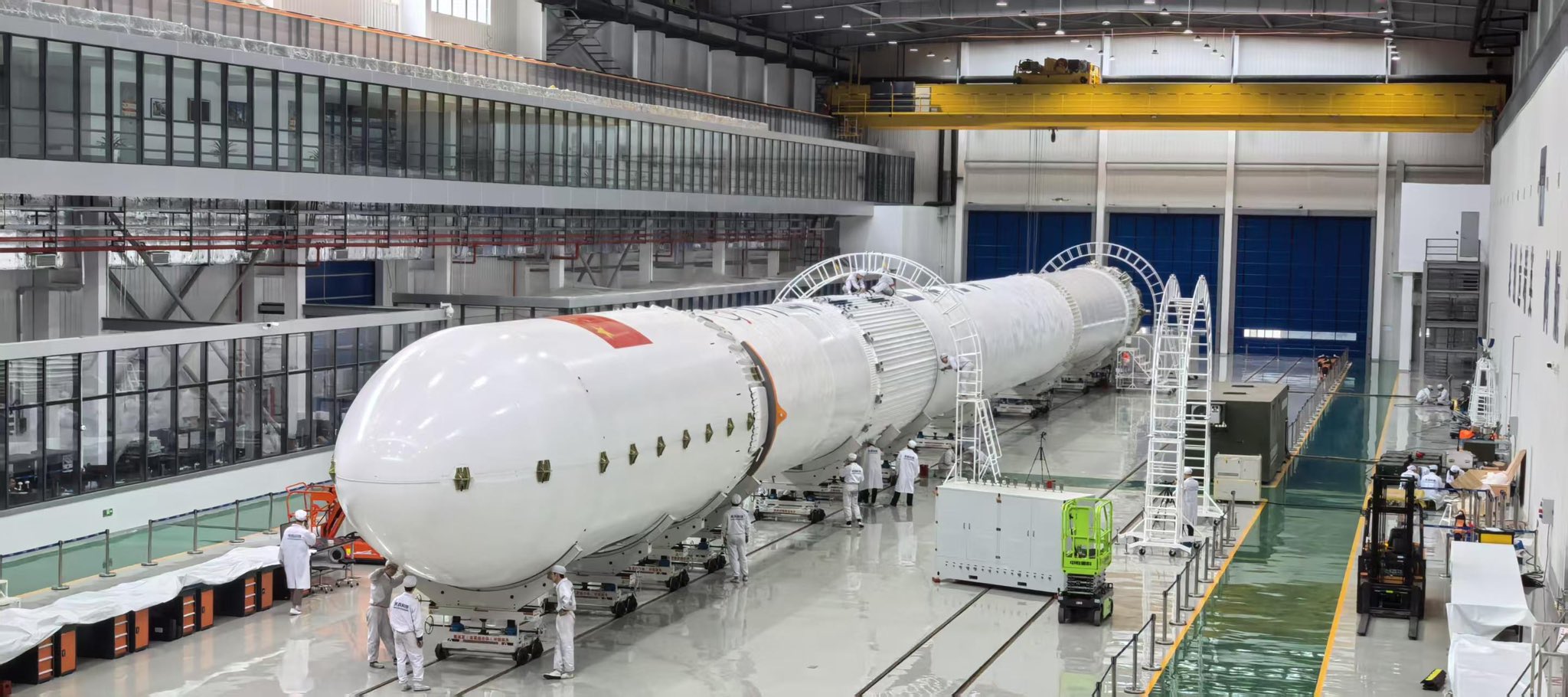
Launch facts
| Rocket | Tianlong-3 |
| Operator | Space Pioneer |
| Pad | Tianlong-3 Launch Pad, Jiuquan Satellite Launch Center, People's Republic of China |
| T-0 (UTC) | 3 April 2026 at 04:17 |
| Status | Failure |
What happened?
Space Pioneer's Tianlong-3 rocket lifted off on its demonstration flight at 04:17 UTC on 3 April 2026 from the dedicated Tianlong-3 Launch Pad at the Jiuquan Satellite Launch Center in northwestern China, and the mission ended in failure. The maiden orbital attempt of China's most powerful private launch vehicle did not reach its intended orbit.
Tianlong-3 ("Heavenly Dragon-3") is a two-stage, kerosene-liquid-oxygen medium-lift rocket developed by the Beijing-based company Space Pioneer (Beijing Tianbing Technology). It is designed with a reusable first stage and is frequently described as China's commercial answer to SpaceX's Falcon 9.
Did the launch succeed?
No. According to the launch status recorded for the mission, the Tianlong-3 demonstration flight was a failure. As with most maiden flights of a new orbital-class rocket, this debut carried elevated risk, and the vehicle did not complete its planned mission profile.
Debut launches historically carry a high failure rate across the global industry. A failed first flight does not end a program; operators typically analyze telemetry, identify the root cause, and return to the pad with corrective measures.
Launch at a glance
| Item | Detail |
|---|---|
| Rocket | Tianlong-3 |
| Provider | Space Pioneer |
| Mission | Demo Flight |
| Launch date/time | 3 April 2026, 04:17 UTC |
| Launch site | Tianlong-3 Launch Pad, Jiuquan, China |
| Outcome | Failure |
What is Tianlong-3?
Tianlong-3 is a two-stage launch vehicle powered by a cluster of Space Pioneer's TH-12 kerosene/liquid-oxygen engines on the first stage. The rocket is roughly 71 meters tall and is engineered to place substantial payloads into low Earth orbit, positioning it as a workhorse for deploying large batches of satellites in a single flight.
The vehicle is central to China's ambitions to build out large domestic satellite internet constellations, which require frequent, high-cadence launches with reusable hardware to keep costs down. Space Pioneer previously became the first private Chinese company to reach orbit with its smaller Tianlong-2 rocket, making Tianlong-3 a significant scale-up in capability.
Why did this flight matter?
Tianlong-3's reusable first stage is intended to be recovered and reflown, mirroring the economics that transformed Western launch markets. A successful demonstration would have marked a major milestone for China's commercial launch sector and its plans to deploy thousands of broadband satellites. The debut therefore drew close attention as a bellwether for the country's private rocket industry.
What was the payload?
The mission was designated a demonstration flight, the standard profile for validating a new vehicle's performance before it begins operational service. Demonstration flights prioritize proving the rocket's systems—stage separation, engine performance, and guidance—over delivering a high-value operational satellite.
What happens next?
Following a failed maiden flight, launch providers conduct a formal investigation into the anomaly. Space Pioneer is expected to review flight data, determine the cause, and implement fixes before the next Tianlong-3 attempt. The pace of the return-to-flight will depend on the severity and complexity of the issue identified.
You can follow every upcoming attempt and see the full manifest of Chinese and international missions on our rocket launch schedule, and read continuing coverage on our latest launch news page.
Where to track the aftermath
Once new satellites do reach orbit from future Tianlong-3 flights, you can watch them circle the planet in real time on the Cosmik live 3D satellite map. Learn more about following orbital objects with our guide to tracking satellites.
About the operator and pad
Space Pioneer operates from the Jiuquan Satellite Launch Center, China's oldest and one of its busiest spaceports, located in the Gobi Desert. The center has hosted both government and commercial launches, including crewed Shenzhou missions. Background on the vehicle family is available via Tianlong-3 on Wikipedia, and launch data for this article is sourced from The Space Devs Launch Library.
Follow the next launch live on Cosmik
Don't miss Space Pioneer's return to flight. Enable free launch alerts on Cosmik to get notified before the next Tianlong-3 attempt, track live countdowns on our launch tracker, and watch every satellite in orbit on our real-time 3D map.
Follow this mission live in 3D and get a free alert before liftoff.
Open the live map →Sources
Next launches
- Dragon CRS-2 SpX-35 — launch time & how to watch — 13 October 2026, 10:33 UTC
- Martian Moon eXplorer (MMX) — launch time & how to watch — 19 October 2026, 19:41 UTC
- Amazon Leo (LV-01) — launch time & how to watch — 29 October 2026
More launch coverage
- Starlink Group 17-35 Launches on Falcon 9 — 7 April 2026 Recap — 7 April 2026, 02:50 UTC
- Atlas V 551 Launches Amazon Leo (LA-05): 4 April 2026 Recap — 4 April 2026, 05:46 UTC
- Soyuz 2.1a/Fregat-M Launches Meridian-M No.21L — 3 April 2026 Recap — 3 April 2026, 06:28 UTC
- Falcon 9 Starlink Group 10-58 Launch Recap: Success on 2 April 2026 — 2 April 2026, 11:55 UTC
- Artemis II Recap: SLS Block 1 Launches 4 Crew April 1, 2026 — 1 April 2026, 22:35 UTC
- Starlink Group 10-44: Falcon 9 Launch Recap (30 March 2026) — 30 March 2026, 21:15 UTC