Soyuz MS-29 Launch Recap: Success from Baikonur (14 July 2026)
Published · Updated
Soyuz MS-29Soyuz 2.1aROSCOSMOSBaikonur✓ recap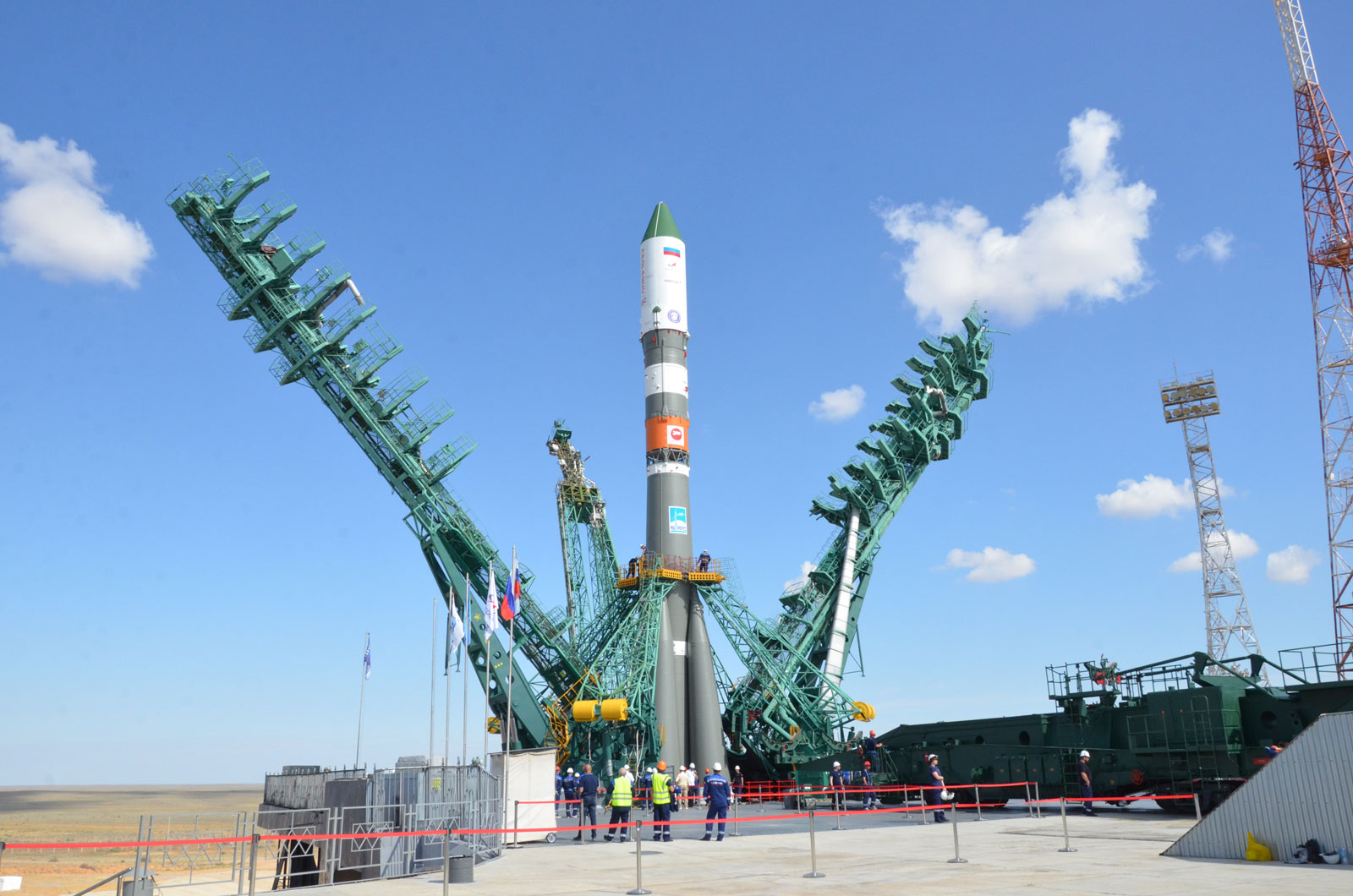
Launch facts
| Rocket | Soyuz 2.1a |
| Operator | Russian Federal Space Agency (ROSCOSMOS) |
| Pad | 31/6, Baikonur Cosmodrome, Republic of Kazakhstan |
| T-0 (UTC) | 14 July 2026 at 14:47 |
| Status | Success |
Did the launch succeed?
Yes. A Soyuz 2.1a rocket successfully launched the Soyuz MS-29 crewed spacecraft from Site 31/6 at the Baikonur Cosmodrome in Kazakhstan on 14 July 2026 at 14:47:43 UTC, according to the Russian Federal Space Agency (ROSCOSMOS). The mission, bound for the International Space Station, was declared a success following a clean ascent and orbital insertion.
Soyuz MS-29 is a crewed spacecraft in Russia's long-running Soyuz program, the workhorse vehicle that has carried cosmonauts and astronauts to orbit since the late 1960s. Each MS-series capsule ferries up to three crew members to the ISS and remains docked as a lifeboat for the duration of an expedition.
When did Soyuz MS-29 launch?
Liftoff occurred at 14:47:43 UTC on 14 July 2026. The Soyuz launch window is defined to the second because the rocket must be timed precisely to align with the orbital plane of the International Space Station, which circles the planet roughly every 92 minutes at an average altitude of about 420 kilometers.
| Detail | Value |
|---|---|
| Mission | Soyuz MS-29 |
| Rocket | Soyuz 2.1a |
| Operator | ROSCOSMOS |
| Launch site | Site 31/6, Baikonur Cosmodrome |
| Liftoff | 14 July 2026, 14:47:43 UTC |
| Result | Success |
What is the Soyuz 2.1a rocket?
The Soyuz 2.1a is the modernized digital-flight-control member of the Soyuz rocket family, a three-stage expendable launch vehicle derived from the R-7 missile lineage. It stands roughly 46 meters tall and uses four strap-on boosters clustered around a central core, all burning kerosene and liquid oxygen. The 2.1a variant replaced older analog guidance systems with a digital control unit, improving injection accuracy for crewed and cargo missions to the ISS.
Baikonur's Site 31/6 has served as a primary crewed-launch pad following the retirement of the historic Site 1/5 ("Gagarin's Start") from active flight operations. The Soyuz has one of the longest and most reliable operational records of any launch system ever built.
What is the payload?
The payload was the Soyuz MS-29 spacecraft carrying its expedition crew and cargo to the International Space Station. The MS-series capsule consists of three modules: the orbital module, the descent module where crew ride during launch and re-entry, and the instrument-service module housing propulsion and power systems.
After separation from the rocket's upper stage, the spacecraft began its autonomous rendezvous profile with the ISS. Modern Soyuz missions typically use either a fast two-orbit (roughly 3-hour) or four-orbit (roughly 6-hour) approach, followed by automated docking under the Kurs system. Once docked, the capsule remains attached to the station as the crew's return vehicle for the length of their stay.
How does the docking work?
The Soyuz approaches the ISS at closing speeds measured in centimeters per second during the final phase, using radar-based navigation to align with a docking port. Cosmonauts can take manual control if the automated system encounters an anomaly, a redundancy that has made the vehicle a mainstay of station crew rotations for decades.
How to track the spacecraft and the ISS
You can follow the International Space Station and the docked Soyuz in real time on Cosmik's live 3D solar-system and satellite map, and watch the station pass over your location with the dedicated ISS tracker. To learn more about following crewed vehicles and other objects in orbit, see our guide on how to track satellites.
For more launches from Russia and around the world, browse the full rocket launch schedule and the latest launch news on Cosmik. Launch data for this recap is sourced from The Space Devs Launch Library API.
Why this launch matters
Crewed Soyuz flights are a critical pillar of continuous human presence aboard the ISS, which has been permanently staffed since November 2000. Each successful MS mission maintains the crew rotation cadence and preserves the station's role as an orbital research laboratory.
Learn more
Track Soyuz MS-29 and the International Space Station as they orbit in real time on Cosmik, and enable free launch alerts so you never miss the next crewed liftoff or ISS pass over your location.
Follow this mission live in 3D and get a free alert before liftoff.
Open the live map →Sources
Next launches
- Dragon CRS-2 SpX-35 — launch time & how to watch — 13 October 2026, 10:33 UTC
- Martian Moon eXplorer (MMX) — launch time & how to watch — 19 October 2026, 19:41 UTC
- Amazon Leo (LV-01) — launch time & how to watch — 29 October 2026
More launch coverage
- Soyuz 2.1b Launches 16 Rassvet-3 Satellites (19 July 2026) — 19 July 2026, 17:51 UTC
- Vikram-I Demo Flight: Skyroot Launch Recap (18 July 2026) — 18 July 2026, 06:35 UTC
- SDA Tranche 1 Transport Layer E: Falcon 9 Launch Recap — 16 July 2026, 20:32 UTC
- Falcon 9 Starlink Group 10-45: Launch Success (14 July 2026) — 14 July 2026, 09:10 UTC
- Falcon 9 Starlink Group 15-14 Launch Recap: Success on 14 July 2026 — 14 July 2026, 01:28 UTC
- Falcon 9 Starlink Group 17-48 Launch Recap — 11 July 2026 — 11 July 2026, 03:01 UTC