Soyuz 2.1b Launches 16 Rassvet-3 Satellites (19 July 2026)
Published · Updated
Soyuz 2.1bRassvet-3ROSCOSMOSPlesetsk Cosmodrome✓ recap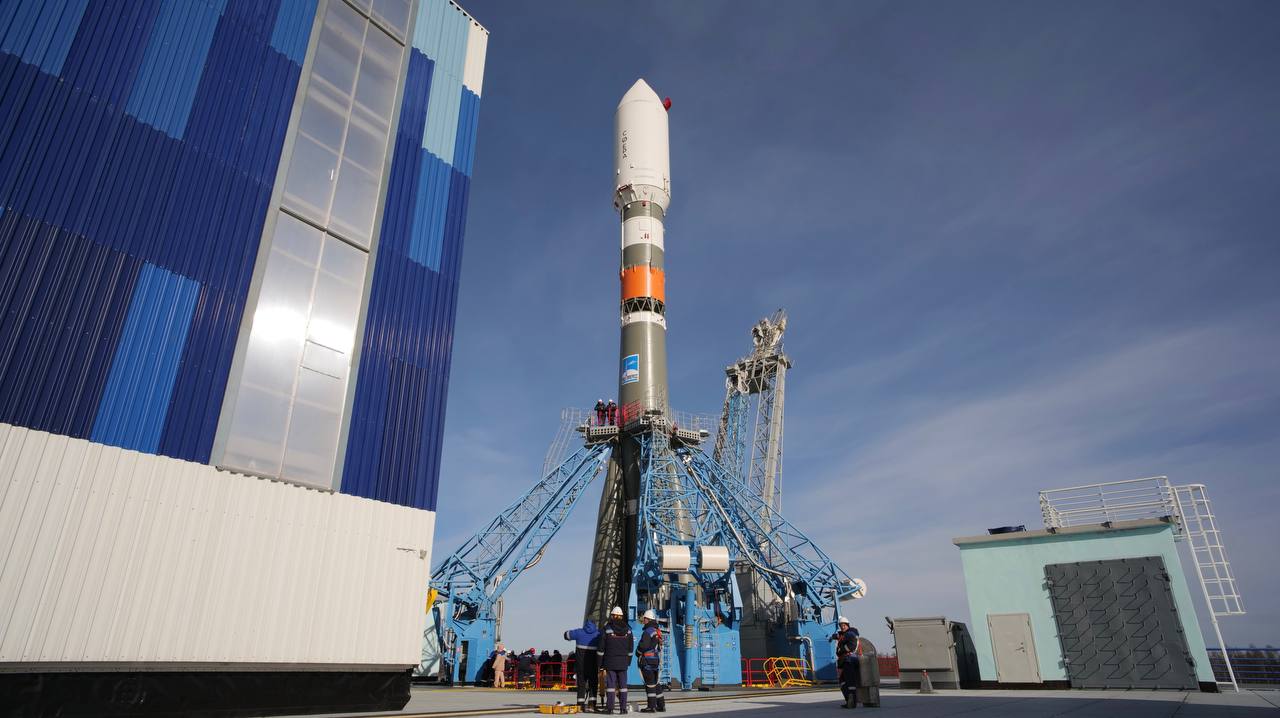
Launch facts
| Rocket | Soyuz 2.1b |
| Operator | Russian Federal Space Agency (ROSCOSMOS) |
| Pad | Unknown Pad, Plesetsk Cosmodrome, Russian Federation |
| T-0 (UTC) | 19 July 2026 at 17:51 |
| Status | Success |
A Soyuz 2.1b rocket successfully launched 16 Rassvet-3 satellites from Plesetsk Cosmodrome, Russia, on 19 July 2026 at 21:00 UTC. The mission, operated by the Russian Federal Space Agency (ROSCOSMOS), was confirmed as a success.
The Soyuz 2.1b is a three-stage medium-lift orbital rocket, the modernized digital-control variant of the legendary Soyuz family that has flown in various forms since the 1960s, making it one of the most-launched launch vehicle lineages in history.
Did the launch succeed?
Yes. According to ROSCOSMOS, the Soyuz 2.1b delivered all 16 Rassvet-3 satellites to orbit as planned. The vehicle lifted off from Plesetsk Cosmodrome in northern Russia at 21:00 UTC on 19 July 2026, with the status confirmed as Success.
What is the payload?
The payload consisted of 16 Rassvet-3 satellites, deployed as a single batch. "Rassvet" (Russian for "dawn") denotes a series of Russian small satellites associated with commercial and communications applications. Deploying 16 spacecraft on a single Soyuz flight reflects the growing use of rideshare-style batch launches to build out Russian satellite constellations more rapidly.
Key mission facts
| Detail | Value |
|---|---|
| Rocket | Soyuz 2.1b |
| Payload | 16 x Rassvet-3 |
| Provider | ROSCOSMOS |
| Launch site | Plesetsk Cosmodrome, Russia |
| Launch time | 19 July 2026, 21:00 UTC |
| Result | Success |
Where did the launch happen?
The mission flew from Plesetsk Cosmodrome, located roughly 800 km north of Moscow. Plesetsk is Russia's primary military spaceport and is heavily used for launches into high-inclination and polar orbits, which are well-suited to constellations requiring broad ground coverage. Its northern latitude, at approximately 62.9 degrees north, makes it the world's northernmost major launch complex.
How does the Soyuz 2.1b work?
The Soyuz 2.1b uses four liquid-fueled strap-on boosters (the first stage) clustered around a central core (the second stage), all igniting on the ground. Its defining upgrade over earlier Soyuz variants is the RD-0124 engine on the third stage, which delivers improved specific impulse and payload performance. Combined with a modern digital flight control system, the 2.1b can place payloads of several tonnes into low Earth orbit, depending on inclination and target altitude.
The Soyuz 2 series replaced older analog guidance hardware, allowing ROSCOSMOS to launch heavier and more complex payloads while retiring dependence on legacy control systems built outside Russia. This flight adds to the family's extensive operational record.
Why does this launch matter?
Batch deployments like this 16-satellite Rassvet-3 mission are how modern operators scale networks efficiently. Rather than launching one spacecraft at a time, packing 16 units onto a single Soyuz reduces per-satellite launch cost and accelerates constellation buildout. Each new batch expands coverage, adds redundancy, and replaces aging units already on orbit.
For observers, the newly deployed satellites will gradually spread along their orbital plane in the days following separation. You can follow their progress and see how the batch disperses using the live 3D tools on Cosmik's interactive solar system and satellite map.
How to track the satellites
Once cataloged, the 16 Rassvet-3 satellites can be visualized in real time. Explore them alongside every other object in orbit on the Cosmik live map, review upcoming missions on the rocket launch schedule, and read more coverage on the latest launch news page. If you're new to orbital tracking, our guide on how to track satellites explains the basics.
Launch data for this recap is sourced from The Space Devs Launch Library. Background on the vehicle and spaceport is available via Soyuz-2 on Wikipedia, ROSCOSMOS on Wikipedia, and Plesetsk Cosmodrome on Wikipedia.
Follow the mission live
Track the newly launched Rassvet-3 satellites and every rocket heading to orbit in real time on Cosmik's free 3D live map. Turn on free launch alerts so you never miss the next Soyuz liftoff or constellation deployment.
Follow this mission live in 3D and get a free alert before liftoff.
Open the live map →Sources
Next launches
- Dragon CRS-2 SpX-35 — launch time & how to watch — 13 October 2026, 10:33 UTC
- Martian Moon eXplorer (MMX) — launch time & how to watch — 19 October 2026, 19:41 UTC
- Amazon Leo (LV-01) — launch time & how to watch — 29 October 2026
More launch coverage
- Gravity-1 Launch: Sea-Based Liftoff Set for 31 July 2026 — 22 July 2026, 02:54 UTC
- Falcon 9 Launches MRV-1 from Cape Canaveral — July 21, 2026 — 21 July 2026, 21:15 UTC
- Starlink Group 17-39 Launch Recap: Success on July 21, 2026 — 21 July 2026, 14:49 UTC
- Vikram-I Demo Flight: Skyroot Launch Recap (18 July 2026) — 18 July 2026, 06:35 UTC
- SDA Tranche 1 Transport Layer E: Falcon 9 Launch Recap — 16 July 2026, 20:32 UTC
- Soyuz MS-29 Launch Recap: Success from Baikonur (14 July 2026) — 14 July 2026, 14:47 UTC