Shenzhou 23 Launch Success: Long March 2F Flew 24 May 2026
Published · Updated
Shenzhou 23Long March 2FChina spaceflightTiangong✓ recap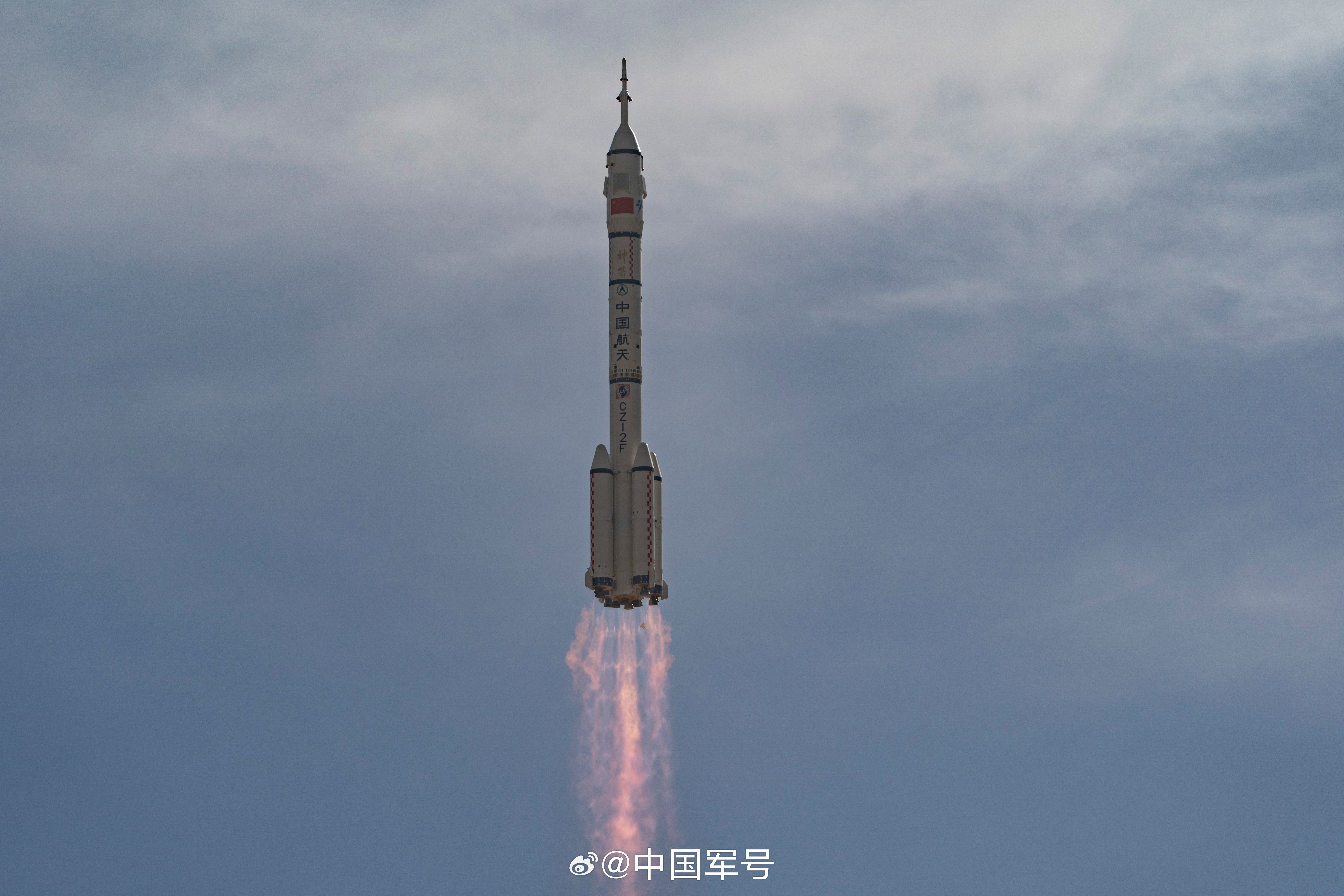
Launch facts
| Rocket | Long March 2F/G |
| Operator | China Aerospace Science and Technology Corporation |
| Pad | Launch Area 91 (SLS-1 / 921), Jiuquan Satellite Launch Center, People's Republic of China |
| T-0 (UTC) | 24 May 2026 at 15:08 |
| Status | Success |
What just launched?
Shenzhou 23 is a crewed Chinese spacecraft that launched successfully on 24 May 2026 at 15:08:36 UTC aboard a Long March 2F/G rocket from Launch Area 91 (SLS-1 / 921) at the Jiuquan Satellite Launch Center in the Gobi Desert. The mission, operated by the China Aerospace Science and Technology Corporation (CASC), is bound for China's Tiangong space station, where the crew will begin a months-long expedition.
The Shenzhou ("Divine Vessel") is China's human-rated capsule, a three-module spacecraft first flown crewed in 2003. It carries taikonauts to and from low Earth orbit, docking with the Tiangong station roughly 380–400 km above Earth.
Did the launch succeed?
Yes. The status is confirmed as a Success. The Long March 2F/G lifted off on schedule at 15:08:36 UTC and inserted Shenzhou 23 into its planned low Earth orbit, setting up an autonomous rendezvous and docking with the Tiangong complex within hours of liftoff, per standard Shenzhou flight profiles.
What is the Long March 2F/G?
The Long March 2F is China's only human-rated launch vehicle. It is a two-stage rocket augmented by four strap-on boosters, standing roughly 62 metres tall and capable of lifting about 8,400 kg to low Earth orbit. The "G" variant is optimized for crewed Shenzhou flights and features an escape tower and enhanced fault-detection systems designed to protect the taikonauts in the event of an anomaly during ascent.
The vehicle has an unbroken record of successfully launching every crewed Shenzhou mission since 2003, making it one of the most reliable human-rated rockets in service. It burns hypergolic propellants — a mix of unsymmetrical dimethylhydrazine and nitrogen tetroxide — that ignite on contact and simplify ignition sequencing.
Where did it launch from?
The launch took place from Launch Area 91, also designated SLS-1 or Pad 921, at the Jiuquan Satellite Launch Center. Jiuquan is China's oldest and only crewed-spaceflight launch complex, located in the Gobi Desert in Inner Mongolia. Every Chinese human spaceflight to date has departed from this site.
What is the mission?
Shenzhou 23 is a crew-rotation flight to the Tiangong space station, China's permanently inhabited orbital outpost. Tiangong consists of three modules — the Tianhe core module and the Wentian and Mengtian laboratory modules — arranged in a T-shape and continuously staffed since 2021.
On arrival, the incoming crew overlaps briefly with the departing expedition for a handover before the previous crew returns to Earth. During their stay, taikonauts conduct scientific experiments, station maintenance, and extravehicular activities. Key facts:
- Spacecraft: Shenzhou 23 crewed capsule
- Destination: Tiangong space station, ~380–400 km orbit
- Launch vehicle: Long March 2F/G, ~62 m tall
- Operator: China Aerospace Science and Technology Corporation
- Liftoff: 24 May 2026, 15:08:36 UTC
How to track Shenzhou 23 and Tiangong
You can follow Shenzhou 23 and the Tiangong station as they orbit Earth in real time on the Cosmik live 3D satellite map. Tiangong is one of only two crewed stations currently in orbit, alongside the International Space Station — you can also watch the ISS live tracker for comparison. To learn the basics of orbital tracking, see our guide on how to track satellites.
Where to find more launches
Browse upcoming missions on the rocket launch schedule and catch the latest updates on the launch news feed.
Background: China's crewed program
China became the third nation to independently launch humans into orbit with Shenzhou 5 in 2003. The Tiangong station, completed in 2022, hosts rotating three-person crews on roughly six-month expeditions. Shenzhou 23 continues that cadence, extending China's uninterrupted human presence in orbit that now spans several years.
| Detail | Value |
|---|---|
| Mission | Shenzhou 23 |
| Rocket | Long March 2F/G |
| Launch site | Jiuquan, Pad 921 |
| Date/time | 24 May 2026, 15:08:36 UTC |
| Result | Success |
Launch data is sourced from The Space Devs Launch Library. Background on the vehicle and station draws from the Long March 2F, Shenzhou spacecraft, and Jiuquan Satellite Launch Center references.
Follow it live on Cosmik
Watch Shenzhou 23 and the Tiangong station circle the planet in real time on the Cosmik 3D map, and enable free launch alerts so you never miss the next crewed liftoff or docking.
Follow this mission live in 3D and get a free alert before liftoff.
Open the live map →Sources
Next launches
- Dragon CRS-2 SpX-35 — launch time & how to watch — 13 October 2026, 10:33 UTC
- Martian Moon eXplorer (MMX) — launch time & how to watch — 19 October 2026, 19:41 UTC
- Amazon Leo (LV-01) — launch time & how to watch — 29 October 2026
More launch coverage
- Long March 7A Launches TJSW-24 on 26 May 2026 — Recap — 26 May 2026, 16:16 UTC
- Falcon 9 Starlink Group 17-37: Launch Succeeds 26 May 2026 — 26 May 2026, 14:50 UTC
- Starlink Group 10-47: Falcon 9 Launch Recap — 25 May 2026 — 25 May 2026, 11:48 UTC
- Starship Flight 12 Recap: SpaceX Succeeds on 22 May 2026 — 22 May 2026, 22:30 UTC
- Electron 'Viva La StriX' Launch Recap: Success on 22 May 2026 — 22 May 2026, 09:33 UTC
- Falcon 9 Starlink Group 10-31: Launch Success (21 May 2026) — 21 May 2026, 10:04 UTC