Electron 'Viva La StriX' Launch Recap: Success on 22 May 2026
Published · Updated
ElectronRocket LabStriXiQPS✓ recap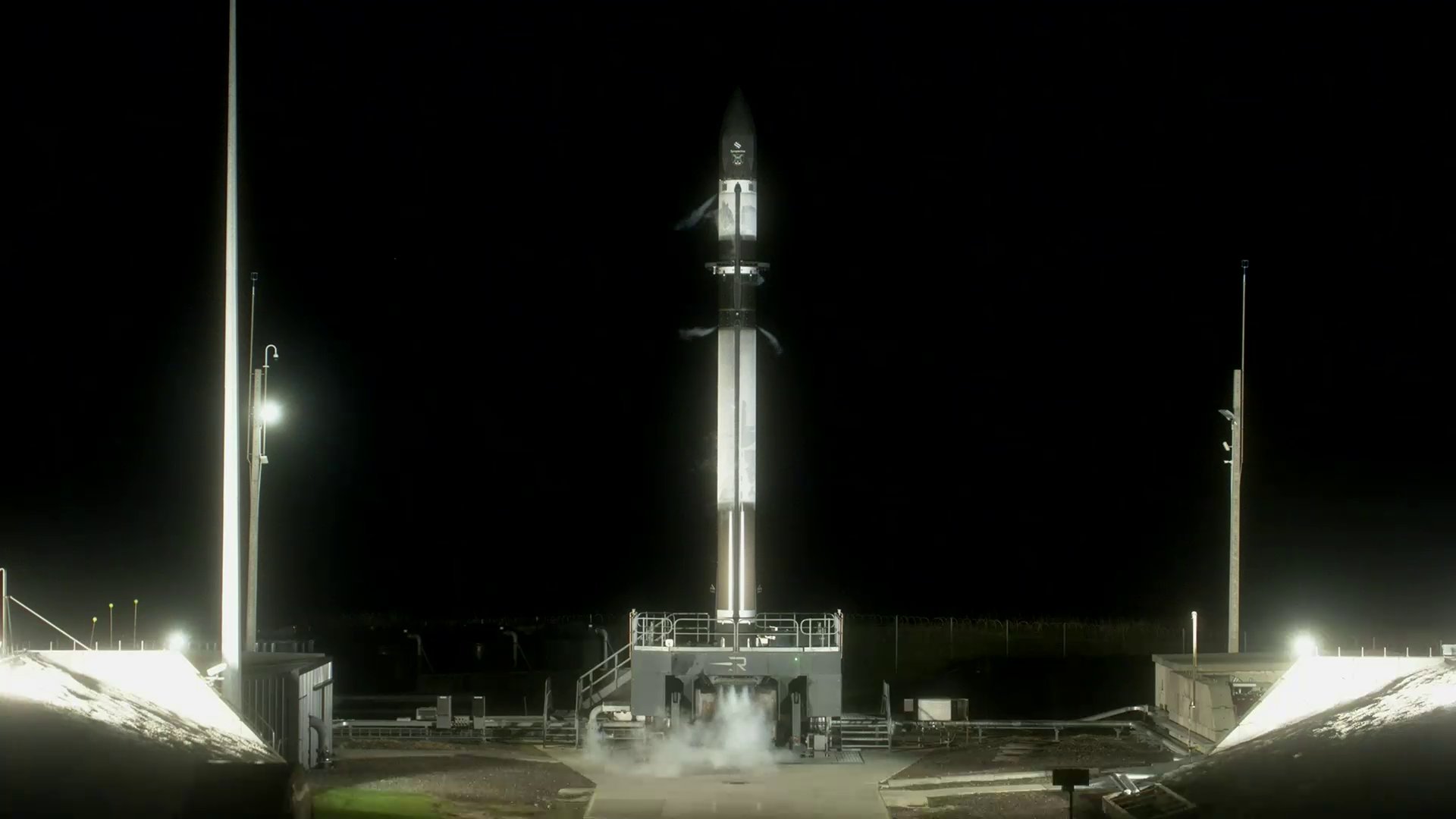
Launch facts
| Rocket | Electron |
| Operator | Rocket Lab |
| Pad | Rocket Lab Launch Complex 1B, Rocket Lab Launch Complex 1, Mahia Peninsula, New Zealand |
| T-0 (UTC) | 22 May 2026 at 09:33 |
| Status | Success |
Did the launch succeed?
Rocket Lab's Electron rocket successfully launched the Viva La StriX (StriX Launch 9) mission at 09:33 UTC on 22 May 2026 from Launch Complex 1B on New Zealand's Mahia Peninsula. Electron is a two-stage, 18-meter light-lift orbital rocket built by Rocket Lab to deliver small satellites into precise low Earth orbits, and this flight marked another clean deployment for the StriX radar-imaging constellation.
The mission carried a StriX synthetic-aperture radar (SAR) satellite, part of the constellation operated by Japanese Earth-observation company iQPS. According to Rocket Lab, StriX satellites use radar rather than optical cameras, allowing them to image the planet through clouds and at night — a capability that has made the constellation a repeat Electron customer.
What is Electron?
Electron is a dedicated small-satellite launch vehicle capable of lifting roughly 300 kg to low Earth orbit. It is notable for its carbon-composite structure and its nine 3D-printed Rutherford engines on the first stage, each electric-pump-fed rather than using a traditional gas generator. Since its 2017 debut, Electron has become the most-flown dedicated small launcher in the West, providing tailored orbits that rideshare missions cannot always match.
| Detail | Value |
|---|---|
| Mission | Viva La StriX (StriX Launch 9) |
| Rocket | Electron |
| Provider | Rocket Lab |
| Launch time | 09:33 UTC, 22 May 2026 |
| Pad | Launch Complex 1B, Mahia Peninsula, New Zealand |
| Result | Success |
What was the payload?
The payload was a StriX-series SAR satellite for iQPS. Each StriX spacecraft carries a deployable radar antenna and is designed to capture high-resolution imagery day or night, in any weather. iQPS aims to build a constellation large enough to revisit any point on Earth multiple times per day, and dedicated Electron flights let the company place each satellite in its target orbital plane with precision.
Radar-imaging constellations like StriX are used for disaster monitoring, maritime surveillance, infrastructure tracking and agriculture. The dedicated launch model means the customer controls the exact orbit altitude and inclination rather than sharing a drop-off point with dozens of unrelated payloads.
Where did it launch from?
The mission lifted off from Launch Complex 1B at Rocket Lab's private spaceport on the Mahia Peninsula, on the east coast of New Zealand's North Island. Launch Complex 1 is the world's first privately operated orbital launch site and hosts two pads, 1A and 1B, enabling a rapid launch cadence. The southern, coastal location gives Electron a clear range for a wide spread of inclinations, including the sun-synchronous orbits favored by Earth-observation satellites.
You can explore the pad location and follow Rocket Lab's upcoming flights on the Rocket Lab launch hub and the full rocket launch schedule.
How did the mission profile work?
After liftoff, Electron's nine Rutherford first-stage engines burned for roughly two and a half minutes before stage separation. The single vacuum-optimized Rutherford on the second stage then took over, followed by a kick stage that circularizes the orbit and releases the satellite at the precise altitude and inclination required. This kick-stage architecture is central to Electron's ability to deliver small payloads to bespoke orbits.
How to watch and track it live
Rocket Lab typically streams Electron launches on its official webcast, beginning shortly before liftoff. With the mission now complete, the most useful next step is to follow the deployed StriX satellite as it settles into its operational orbit.
- Watch satellites move in real time on the Cosmik live 3D map.
- Check what's flying next on the launch schedule.
- Read the latest launch news for follow-up coverage.
- Learn the basics on how to track satellites.
Where can I learn more?
For background on the vehicle and operator, see the Electron and Rocket Lab Wikipedia entries, and the Mahia Peninsula page for the launch site. Launch data is sourced from The Space Devs Launch Library API.
Follow the newly deployed StriX satellite and every rocket launch live on Cosmik. Open the 3D solar-system and satellite map, browse the launch tracker, and enable free launch alerts so you never miss the next Electron mission from Mahia.
Follow this mission live in 3D and get a free alert before liftoff.
Open the live map →Sources
Next launches
- Dragon CRS-2 SpX-35 — launch time & how to watch — 13 October 2026, 10:33 UTC
- Martian Moon eXplorer (MMX) — launch time & how to watch — 19 October 2026, 19:41 UTC
- Amazon Leo (LV-01) — launch time & how to watch — 29 October 2026
More launch coverage
- Starlink Group 10-47: Falcon 9 Launch Recap — 25 May 2026 — 25 May 2026, 11:48 UTC
- Shenzhou 23 Launch Success: Long March 2F Flew 24 May 2026 — 24 May 2026, 15:08 UTC
- Starship Flight 12 Recap: SpaceX Succeeds on 22 May 2026 — 22 May 2026, 22:30 UTC
- Falcon 9 Starlink Group 10-31: Launch Success (21 May 2026) — 21 May 2026, 10:04 UTC
- Starlink Group 17-42 Launch Recap: Falcon 9 Succeeds May 20, 2026 — 20 May 2026, 02:46 UTC
- Vega-C Launches SMILE Mission for ESA — 19 May 2026 Recap — 19 May 2026, 03:52 UTC