Starship Flight 12 Recap: SpaceX Succeeds on 22 May 2026
Published · Updated
StarshipSpaceXFlight 12Starbase✓ recap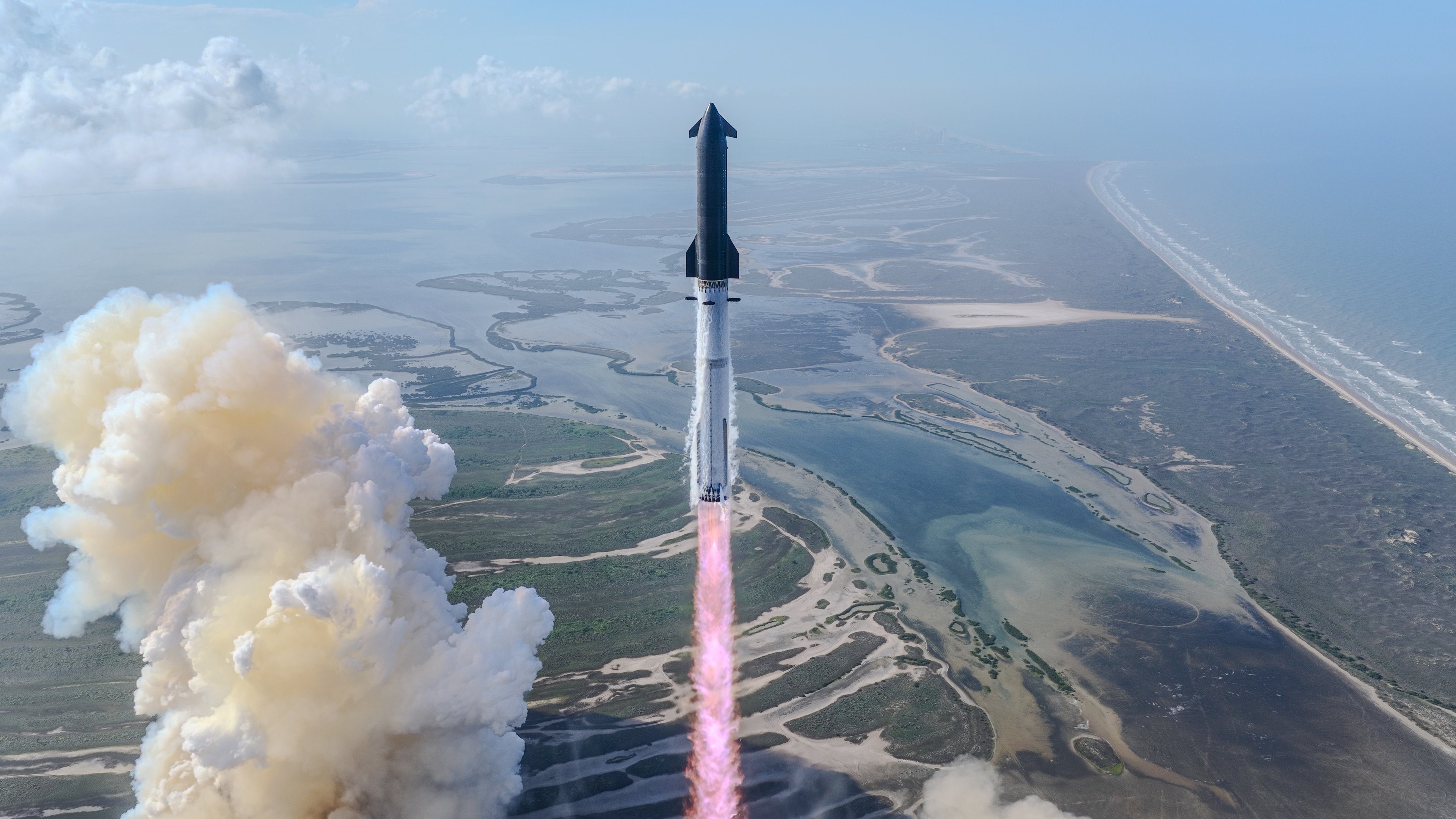
Launch facts
| Rocket | Starship |
| Operator | SpaceX |
| Pad | Orbital Launch Pad 2, SpaceX Starbase, TX, USA |
| T-0 (UTC) | 22 May 2026 at 22:30 |
| Status | Success |
What happened on Starship Flight 12?
SpaceX's Starship Flight 12 lifted off successfully at 22:30 UTC on 22 May 2026 from Orbital Launch Pad 2 at SpaceX Starbase in Boca Chica, Texas. Starship is the world's largest and most powerful rocket, a fully reusable two-stage launch system standing roughly 121 meters tall and designed to carry cargo and crew to Earth orbit, the Moon, and Mars.
According to SpaceX, the flight was declared a success, continuing the company's iterative test-and-fly development campaign for the vehicle. Flight 12 is the twelfth full integrated test of the Super Heavy booster and Starship upper stage combination.
Did the launch succeed?
Yes. The mission status is confirmed as a success. The launch marks another milestone in the Starship program, which SpaceX is developing as the backbone of future satellite deployment, lunar landings under NASA's Artemis program, and long-term Mars exploration.
Key mission facts
| Detail | Value |
|---|---|
| Mission | Starship Flight 12 |
| Rocket | Starship (Super Heavy + Ship) |
| Operator | SpaceX |
| Launch site | Orbital Launch Pad 2, Starbase, TX |
| Liftoff | 22:30 UTC, 22 May 2026 |
| Outcome | Success |
What is Starship?
Starship consists of two stages. The first stage, the Super Heavy booster, is powered by 33 Raptor engines that generate roughly 74.4 meganewtons of thrust at liftoff — more than double the thrust of the Saturn V that sent astronauts to the Moon. The second stage, called Ship, is the upper stage and payload carrier, powered by six Raptor engines. Both stages are built from stainless steel and are designed to be fully and rapidly reusable, a first in spaceflight history.
Fully stacked, Starship stands about 121 meters tall and can deliver on the order of 100 to 150 tonnes to low Earth orbit in its reusable configuration, per SpaceX's published performance figures. That payload capacity is intended to slash launch costs and enable large-scale deployment of next-generation Starlink satellites.
Why does Flight 12 matter?
Each Starship flight tests critical systems before the vehicle enters operational service. Priorities across the test campaign have included booster liftoff and separation, upper-stage engine performance, in-space maneuvering, heat-shield survival during reentry, and controlled landing burns for both stages. A successful Flight 12 advances SpaceX toward routine orbital operations, payload deployment, and eventual propellant transfer in orbit — a prerequisite for the Artemis III lunar landing, for which NASA selected a Starship-derived Human Landing System.
The Starbase launch complex in South Texas is SpaceX's dedicated Starship development and production hub, hosting the Orbital Launch Pads, integration towers, and the Raptor engine test infrastructure that support this rapid flight cadence.
How to watch and track the flight
SpaceX streams Starship launches live on its official channels, typically beginning coverage shortly before liftoff. For the trajectory and the objects reaching orbit, you can follow along on Cosmik's real-time tools.
- Explore the vehicle and deployed hardware on the live 3D satellite map.
- See what's flying next on the rocket launch schedule.
- Browse more SpaceX missions and Starbase launches.
- Catch up on the latest launch news.
Where can I learn more about Starship?
Background on the vehicle and its operator is available from established references, and launch data used here is drawn from the public launch API.
What's next?
SpaceX operates an iterative campaign, meaning lessons from Flight 12 feed directly into the next stacked vehicle. Future flights are expected to push further on reuse, payload deployment, and orbital operations as the company scales toward operational service. Track upcoming Starship attempts and the broader manifest on our launch tracker.
Follow every Starship flight live on Cosmik. Watch launches unfold on our 3D solar-system and satellite map, and turn on free launch alerts so you never miss the next liftoff from Starbase.
Follow this mission live in 3D and get a free alert before liftoff.
Open the live map →Sources
Next launches
- Dragon CRS-2 SpX-35 — launch time & how to watch — 13 October 2026, 10:33 UTC
- Martian Moon eXplorer (MMX) — launch time & how to watch — 19 October 2026, 19:41 UTC
- Amazon Leo (LV-01) — launch time & how to watch — 29 October 2026
More launch coverage
- Falcon 9 Starlink Group 17-37: Launch Succeeds 26 May 2026 — 26 May 2026, 14:50 UTC
- Starlink Group 10-47: Falcon 9 Launch Recap — 25 May 2026 — 25 May 2026, 11:48 UTC
- Shenzhou 23 Launch Success: Long March 2F Flew 24 May 2026 — 24 May 2026, 15:08 UTC
- Electron 'Viva La StriX' Launch Recap: Success on 22 May 2026 — 22 May 2026, 09:33 UTC
- Falcon 9 Starlink Group 10-31: Launch Success (21 May 2026) — 21 May 2026, 10:04 UTC
- Starlink Group 17-42 Launch Recap: Falcon 9 Succeeds May 20, 2026 — 20 May 2026, 02:46 UTC