Long March 10B Demo Flight: Launch Recap for 10 July 2026
Published · Updated
Long March 10BCASCWenchangChina spaceflight✓ recap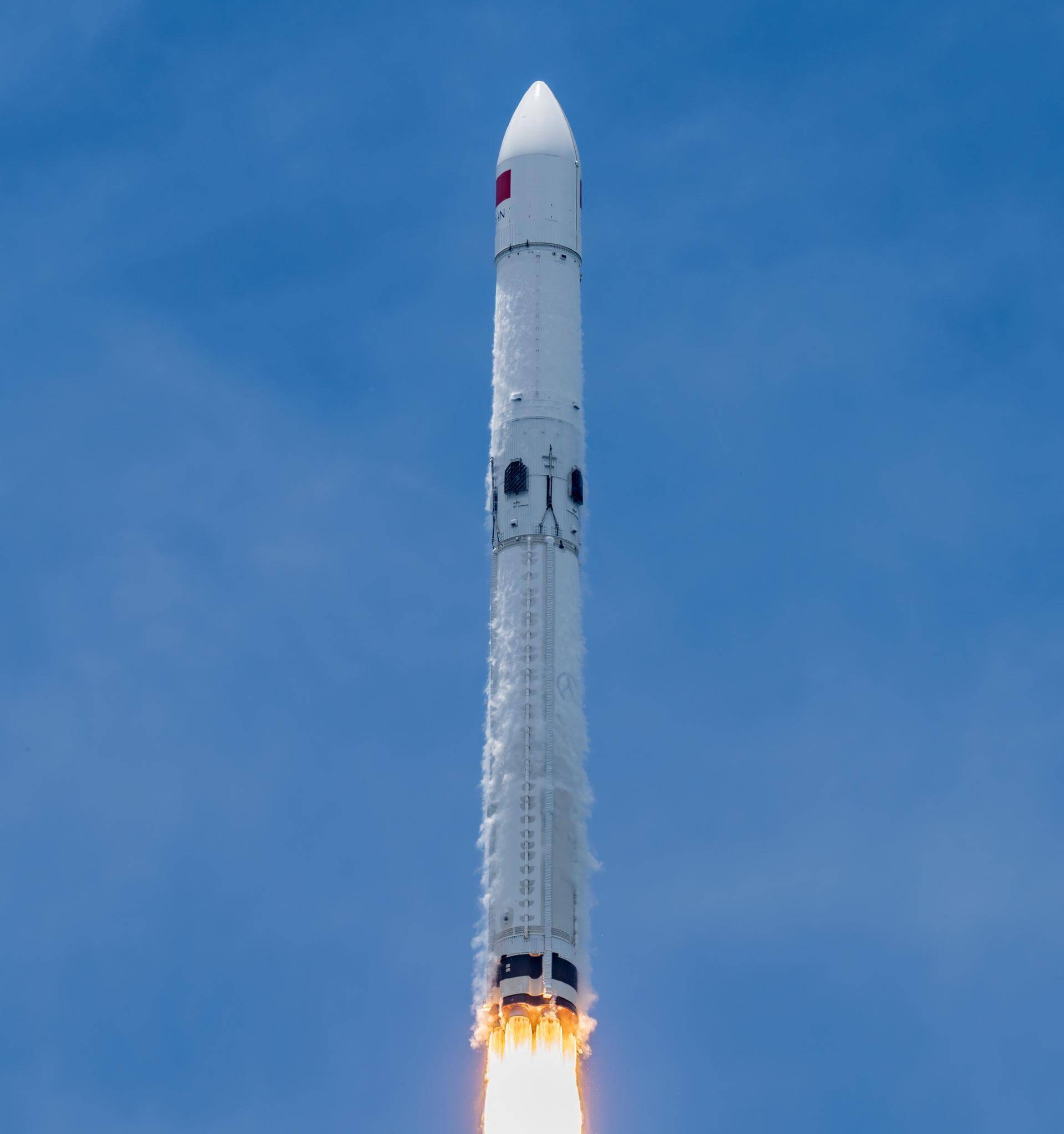
Launch facts
| Rocket | Long March 10B |
| Operator | China Aerospace Science and Technology Corporation |
| Pad | Commercial LC-2, Wenchang Space Launch Site, People's Republic of China |
| T-0 (UTC) | 10 July 2026 at 04:15 |
| Status | Success |
What happened?
The Long March 10B completed its inaugural demonstration flight successfully on 10 July 2026 at 04:15 UTC, lifting off from Commercial LC-2 at the Wenchang Space Launch Site in the People's Republic of China. The rocket is a single-stick, next-generation heavy-lift launch vehicle developed by the China Aerospace Science and Technology Corporation (CASC) as the core variant of China's crewed lunar rocket family.
The Long March 10B is the reusable-oriented, single-core configuration of the broader Long March 10 program, distinguished from the three-core variant designed for lunar missions. This demonstration flight validated the vehicle's core stage, propulsion, and flight systems ahead of operational service.
Did the launch succeed?
Yes. The mission is officially listed as a Success. The demonstration flight met its primary objectives, marking a key milestone for CASC's next-generation launch fleet and China's ambitions to land astronauts on the Moon before 2030.
Mission at a glance
| Detail | Value |
|---|---|
| Rocket | Long March 10B |
| Mission | Demo Flight |
| Provider | China Aerospace Science and Technology Corporation |
| Pad | Commercial LC-2, Wenchang Space Launch Site |
| Launch time | 10 July 2026, 04:15 UTC |
| Result | Success |
What is the Long March 10B?
The Long March 10 series is China's heavy-lift launch system engineered primarily for crewed lunar exploration. The three-core version is designed to send a crewed spacecraft and a lunar lander toward the Moon, supporting a landing target before 2030. The Long March 10B is the single-core derivative, intended for launches to low Earth orbit, including crewed missions to China's future space station operations and next-generation crew vehicles.
According to CASC, the Long March 10 family uses clustered YF-100K kerolox engines derived from the proven YF-100 family that powers the Long March 5, 6, 7 and 8 rockets. The design incorporates provisions for booster recovery and reuse, aligning China's flagship rocket with the reusability trend led globally by operators such as SpaceX.
Why does this launch matter?
This demonstration flight is a foundational step toward China's crewed lunar landing goal. Validating the single-core Long March 10B first reduces risk for the far more complex three-core configuration, which must lift substantially heavier payloads on translunar trajectories.
- It confirms the performance of the new YF-100K engine cluster in flight.
- It qualifies Wenchang's Commercial LC-2 pad for next-generation heavy-lift operations.
- It advances the timeline for China's stated goal of a crewed Moon landing before 2030.
Wenchang, located on Hainan Island near the equator, is China's newest and southernmost spaceport. Its low latitude provides a performance advantage for launches to equatorial and geostationary transfer orbits, and it is the only Chinese site capable of handling the country's largest rockets.
How was it tracked?
Orbital objects and active launch vehicles can be followed in real time on Cosmik's live 3D satellite map. You can also review upcoming missions on our rocket launch schedule and catch the newest coverage on the latest launch news page.
What comes next?
With the demonstration flight complete, CASC is expected to proceed toward operational Long March 10B flights and, ultimately, the three-core Long March 10 that will underpin crewed lunar missions. Each subsequent flight builds confidence in the hardware ahead of high-stakes human spaceflight.
Launch data for this mission is sourced from The Space Devs Launch Library. For deeper background, see the Long March 10, CASC, and Wenchang Space Launch Site pages on Wikipedia.
Follow every launch live on Cosmik
Track newly deployed satellites, follow the next rocket to fly, and enable free launch alerts so you never miss a liftoff. Explore the live 3D map of the solar system and every satellite in orbit and turn on notifications today.
Follow this mission live in 3D and get a free alert before liftoff.
Open the live map →Sources
Next launches
- Dragon CRS-2 SpX-35 — launch time & how to watch — 13 October 2026, 10:33 UTC
- Martian Moon eXplorer (MMX) — launch time & how to watch — 19 October 2026, 19:41 UTC
- Amazon Leo (LV-01) — launch time & how to watch — 29 October 2026
More launch coverage
- Falcon 9 Starlink Group 10-45: Launch Success (14 July 2026) — 14 July 2026, 09:10 UTC
- Falcon 9 Starlink Group 15-14 Launch Recap: Success on 14 July 2026 — 14 July 2026, 01:28 UTC
- Falcon 9 Starlink Group 17-48 Launch Recap — 11 July 2026 — 11 July 2026, 03:01 UTC
- Falcon 9 Starlink Group 10-42: Launch Recap (9 July 2026) — 9 July 2026, 09:25 UTC
- Falcon 9 Transporter-17 Rideshare: Launch Recap (7 July 2026) — 7 July 2026, 07:12 UTC
- Long March 8A Launches SpaceSail Polar #14 — July 5, 2026 — 5 July 2026, 13:43 UTC