Long March 8 Launches SpaceSail Polar Group #7 — 7 April 2026
Published · Updated
Long March 8SpaceSailQianfanCASC✓ recap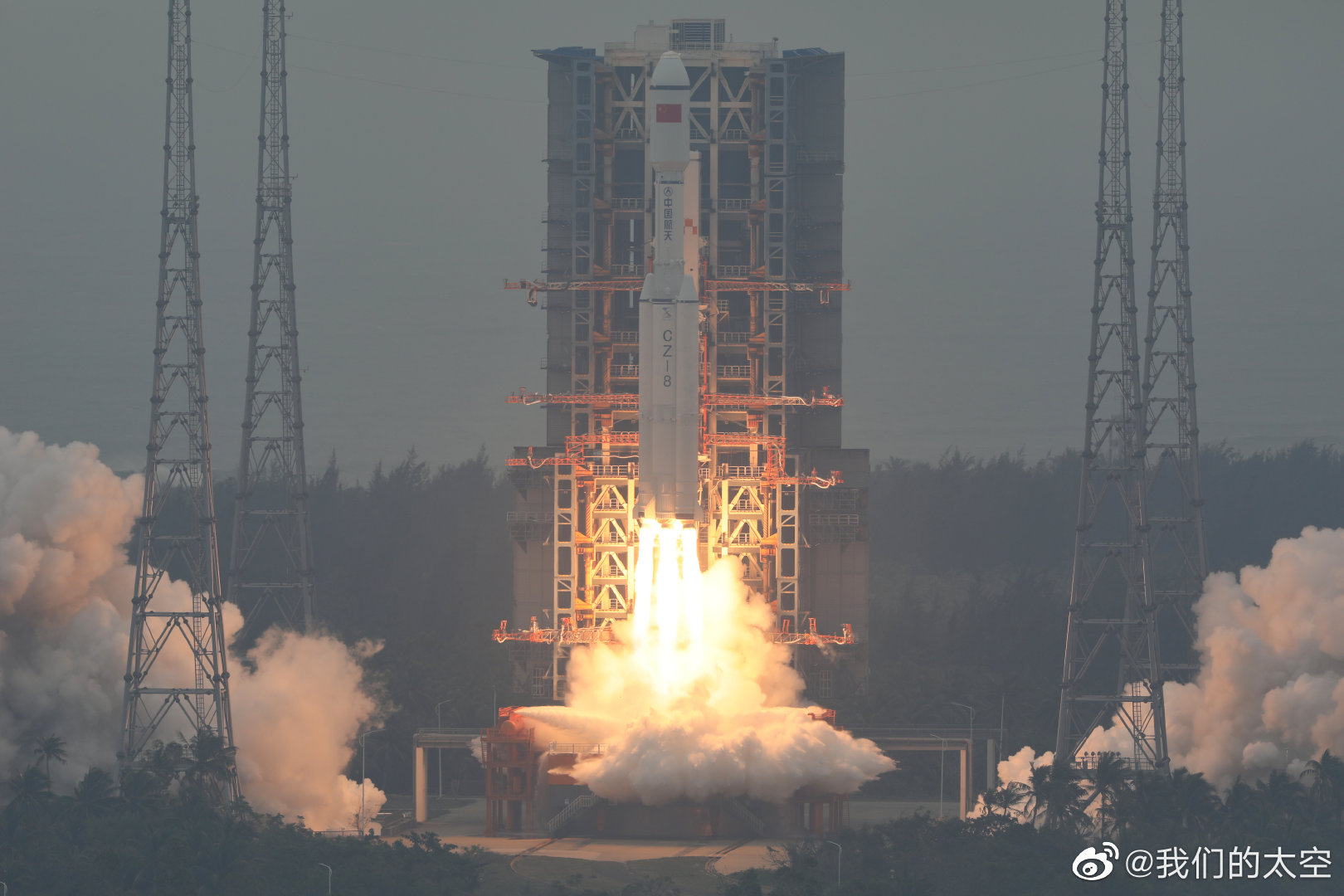
Launch facts
| Rocket | Long March 8 |
| Operator | China Aerospace Science and Technology Corporation |
| Pad | Commercial LC-1, Wenchang Space Launch Site, People's Republic of China |
| T-0 (UTC) | 7 April 2026 at 13:32 |
| Status | Success |
What just launched?
A Long March 8 rocket successfully launched the SpaceSail Polar Group #7 batch of broadband satellites on 7 April 2026 at 13:32 UTC from Commercial LC-1 at the Wenchang Space Launch Site in China. The mission, operated by the China Aerospace Science and Technology Corporation (CASC), reached orbit and was declared a success.
The Long March 8 is a two-stage, kerosene- and hydrogen-fueled medium-lift launch vehicle designed for sun-synchronous and polar missions, and this flight added another block of spacecraft to China's growing SpaceSail (Qianfan/G60) low-Earth-orbit broadband constellation.
Did the launch succeed?
Yes. According to CASC, the Long March 8 delivered the SpaceSail Polar Group #7 satellites to their target orbit, marking a successful mission. The vehicle lifted off precisely at 13:32 UTC from the coastal Wenchang pad on Hainan Island, which sits at roughly 19 degrees north latitude and is China's newest and most modern spaceport.
Launch snapshot
| Parameter | Detail |
|---|---|
| Rocket | Long March 8 |
| Payload | SpaceSail Polar Group #7 |
| Operator | China Aerospace Science and Technology Corporation |
| Launch site | Commercial LC-1, Wenchang, China |
| Liftoff (UTC) | 7 April 2026, 13:32 |
| Result | Success |
What is the payload?
The SpaceSail constellation — also known as Qianfan ("Thousand Sails") or the G60 Starlink project — is a Shanghai-backed low-Earth-orbit network intended to deliver global broadband internet. The operator has publicly stated a goal of deploying more than 10,000 satellites, with an initial phase targeting around 1,296 spacecraft. It is one of China's principal answers to Western mega-constellations and launches in batches on multiple rocket types.
The "Polar Group" designation indicates deployment into a high-inclination polar orbit, which maximizes coverage across all latitudes as the satellites sweep over the poles on each pass. LEO broadband satellites of this class typically operate at altitudes near 800 kilometers, low enough for the short signal latency that makes real-time internet service practical.
Why Wenchang and Long March 8?
Commercial LC-1 at Wenchang is part of a new commercial launch complex built to raise China's flight cadence for constellation deployment. The Long March 8 is well matched to this role: its variants are optimized for sun-synchronous and polar orbits, exactly the regimes SpaceSail requires. The rocket family debuted in December 2020 and has become a workhorse for medium-lift missions to LEO.
Wenchang's low-latitude coastal location lets rockets drop spent stages safely over the ocean, and its southerly position provides an efficiency boost for many trajectories compared with China's inland spaceports.
How to watch and track the satellites
The SpaceSail Polar Group #7 satellites will appear in public tracking catalogs in the days following launch as they are catalogued and raise into their operational orbit. You can follow the deployed spacecraft and thousands of other objects on the Cosmik live 3D satellite map, and browse upcoming missions on the rocket launch schedule.
For more Chinese and international missions, see our latest launch news, and learn the basics of orbital tracking with our guide to tracking satellites.
Background: the Long March 8 and SpaceSail
The Long March 8 is developed by the China Academy of Launch Vehicle Technology under CASC. Standard configurations use a hydrolox second stage atop a kerolox core, with optional strap-on boosters for heavier payloads. As constellation demand grows, China has been increasing production and launch frequency of the vehicle to meet ambitious deployment targets.
SpaceSail has ramped its launch tempo across 2025 and 2026, steadily building toward its first-phase constellation. Each polar-group batch extends coverage and brings the network closer to continuous global service.
- Rocket: Long March 8, medium-lift, LEO/SSO optimized
- Constellation goal: 10,000+ satellites long term
- Spaceport: Wenchang, ~19°N latitude
Sources
Mission data via The Space Devs Launch Library. Background on the vehicle and operator from Long March 8, Qianfan (SpaceSail), and Wenchang Space Launch Site on Wikipedia.
Follow it live on Cosmik
Track the newly deployed SpaceSail satellites and watch the next Long March launches unfold in real time on Cosmik's 3D map. Enable free launch alerts so you never miss a liftoff.
Follow this mission live in 3D and get a free alert before liftoff.
Open the live map →Sources
Next launches
- Dragon CRS-2 SpX-35 — launch time & how to watch — 13 October 2026, 10:33 UTC
- Martian Moon eXplorer (MMX) — launch time & how to watch — 19 October 2026, 19:41 UTC
- Amazon Leo (LV-01) — launch time & how to watch — 29 October 2026
More launch coverage
- Smart Dragon 3 Launches SatNet Test Satellite — 11 April 2026 Recap — 11 April 2026, 11:32 UTC
- Falcon 9 Starlink Group 17-21 Launch Recap: Success on 11 April 2026 — 11 April 2026, 05:04 UTC
- Long March 6A Launches SatNet LEO Group 21 — 8 April 2026 Recap — 8 April 2026, 19:38 UTC
- Minotaur IV STP-S29A Launch Recap: Success on 7 April 2026 — 7 April 2026, 11:33 UTC
- Starlink Group 17-35 Launches on Falcon 9 — 7 April 2026 Recap — 7 April 2026, 02:50 UTC
- Atlas V 551 Launches Amazon Leo (LA-05): 4 April 2026 Recap — 4 April 2026, 05:46 UTC