Long March 8 Launches SpaceSail Polar Group #12 — 5 June 2026 Recap
Published · Updated
Long March 8SpaceSailQianfanCASC✓ recap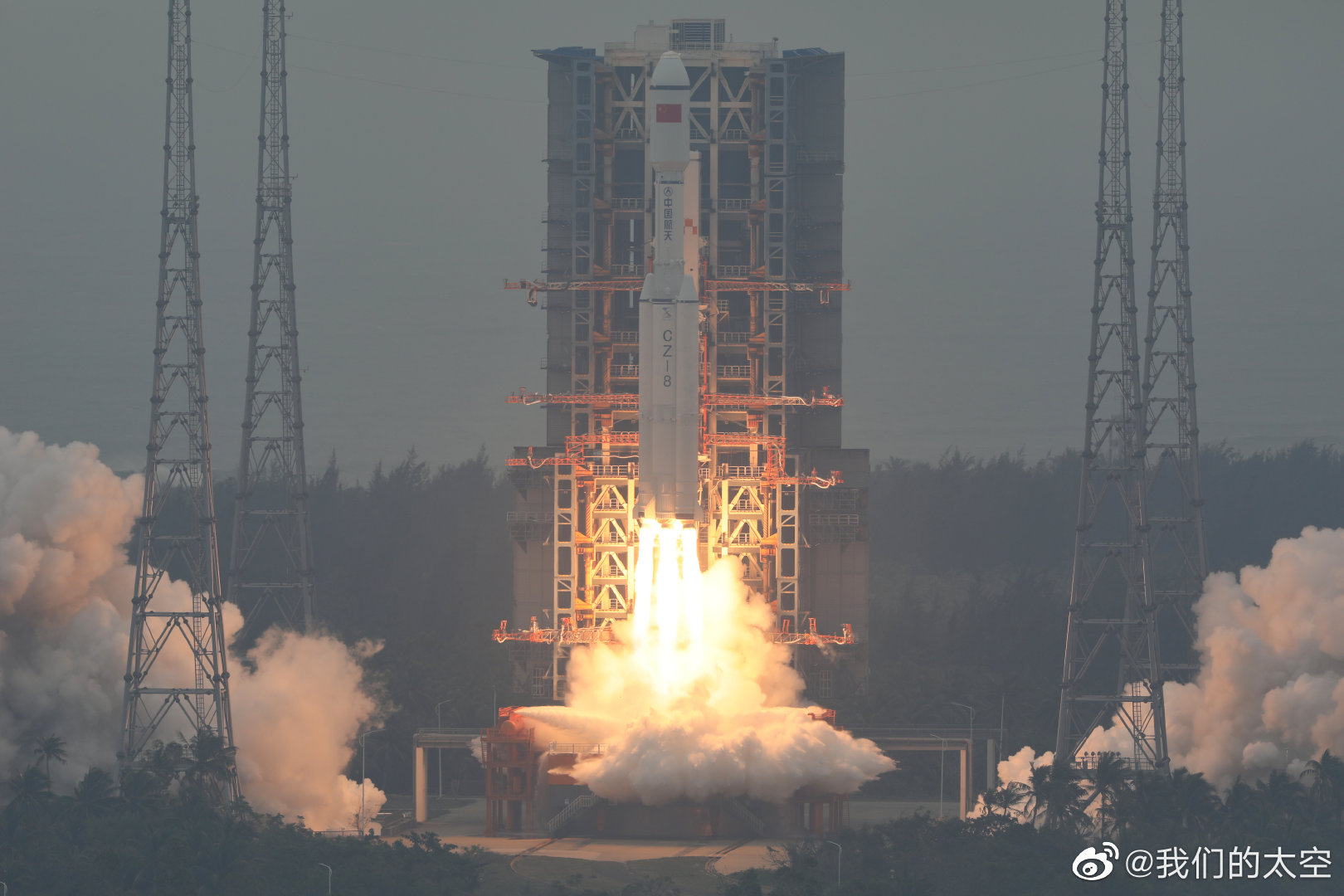
Launch facts
| Rocket | Long March 8 |
| Operator | China Aerospace Science and Technology Corporation |
| Pad | Commercial LC-1, Wenchang Space Launch Site, People's Republic of China |
| T-0 (UTC) | 5 June 2026 at 06:34 |
| Status | Success |
What happened?
A Long March 8 rocket successfully launched the SpaceSail Polar Group #12 batch on 5 June 2026 at 06:34 UTC from Commercial LC-1 at the Wenchang Space Launch Site in China. The mission, operated by the China Aerospace Science and Technology Corporation (CASC), reached orbit successfully, adding another cluster of satellites to China's growing polar-orbit broadband constellation.
The Long March 8 is a medium-lift, two-stage orbital rocket derived from China's Long March family, designed specifically to deliver payloads to Sun-synchronous and polar orbits. It can lift roughly 4,500 kg to a 700 km Sun-synchronous orbit, making it a workhorse for the megaconstellation deployments China is racing to complete this decade.
When did the launch take place?
Liftoff occurred at 06:34 UTC on 5 June 2026 (14:34 local Beijing time). The vehicle flew from Commercial LC-1, the newly built commercial launch complex at Wenchang on Hainan Island — a coastal spaceport that allows spent stages to drop safely over water rather than inhabited terrain, unlike China's older inland sites.
What was the payload?
The payload was another batch of satellites for the SpaceSail (Qianfan / "Thousand Sails") constellation, a Chinese low-Earth-orbit broadband network operated in partnership with Shanghai-based Spacecom. The "Polar Group #12" designation indicates this is the twelfth cluster inserted into a polar orbital plane.
SpaceSail is one of China's flagship answers to SpaceX's Starlink. According to publicly stated plans by the operator, the constellation targets more than 14,000 satellites in total, with an initial phase of roughly 1,296 spacecraft providing global broadband coverage. Deploying satellites across multiple polar planes ensures continuous coverage of high-latitude regions, including the poles that geostationary systems cannot reach.
Why polar orbits?
Polar and near-polar orbits carry satellites over Earth's poles on each pass. As the planet rotates beneath them, a full constellation eventually sweeps every point on the surface. This geometry is essential for a truly global broadband service, which is why each numbered "Polar Group" fills a distinct orbital plane in the network's shell.
Did the launch succeed?
Yes. The mission was confirmed a success, with the Long March 8 delivering its payload to the intended orbit. This continues a steady cadence for the Long March 8, which has become CASC's primary vehicle for commercial and constellation launches from the Wenchang commercial pads.
Key mission facts
| Detail | Value |
|---|---|
| Rocket | Long March 8 |
| Payload | SpaceSail Polar Group #12 |
| Operator | China Aerospace Science and Technology Corporation |
| Launch time | 5 June 2026, 06:34 UTC |
| Launch site | Commercial LC-1, Wenchang, China |
| Outcome | Success |
How does this fit into China's constellation race?
SpaceSail sits alongside Guowang and other Chinese LEO networks competing to secure orbital slots and radio-frequency spectrum before rivals do. Each successful batch launch shortens the timeline to operational broadband service and strengthens China's position in the increasingly crowded low-Earth-orbit environment, where thousands of new satellites are being added every year. You can watch these objects populate their orbital shells on the Cosmik live 3D satellite map.
How to track the satellites
Once cataloged, the SpaceSail Polar Group #12 satellites will be visible on Cosmik as they climb toward their operational altitude and spread along their orbital plane. Browse upcoming missions on the rocket launch schedule, catch the latest updates on the launch news feed, and see how orbital tracking works via our guide to tracking satellites.
For background, see the Long March 8 and Wenchang Space Launch Site pages on Wikipedia. Launch data is sourced from The Space Devs Launch Library.
Follow the mission live
Track the SpaceSail Polar Group #12 satellites and every other object in orbit in real time on Cosmik's free 3D map, and enable free launch alerts so you never miss the next Long March 8 liftoff from Wenchang.
Follow this mission live in 3D and get a free alert before liftoff.
Open the live map →Sources
Next launches
- Dragon CRS-2 SpX-35 — launch time & how to watch — 13 October 2026, 10:33 UTC
- Martian Moon eXplorer (MMX) — launch time & how to watch — 19 October 2026, 19:41 UTC
- Amazon Leo (LV-01) — launch time & how to watch — 29 October 2026
More launch coverage
- Zhuque-2E Block 2 Launches 2 SatNet Satellites — 9 June 2026 Recap — 9 June 2026, 08:23 UTC
- Falcon 9 Starlink Group 10-35: Launch Recap (8 June 2026) — 8 June 2026, 10:13 UTC
- Falcon 9 Starlink Group 17-43 Launch Recap — 7 June 2026 — 7 June 2026, 04:24 UTC
- Long March 6A Launches SpaceSail Polar #11 — 4 June 2026 — 4 June 2026, 11:39 UTC
- Starlink Group 10-43 Launch Recap: Falcon 9 Success June 4, 2026 — 4 June 2026, 10:26 UTC
- Falcon 9 Starlink Group 17-47 Recap: Success on 3 June 2026 — 3 June 2026, 15:40 UTC