QuickSounder Launch on Firefly Alpha: Q3 2026
Published · Updated
Firefly AerospaceFirefly AlphaQuickSounderNOAApreview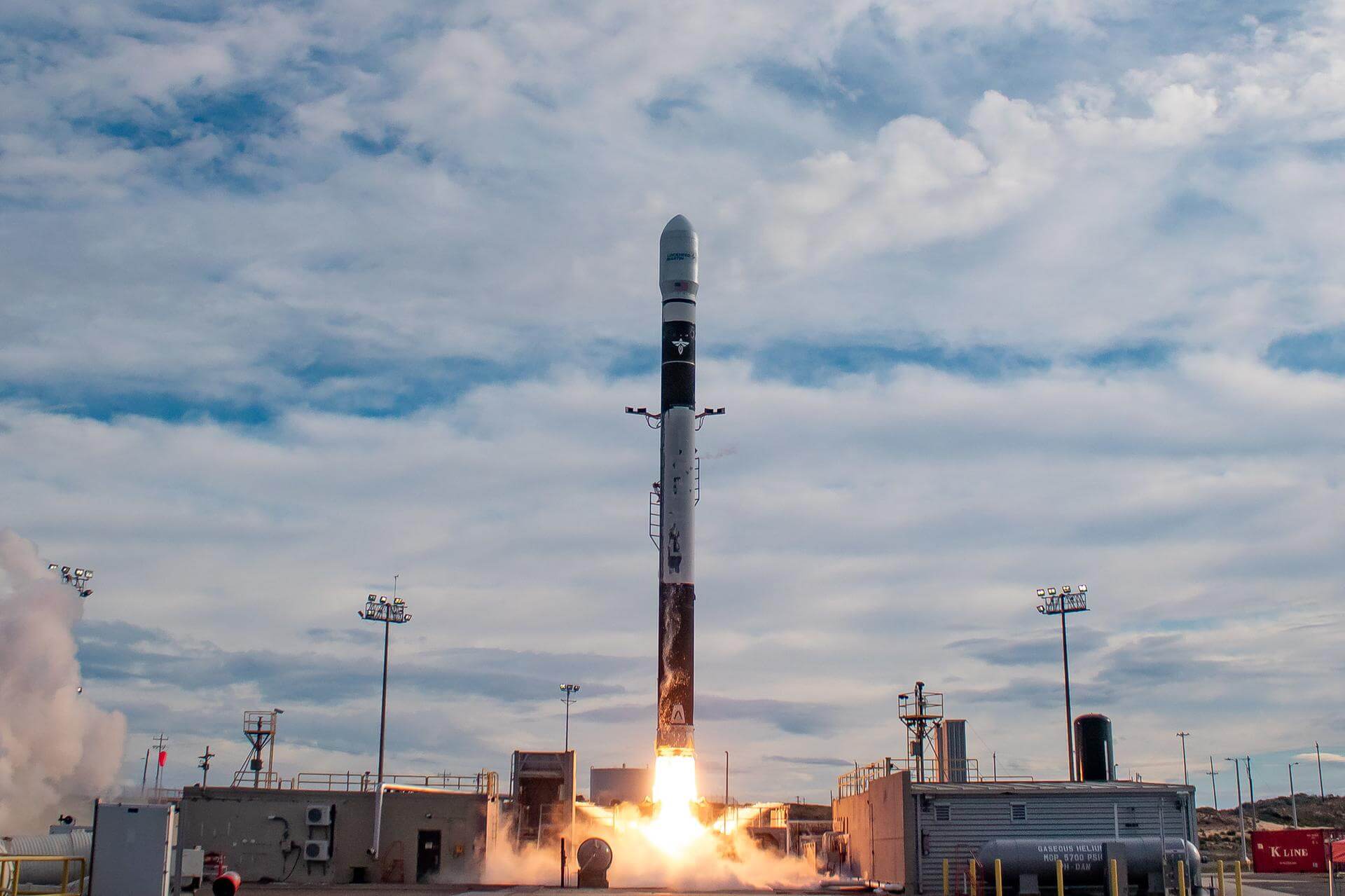
Launch facts
| Rocket | Firefly Alpha Block 2 |
| Operator | Firefly Aerospace |
| Pad | Space Launch Complex 2W, Vandenberg SFB, CA, USA |
| Launch window | Q3 2026 — date TBC |
| Status | TBD |
🚀 QuickSounder Launch on Firefly Alpha: Q3 2026
No confirmed launch date yet
The schedule only says Q3 2026. The day and the liftoff time don't exist yet — not here, not anywhere. There's nothing to count down to.
🚀 No confirmed launch date yet
We'll tell you the moment it gets a real date — and again about an hour before liftoff. Nothing else.
Free · no account · unsubscribe anytime
✈ TelegramWhat is launching?
Firefly Aerospace will launch NOAA's QuickSounder satellite aboard an Alpha Block 2 rocket from Space Launch Complex 2W at Vandenberg Space Force Base, California, no earlier than Q3 2026. Firefly Alpha is a two-stage, all-carbon-composite small-satellite launch vehicle designed to place roughly 1,000 kg into low Earth orbit.
QuickSounder is a NOAA technology-demonstration mission that flies a refurbished microwave sounder instrument to prove out a faster, lower-cost path for the agency's next-generation weather satellites. The mission is a cornerstone of NOAA's Near Earth Orbit Network (NEON) program.
When is the launch?
The current target is in Q3 2026, though the status is listed as TBD and the exact liftoff time may shift as the launch approaches. Check the rocket launch schedule for the latest confirmed window.
| Detail | Information |
|---|---|
| Mission | QuickSounder |
| Rocket | Firefly Alpha Block 2 |
| Provider | Firefly Aerospace |
| Pad | SLC-2W, Vandenberg SFB, California |
| Target date | Q3 2026 (NET) |
| Customer | NOAA |
What is the payload?
QuickSounder carries a microwave sounding instrument that measures atmospheric temperature and moisture profiles, data critical to numerical weather prediction. According to NOAA, the mission's central goal is to validate a streamlined satellite-development model, using existing and refurbished hardware to shorten build times and cut costs compared with the agency's larger flagship weather spacecraft.
By demonstrating that a smaller, quickly built satellite can deliver useful operational sounding data, NOAA aims to inform the architecture of the broader NEON constellation that will eventually replace aging polar-orbiting weather assets.
Why does the Alpha Block 2 matter?
Firefly Alpha is an orbital-class small launcher that has flown a handful of missions from Vandenberg since its 2021 debut. The Block 2 upgrade improves engine performance and structural design to increase payload capacity, part of Firefly's effort to raise Alpha's roughly 1,000 kg to low Earth orbit lift capability and improve reliability.
The rocket's first stage is powered by four Reaver engines and the second stage by a single Lightning engine, both burning liquid oxygen and RP-1 kerosene. Alpha's fully carbon-composite airframe keeps the vehicle light, a key advantage in the dedicated small-satellite market where Firefly competes with providers such as Rocket Lab.
Where is it launching from?
The mission lifts off from Space Launch Complex 2W at Vandenberg Space Force Base on the California coast. Vandenberg is the primary U.S. West Coast spaceport, favored for polar and sun-synchronous orbits because rockets can fly south over open ocean, exactly the trajectory a weather-sounding satellite needs for global coverage. Explore other missions from the site on our Vandenberg launch hub.
How to watch live
Firefly Aerospace typically streams its Alpha launches via its official channels, with coverage beginning shortly before liftoff. Because the mission window is still TBD, confirm the timing before tuning in.
You can follow the countdown and see the rocket's planned trajectory on Cosmik's real-time launch tracker, then watch QuickSounder join Earth orbit on our live 3D satellite map. For more coverage, visit the latest launch news page and browse upcoming missions across every spaceport.
Key facts at a glance
- Payload: QuickSounder microwave-sounding technology demonstrator for NOAA
- Vehicle: Firefly Alpha Block 2, capable of ~1,000 kg to LEO
- Site: SLC-2W, Vandenberg SFB, ideal for sun-synchronous polar orbits
- Date: No earlier than in Q3 2026 (status TBD)
- Program: Part of NOAA's Near Earth Orbit Network (NEON)
Launch data is sourced from The Space Devs Launch Library. Background on the vehicle and operator is drawn from public references including Firefly Alpha, Firefly Aerospace, and Vandenberg Space Force Base.
Follow the mission on Cosmik
Track the QuickSounder countdown, watch the Firefly Alpha ascent, and follow the satellite in orbit on Cosmik's live 3D map of the solar system. Enable free launch alerts so you never miss a liftoff, and check the full launch schedule for the newest updates.
Follow this mission live in 3D and get a free alert before liftoff.
Open the live map →Sources
Next launches
- Bandwagon 5 (Dedicated Mid-Inclination Rideshare) — launch — 19 October 2026, 10:30 UTC
- Martian Moon eXplorer (MMX) — launch time & how to watch — 19 October 2026, 19:41 UTC
- We're Not Hawking Around (3x HawkEye 360) — launch time & — 21 October 2026, 05:00 UTC
More launch coverage
- NeonSat-2 to 6 on Nuri — launch time & how to watch — 7 October 2026, 03:25 UTC
- Transporter 18 (Dedicated SSO Rideshare) — launch time & how — 1 October 2026, 18:32 UTC
- Crew-13 on Falcon 9 Block 5 — launch time & how to watch — 1 October 2026, 15:10 UTC
- Starlink Group 31-1 (Starship Flight 14) — launch time & how — 28 September 2026, 12:48 UTC
- Owlright, Owlright, Owlright (StriX Launch 13) — launch time — 26 September 2026, 00:39 UTC
- SatNet LEO Group 26 — launch time & how to watch — 23 September 2026, 13:32 UTC