Binoculars for satellite watching — what actually works
Here's the honest secret: you don't need any equipment to see the ISS — it's brighter than every star. Where binoculars change the game is everything dimmer: ordinary satellites, faint Starlink trains after they've spread out, and rocket bodies tumbling end over end. The right pair turns a 'was that it?' into a clear moving point you can track across the sky.
For satellites you want light-gathering and field of view, not magnification. High power makes objects brighter but the field so narrow you can't keep a moving satellite in it. The sweet spot: 7× to 10× magnification with big 50-70mm objectives.
The picks
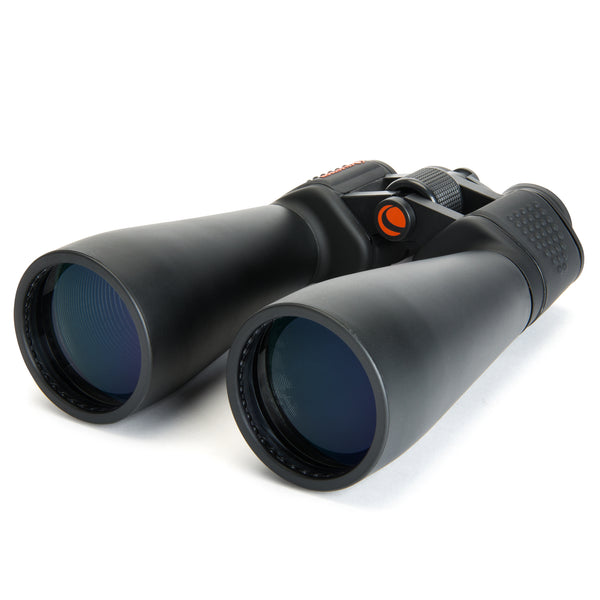
Celestron SkyMaster 15x70
~$90The classic budget astronomy binocular — huge 70mm objectives pull in faint satellites; needs steady hands or a cheap tripod adapter at 15×.
Check price on Amazon →Nikon Aculon A211 10x50
~$110The best all-rounder: 10×50 is the classic satellite/stargazing spec, wide field, easy to hand-hold and track a moving pass.
Check price on Amazon →Celestron Cometron 7x50
~$40Cheapest real option that works — 7× is very easy to keep on a moving satellite, great starter/kids pair.
Check price on Amazon →Binocular tripod adapter
~$15Turns any 15×+ pair into a steady instrument for watching a predicted pass point.
Check price on Amazon →Field tips
- Check the pass prediction first (Cosmik's free alerts tell you exactly when and where to look) — then point the binoculars slightly ahead of the satellite's path and let it fly through your view.
- Sit in a reclining chair; neck strain ends sessions faster than clouds.
- Let your eyes dark-adapt for 10-15 minutes; skip the phone screen or use night mode.
FAQ
Do I need binoculars to see the ISS?
No — the ISS is brighter than any star and easily visible to the naked eye during a good pass. Binoculars are for the thousands of dimmer satellites, spread-out Starlink trains, and seeing the ISS as more than a point of light.
What magnification is best for satellites?
7× to 10× with 50mm or larger objectives. Higher magnification (15×+) gathers more light but makes it genuinely hard to keep a fast-moving satellite in the narrow field of view without a tripod.
Can you see Starlink satellites with binoculars?
Yes — fresh Starlink trains are naked-eye objects in the first days after launch, and binoculars keep them visible for weeks afterwards as they climb and dim. A live tracker tells you exactly when a train crosses your sky.
Know when to look up
Gear is half the equation — timing is the other. Cosmik tracks the ISS and 20,000+ satellites live and sends a free alert ~10 minutes before a visible pass over your exact location.
More guides
- How to photograph the ISS — gear & settings that work (2026)
- Stargazing starter kit — the short list that's actually worth buying
As an Amazon Associate, Cosmik earns from qualifying purchases. Product links go to Amazon search results so you always see current models and prices; recommendations are our own and nobody pays to appear here.