Falcon 9 Launches MRV-1 from Cape Canaveral — July 21, 2026
Published · Updated
Falcon 9SpaceXMRV-1Cape Canaveral✓ recap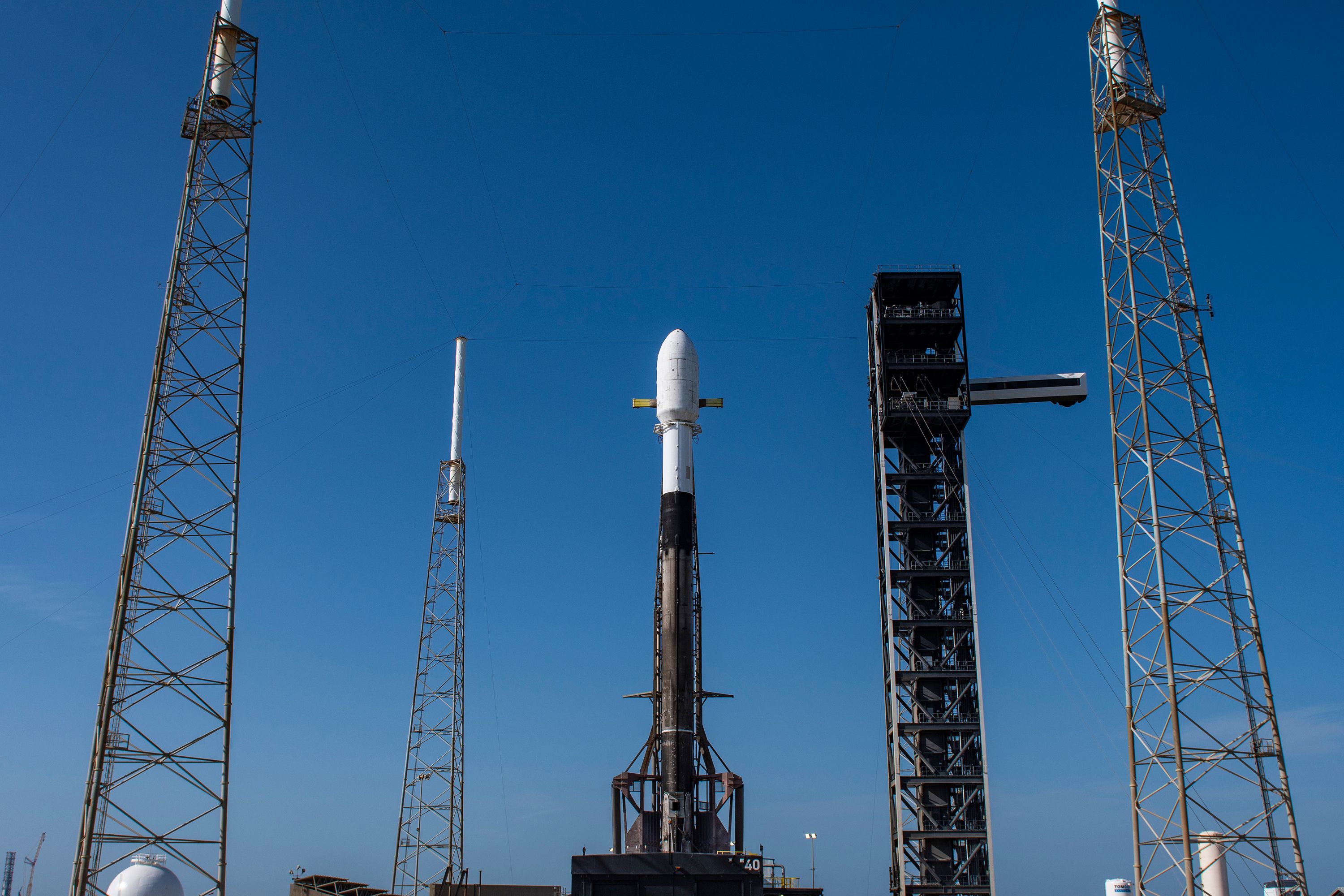
Launch facts
| Rocket | Falcon 9 Block 5 |
| Operator | SpaceX |
| Pad | Space Launch Complex 40, Cape Canaveral SFS, FL, USA |
| T-0 (UTC) | 21 July 2026 at 21:15 |
| Status | Success |
What just launched?
SpaceX launched a Falcon 9 Block 5 rocket carrying the MRV-1 payload on July 21, 2026, at 21:15 UTC from Space Launch Complex 40 at Cape Canaveral Space Force Station, Florida. The Falcon 9 Block 5 is a two-stage, partially reusable orbital rocket built by SpaceX and is currently the most-flown operational launch vehicle in the world.
The mission was in flight following liftoff, continuing SpaceX's high-cadence 2026 launch campaign from Florida's Space Coast.
When and where did the launch happen?
Liftoff occurred at 21:15 UTC (5:15 p.m. EDT) on July 21, 2026. Key facts:
| Detail | Value |
|---|---|
| Rocket | Falcon 9 Block 5 |
| Provider | SpaceX |
| Payload | MRV-1 |
| Launch pad | SLC-40, Cape Canaveral SFS, Florida |
| Liftoff time | 2026-07-21 21:15 UTC |
SLC-40 is one of SpaceX's busiest East Coast pads, supporting a large share of the company's roughly 100-plus annual Falcon 9 flights. Cape Canaveral SFS remains the most active spaceport in the United States.
What is the Falcon 9 Block 5?
The Falcon 9 Block 5 is the fifth and final major iteration of SpaceX's Falcon 9 family, standing about 70 meters tall with nine Merlin engines on its first stage. It is designed for rapid reuse, with individual boosters certified for many flights and returning to land on either an autonomous droneship or a ground pad. According to SpaceX, the Block 5 has become the workhorse of both commercial and government spaceflight, having flown hundreds of successful missions since its 2018 debut.
How the flight unfolded
Following ignition of the nine Merlin engines and clearing the tower, the vehicle throttled through max-Q — the point of maximum aerodynamic pressure — before main engine cutoff and stage separation. The first stage began its descent for a planned recovery while the single Merlin Vacuum engine on the second stage ignited to continue the climb to orbit. The mission was reported in flight at the time of publication.
What is the MRV-1 payload?
MRV-1 was the primary payload aboard this Falcon 9 mission. As with all SpaceX customer flights, the payload was encapsulated within the Falcon 9's composite fairing for the ascent through the atmosphere before deployment on the second stage. Full deployment and orbital insertion details follow the vehicle's upper-stage burn sequence.
Did the launch succeed?
At the time of this recap, the mission status was in flight. SpaceX confirms mission milestones — including stage separation, booster landing, and payload deployment — through its live broadcast and post-launch updates. For the latest confirmed outcome, follow the mission on our rocket launch schedule and latest launch news, which update as official data is released.
How to watch and track the mission
SpaceX typically streams Falcon 9 launches beginning several minutes before liftoff. Once the payload separates, you can follow the newly deployed object and the rest of the fleet in orbit:
- Explore the live 3D satellite map to see the payload's orbit in real time.
- Browse upcoming SpaceX launches and other missions from Cape Canaveral.
- Learn the basics with our guide on how to track satellites.
Why this launch matters
Every Falcon 9 flight reinforces SpaceX's reusability model, which has driven down launch costs and enabled an unprecedented flight rate. With reusable boosters routinely surpassing double-digit flight counts, missions like MRV-1 demonstrate the reliability and cadence that have made the Falcon 9 the backbone of global access to orbit in 2026.
Sources and further reading
- Falcon 9 (Wikipedia)
- SpaceX (Wikipedia)
- Cape Canaveral SFS (Wikipedia)
- The Space Devs Launch Library (data source)
Follow MRV-1 and the entire Falcon 9 fleet live on Cosmik, and enable free launch alerts on our launch tracker so you never miss the next liftoff from Cape Canaveral.
Follow this mission live in 3D and get a free alert before liftoff.
Open the live map →Sources
Next launches
- Dragon CRS-2 SpX-35 — launch time & how to watch — 13 October 2026, 10:33 UTC
- Martian Moon eXplorer (MMX) — launch time & how to watch — 19 October 2026, 19:41 UTC
- Amazon Leo (LV-01) — launch time & how to watch — 29 October 2026
More launch coverage
- Long March 3B/E Launch: Time & How to Watch (23 July 2026) — 23 July 2026, 12:00 UTC
- Gravity-1 Launch: Sea-Based Liftoff Set for 31 July 2026 — 22 July 2026, 02:54 UTC
- Gravity-1 | 9 satellites — launch recap (22 July 2026) — 22 July 2026, 02:54 UTC
- Starlink Group 17-39 Launch Recap: Success on July 21, 2026 — 21 July 2026, 14:49 UTC
- Soyuz 2.1b Launches 16 Rassvet-3 Satellites (19 July 2026) — 19 July 2026, 17:51 UTC
- Vikram-I Demo Flight: Skyroot Launch Recap (18 July 2026) — 18 July 2026, 06:35 UTC