Starship Flight 13 Success: 24 July 2026 Launch Recap
Published · Updated
StarshipSpaceXFlight 13Starbase✓ recap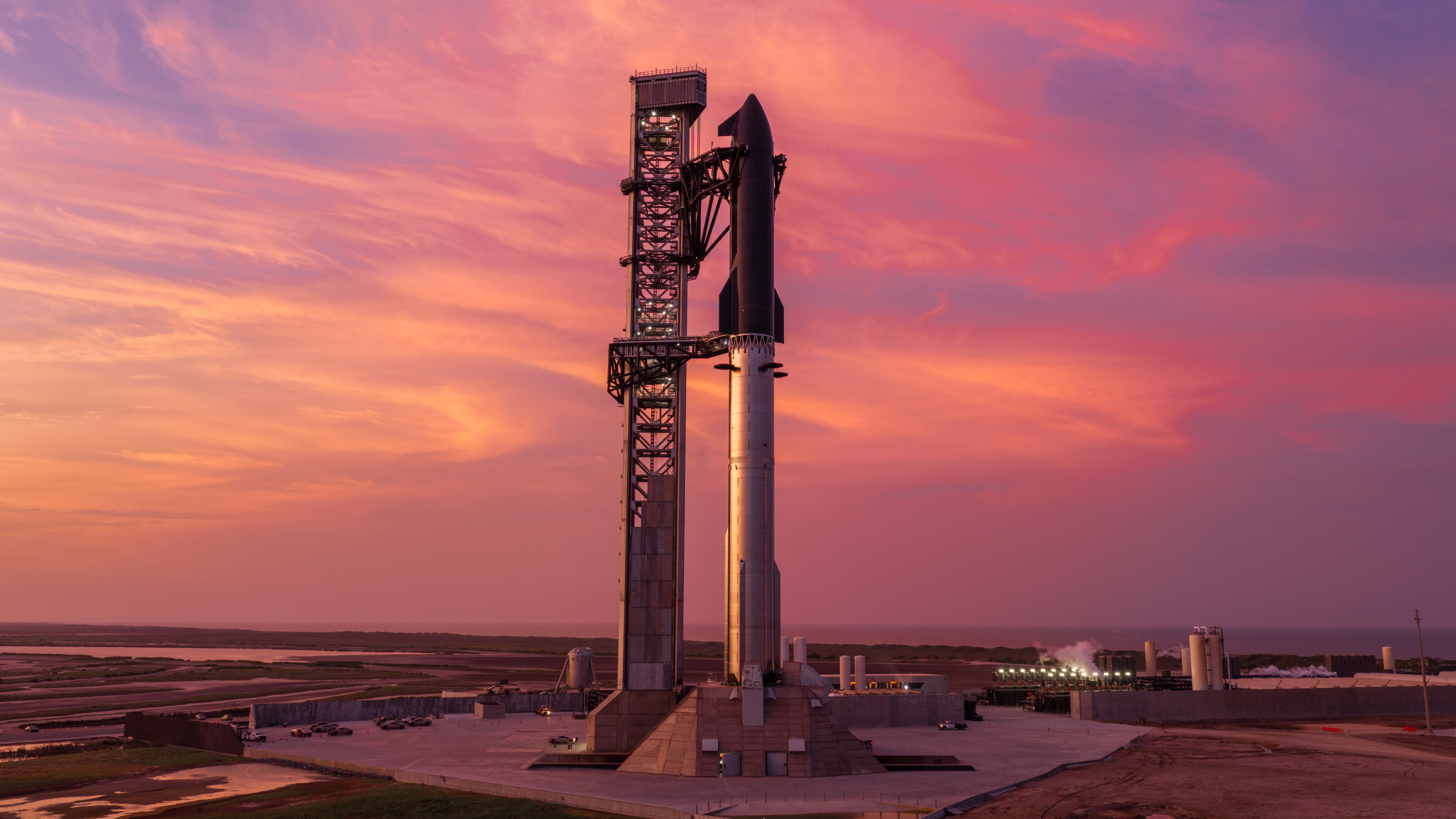
Launch facts
| Rocket | Starship |
| Operator | SpaceX |
| Pad | Orbital Launch Pad 2, SpaceX Starbase, TX, USA |
| T-0 (UTC) | 24 July 2026 at 22:51 |
| Status | Success |
SpaceX's Starship Flight 13 launched successfully at 22:51 UTC on 24 July 2026 from Orbital Launch Pad 2 at Starbase, Texas. Starship is the world's largest and most powerful rocket, a fully reusable two-stage vehicle designed by SpaceX to carry cargo and crew to Earth orbit, the Moon, and Mars.
Did the launch succeed?
Yes. According to SpaceX, Flight 13 was a success, marking another milestone in the Starship test campaign from the company's Boca Chica, Texas facility. The vehicle lifted off on schedule at 22:51 UTC (5:51 p.m. local Central time) from the newer Orbital Launch Pad 2, one of two integration and launch complexes at Starbase.
What is Starship?
Starship is a stainless-steel launch system standing roughly 121 meters (397 feet) tall when fully stacked, combining the Super Heavy booster and the Starship upper stage. The Super Heavy first stage is powered by 33 Raptor engines producing around 74 meganewtons of thrust at liftoff — nearly double the thrust of NASA's Saturn V. The upper stage adds six additional Raptor engines.
Both stages are engineered for full and rapid reuse, a design goal that separates Starship from every operational rocket in service. SpaceX targets eventual payload capacity exceeding 100 metric tons to low Earth orbit in reusable configuration.
When did the launch happen?
Liftoff occurred at 22:51 UTC on 24 July 2026. Here are the key details:
| Detail | Value |
|---|---|
| Mission | Starship Flight 13 |
| Vehicle | Starship (Super Heavy + Starship upper stage) |
| Provider | SpaceX |
| Launch site | Orbital Launch Pad 2, Starbase, TX |
| Liftoff (UTC) | 24 July 2026, 22:51 |
| Outcome | Success |
Why does Flight 13 matter?
Each Starship test flight validates hardware and procedures for the vehicle's long-term missions, which include crewed lunar landings under NASA's Artemis program and the launch of next-generation Starlink satellites in large batches. The Flight 13 designation places this mission well into SpaceX's iterative flight-test series, each building on data from previous launches to refine engine performance, stage separation, heat-shield behavior, and recovery techniques.
Starbase serves as SpaceX's primary Starship development and launch hub. The site's dual orbital pads allow parallel vehicle processing, supporting the high launch cadence SpaceX aims to reach with the fully reusable system.
How was the launch tracked?
Launches from Starbase follow trajectories out over the Gulf of Mexico. You can review the mission and follow SpaceX's next Starbase flights on our Starbase launch schedule, and explore live orbital objects on the Cosmik 3D solar-system and satellite map.
How to follow SpaceX launches live
SpaceX streams Starship flights on its official channels, with coverage typically beginning around 30 to 45 minutes before liftoff. For upcoming missions, our SpaceX launch hub lists confirmed and provisional dates, while the full rocket launch schedule covers every provider worldwide.
Once satellites reach orbit, you can visualize their paths and orbital parameters in real time. Cosmik also tracks the International Space Station and offers a guide on how to track satellites from your location.
What comes next for Starship?
SpaceX continues iterating toward operational Starship flights that will deploy Starlink satellites, support Artemis lunar missions, and ultimately enable interplanetary transport. Following Flight 13's success, attention turns to the next test in the campaign and to progress on booster and ship reuse — the central objective of the entire program.
Stay current with mission outcomes and upcoming attempts on our latest launch news page. Launch data in this article is sourced from the public Launch Library API.
Sources and background
Follow every Starship flight live on Cosmik. Track rockets in real time, watch deployed satellites cross the sky, and enable free launch alerts so you never miss the next liftoff from Starbase.
Follow this mission live in 3D and get a free alert before liftoff.
Open the live map →Sources
Next launches
- Dragon CRS-2 SpX-35 — launch time & how to watch — 13 October 2026, 10:33 UTC
- Martian Moon eXplorer (MMX) — launch time & how to watch — 19 October 2026, 19:41 UTC
- Amazon Leo (LV-01) — launch time & how to watch — 29 October 2026
More launch coverage
- Long March 7A | Tianlian 3-01 — launch recap (29 July 2026) — 29 July 2026, 11:50 UTC
- Long March 7A Launch: Time & How to Watch (17 July 2026) — 29 July 2026, 11:50 UTC
- Starlink Group 17-51: Falcon 9 Launch Recap (25 July 2026) — 25 July 2026, 15:51 UTC
- Kinetica 1 Launches 5 Satellites — 23 July 2026 Recap — 23 July 2026, 23:33 UTC
- Kinetica 1 Launch: July 24, 2026 Time & How to Watch — 23 July 2026, 23:33 UTC
- Long March 3B/E Launch: Time & How to Watch (23 July 2026) — 23 July 2026, 12:00 UTC