Falcon 9 Launches CAS500-2 & Rideshares — 3 May 2026 Recap
Published · Updated
Falcon 9SpaceXCAS500-2Vandenberg✓ recap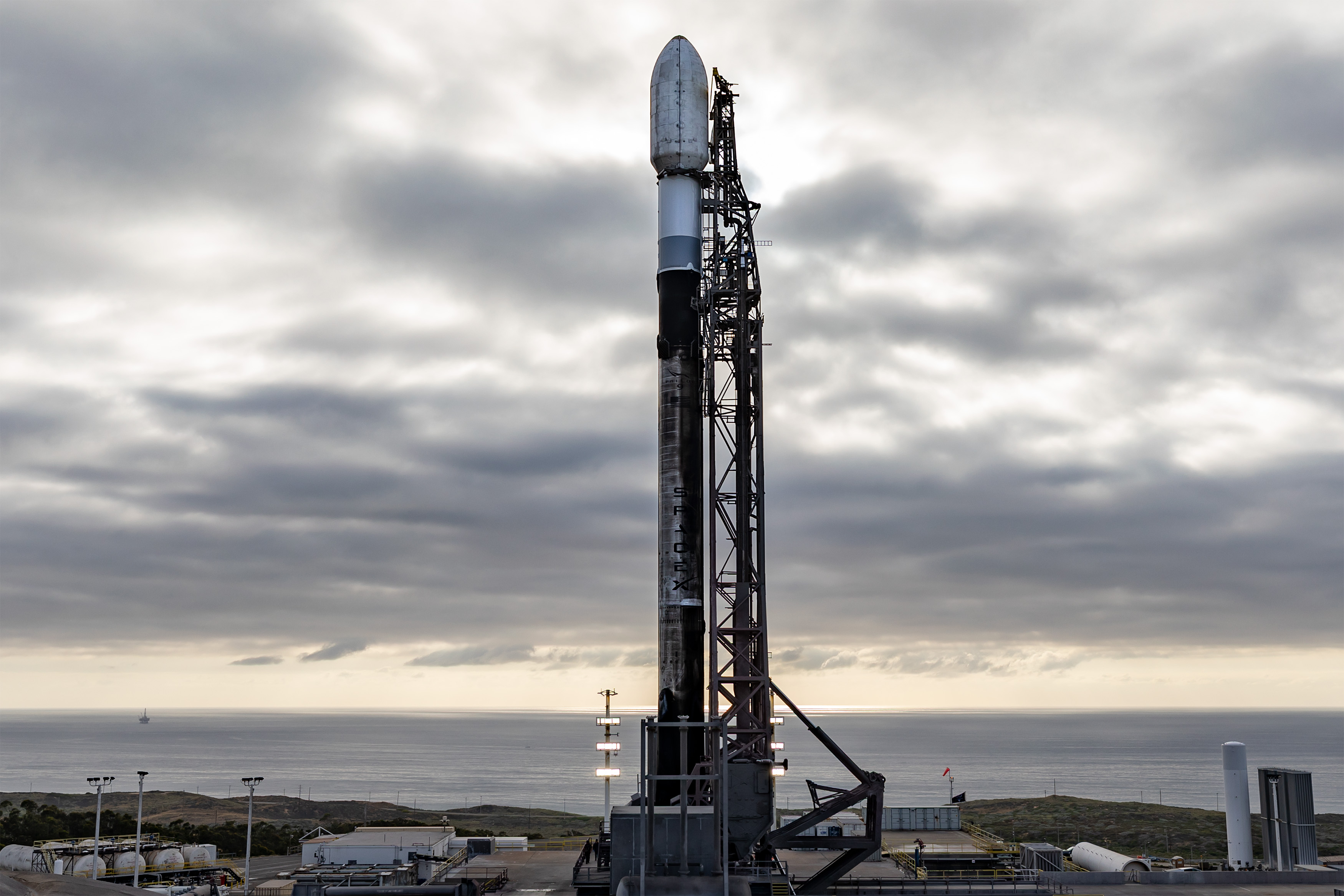
Launch facts
| Rocket | Falcon 9 Block 5 |
| Operator | SpaceX |
| Pad | Space Launch Complex 4E, Vandenberg SFB, CA, USA |
| T-0 (UTC) | 3 May 2026 at 07:00 |
| Status | Success |
Did the launch succeed?
Yes. SpaceX successfully launched a Falcon 9 Block 5 rocket carrying the CAS500-2 Earth-observation satellite and additional rideshare payloads from Space Launch Complex 4E (SLC-4E) at Vandenberg Space Force Base, California, on 3 May 2026 at 07:00 UTC. The Falcon 9 is a two-stage, partially reusable orbital rocket built and operated by SpaceX, and it remains the most-flown vehicle in the world.
What was the payload?
CAS500-2 (Compact Advanced Satellite 500-2) is a South Korean high-resolution optical Earth-observation spacecraft in the roughly 500-kilogram class, developed under the Korea Aerospace Research Institute (KARI) CAS500 program. The satellite delivers sub-meter to meter-class imagery for mapping, agriculture, and disaster monitoring, and it was flown alongside a batch of smaller rideshare satellites on this mission.
The CAS500 series was designed as a standardized, mass-producible platform to lower the cost of Korean Earth-observation missions. CAS500-2 follows its predecessor CAS500-1, extending Korea's independent imaging capability from low Earth orbit.
Where did it go?
The payloads were delivered to a sun-synchronous orbit (SSO), the polar-inclined orbit favored by Earth-observation satellites because it crosses each point on the surface at a consistent local solar time, producing uniform lighting for imagery. Vandenberg's southerly launch corridor over the Pacific is the standard U.S. gateway for reaching such polar orbits.
When did the launch happen?
Liftoff occurred on 3 May 2026 at 07:00 UTC (12:00 a.m. PDT local time) from SLC-4E, SpaceX's West Coast Falcon 9 pad. SLC-4E has hosted dozens of Falcon 9 flights, including numerous Starlink and rideshare missions, and is one of SpaceX's two active polar-launch complexes.
| Detail | Value |
|---|---|
| Rocket | Falcon 9 Block 5 |
| Provider | SpaceX |
| Primary payload | CAS500-2 & rideshares |
| Launch site | SLC-4E, Vandenberg SFB, California |
| Launch time | 3 May 2026, 07:00 UTC |
| Target orbit | Sun-synchronous orbit |
| Result | Success |
What is the Falcon 9 Block 5?
Falcon 9 Block 5 is the final, most reliable iteration of SpaceX's Falcon 9 family, introduced in 2018 and engineered for rapid reuse of its first-stage booster. The 70-meter-tall rocket generates roughly 7,600 kilonewtons of thrust at liftoff from nine Merlin 1D engines and can place more than 22,000 kilograms into low Earth orbit in expendable mode. Its reusable first stage lands either on a droneship or at a landing zone after stage separation.
On Vandenberg SSO missions like this one, the booster typically returns to a Pacific droneship or performs a return-to-launch-site landing, allowing SpaceX to refly the same first stage many times. Multiple boosters in the fleet have exceeded 20 flights, underscoring the reusability that defines the Block 5 design.
Why do rideshare missions matter?
Rideshare launches let multiple operators split the cost of a single Falcon 9 by flying small and medium satellites together to a common orbit. SpaceX's rideshare program has become a primary route to orbit for smallsat operators worldwide, delivering hundreds of spacecraft to sun-synchronous orbit across its dedicated Transporter and rideshare flights. Grouping CAS500-2 with secondary payloads on this mission is a cost-efficient use of the vehicle's lift capacity.
How to track the satellites
Once cataloged, CAS500-2 and the co-passenger satellites can be followed on the Cosmik live 3D satellite map, which visualizes every tracked object in orbit in real time. You can review upcoming missions on the rocket launch schedule, explore more SpaceX launches, and browse recent Vandenberg missions. For a primer on orbital tracking, see our guide on how to track satellites.
Launch data is sourced from The Space Devs Launch Library. Background on the vehicle and site is drawn from Falcon 9, SpaceX, and Vandenberg Space Force Base.
Follow the next launch live
Track CAS500-2 and its rideshare companions as they circle Earth on the Cosmik live map, catch up on the latest launch news, and enable free launch alerts so you never miss the next Falcon 9 liftoff.
Follow this mission live in 3D and get a free alert before liftoff.
Open the live map →Sources
Next launches
- Dragon CRS-2 SpX-35 — launch time & how to watch — 13 October 2026, 10:33 UTC
- Martian Moon eXplorer (MMX) — launch time & how to watch — 19 October 2026, 19:41 UTC
- Amazon Leo (LV-01) — launch time & how to watch — 29 October 2026
More launch coverage
- Falcon 9 NROL-172 Launch Recap: Success on 12 May 2026 — 12 May 2026, 02:13 UTC
- Long March 7 Tianzhou-10: Launch Recap (11 May 2026) — 11 May 2026, 00:14 UTC
- Falcon 9 Starlink Group 17-29: Launch Success on 6 May 2026 — 6 May 2026, 03:59 UTC
- Starlink Group 10-38: Falcon 9 Launch Recap (1 May 2026) — 1 May 2026, 18:06 UTC
- Soyuz-5 Debut Success: Maiden Flight Recap (30 April 2026) — 30 April 2026, 18:00 UTC
- Ariane 64 Launches Amazon Leo LE-02 on 30 April 2026 — 30 April 2026, 08:57 UTC