Electron 'Daughter Of The Stars' Launch Succeeds — 28 March 2026
Published · Updated
Rocket LabElectronLEO-PNT Pathfinder Alaunch recap✓ recap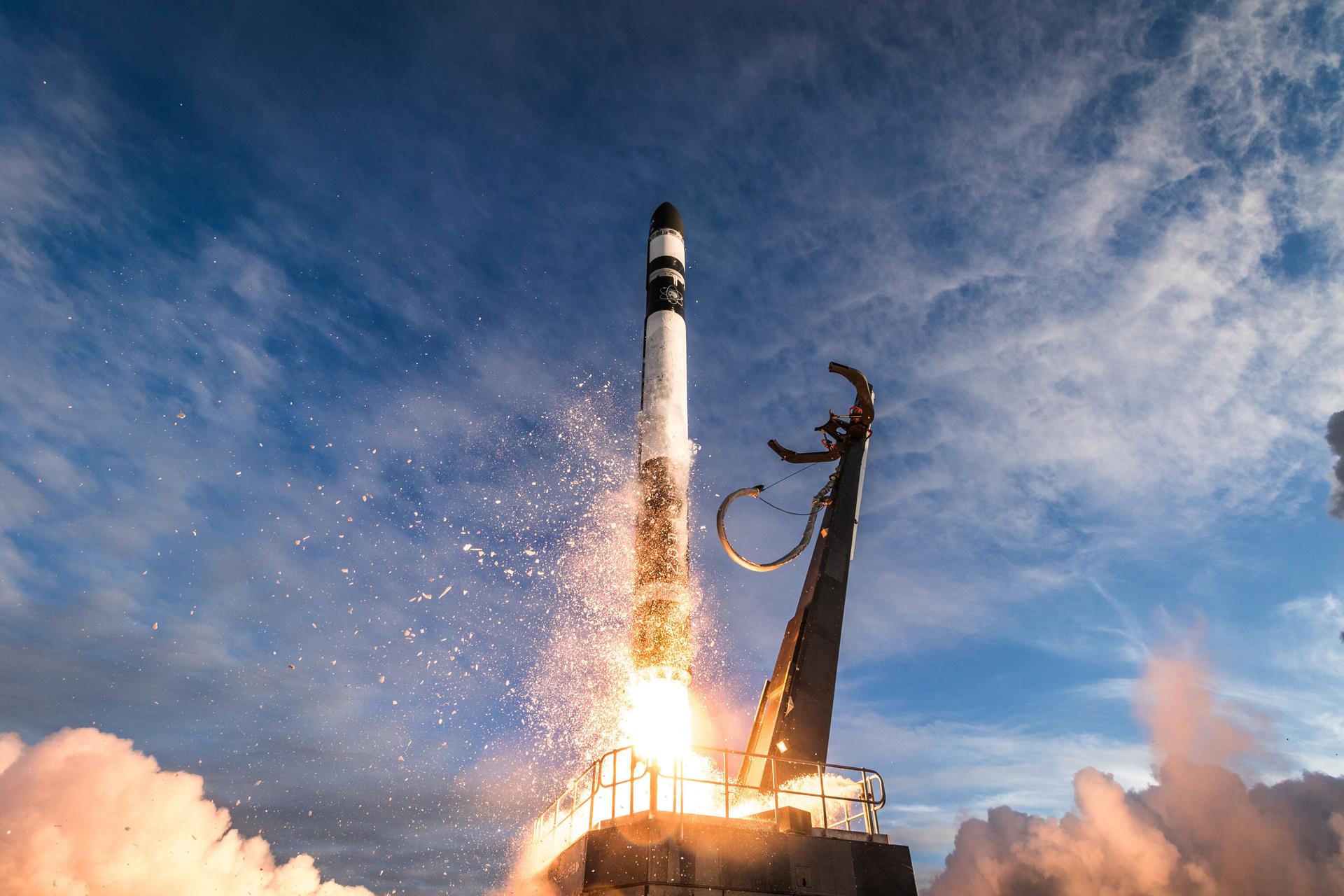
Launch facts
| Rocket | Electron |
| Operator | Rocket Lab |
| Pad | Rocket Lab Launch Complex 1A, Rocket Lab Launch Complex 1, Mahia Peninsula, New Zealand |
| T-0 (UTC) | 28 March 2026 at 09:14 |
| Status | Success |
What happened?
Rocket Lab successfully launched its Electron rocket carrying the LEO-PNT Pathfinder A satellite from Launch Complex 1A on New Zealand's Mahia Peninsula at 09:14 UTC on 28 March 2026. The mission, nicknamed "Daughter Of The Stars," reached orbit as planned, according to Rocket Lab.
Electron is a two-stage, 18-meter-tall small-satellite launch vehicle built by Rocket Lab. It is designed to deliver payloads of up to roughly 300 kg to low Earth orbit and is one of the most frequently flown dedicated small launchers in the world, having flown dozens of times since its 2017 debut.
Did the launch succeed?
Yes. The launch status is confirmed as a success. Electron's first stage, powered by nine Rutherford engines, lifted the vehicle off the pad before stage separation, second-stage ignition, and payload deployment. The single vacuum-optimized Rutherford engine on the upper stage carried the payload the rest of the way to orbit.
Key mission facts
| Detail | Value |
|---|---|
| Rocket | Electron |
| Operator | Rocket Lab |
| Payload | LEO-PNT Pathfinder A |
| Launch site | LC-1A, Mahia Peninsula, New Zealand |
| Liftoff | 09:14 UTC, 28 March 2026 |
| Result | Success |
What is the payload?
The primary payload, LEO-PNT Pathfinder A, is a pathfinder satellite for a low Earth orbit positioning, navigation and timing (PNT) system. LEO-PNT concepts place navigation payloads in low orbits—typically hundreds of kilometers up rather than the ~20,000 km altitude of traditional GNSS constellations like GPS and Galileo—to deliver stronger signals, improved accuracy, and better resistance to jamming and spoofing.
As a pathfinder mission, this satellite is intended to demonstrate and validate technologies ahead of any larger operational constellation. Rocket Lab's Electron is regularly used for exactly this kind of dedicated deployment, placing a single customer's spacecraft into a precise, tailored orbit rather than sharing a rideshare slot.
Why launch from Mahia Peninsula?
Launch Complex 1 on the Mahia Peninsula is Rocket Lab's privately owned and operated spaceport, and it is one of the few sites in the world licensed for high launch frequency from private land. The complex includes two active pads, LC-1A and LC-1B, enabling a rapid launch cadence. Its remote coastal location and open southern ocean ranges allow access to a wide spread of orbital inclinations, including sun-synchronous and polar orbits favored by Earth-observation and navigation payloads.
How does Electron work?
- First stage: nine Rutherford engines using an electric-pump-fed design—a first for an orbital rocket.
- Second stage: a single vacuum Rutherford engine.
- Structure: a carbon-composite airframe that keeps the vehicle light for its class.
- Payload capacity: up to about 300 kg to low Earth orbit.
How to track the satellite
Once catalogued, the LEO-PNT Pathfinder A satellite can be followed in real time on the Cosmik live 3D map, which shows its orbit, altitude and ground track alongside every other tracked object in orbit. If you're new to tracking, our guide on how to track satellites explains how to read passes and orbital data.
You can review the full rocket launch schedule for upcoming missions and browse more Rocket Lab launches as they are added. For continuing coverage, see the latest launch news.
What's next for Rocket Lab?
Rocket Lab maintains a busy Electron manifest across both Mahia and its Launch Complex 2 in Virginia, serving commercial, government and defense customers. The company continues development of its larger, reusable Neutron rocket aimed at heavier payloads and constellation deployment, expanding beyond the small-launch market that Electron has served for years.
Data for this mission is sourced from The Space Devs Launch Library. Background on the vehicle and operator draws on public documentation from Electron and Launch Complex 1.
Follow it live on Cosmik
Track LEO-PNT Pathfinder A and thousands of other satellites in real time on Cosmik's free 3D solar system and orbit map, and turn on free launch alerts so you never miss the next Electron liftoff from Mahia.
Follow this mission live in 3D and get a free alert before liftoff.
Open the live map →Sources
Next launches
- Dragon CRS-2 SpX-35 — launch time & how to watch — 13 October 2026, 10:33 UTC
- Martian Moon eXplorer (MMX) — launch time & how to watch — 19 October 2026, 19:41 UTC
- Amazon Leo (LV-01) — launch time & how to watch — 29 October 2026
More launch coverage
- Starlink Group 10-44: Falcon 9 Launch Recap (30 March 2026) — 30 March 2026, 21:15 UTC
- Falcon 9 Transporter-16 Rideshare: Launch Recap (30 March 2026) — 30 March 2026, 11:02 UTC
- Kinetica 2 Debut: First Flight Success on 30 March 2026 — 30 March 2026, 11:00 UTC
- Long March 2C/YZ-1S Launches Shiyan 33: 27 March 2026 Recap — 27 March 2026, 04:11 UTC
- Starlink Group 17-17: Falcon 9 Launch Recap (26 March 2026) — 26 March 2026, 23:03 UTC