Glonass-K1 No. 20 (?) — launch time & how to watch
Published · Updated
Angara 1.2KosmosRussian Space ForcesPlesetsk Cosmodromepreview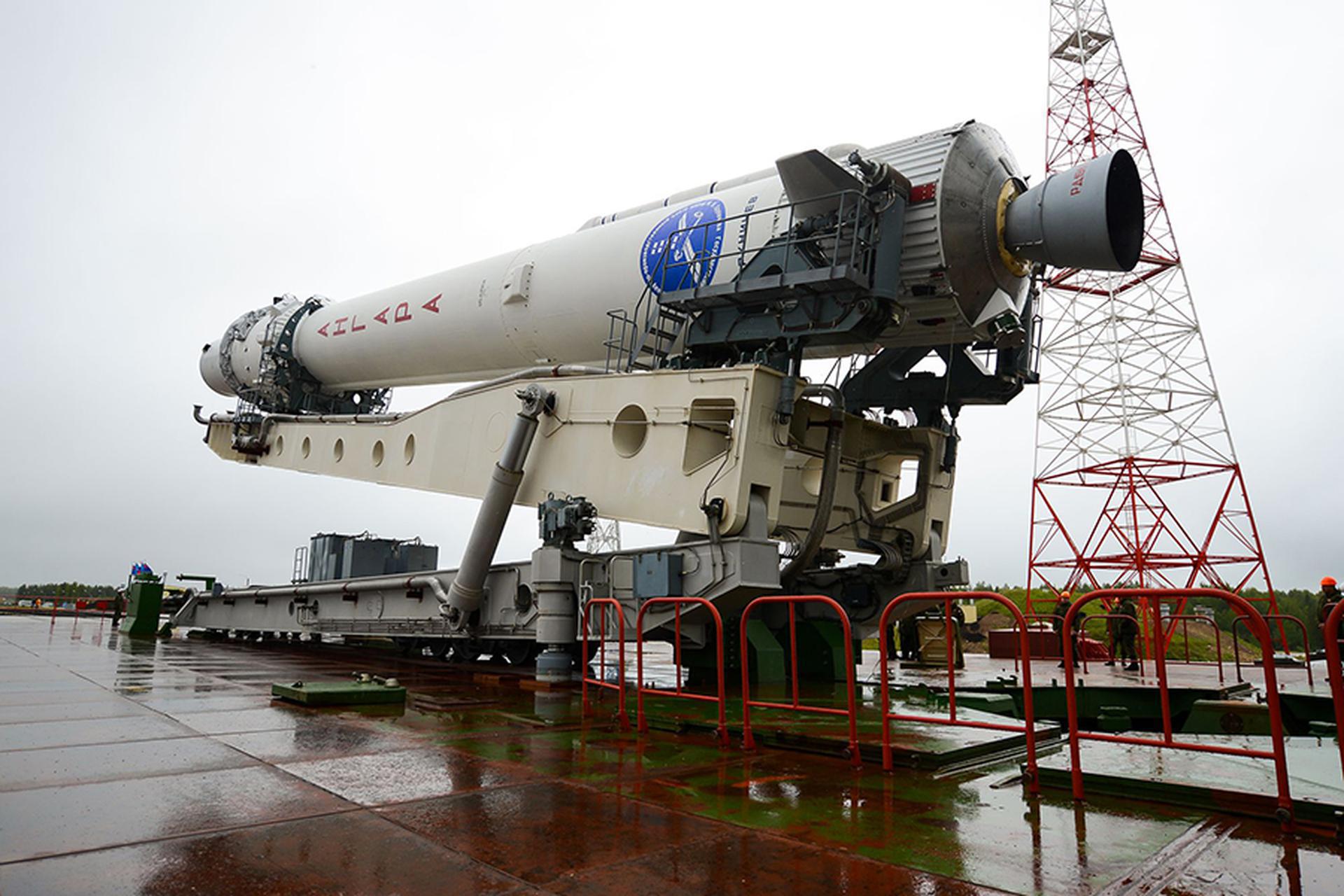
Launch facts
| Rocket | Angara 1.2 |
| Operator | Russian Space Forces |
| Pad | 35/1, Plesetsk Cosmodrome, Russian Federation |
| T-0 (UTC) | 17 September 2026 at 16:50 |
| Status | Success |
What is launching?
An Angara 1.2 rocket operated by the Russian Space Forces is scheduled to launch a classified Kosmos payload from Plesetsk Cosmodrome on August 31, 2026. The Angara 1.2 is Russia's lightest member of the modern Angara rocket family, designed to lift roughly 3,800 kg to a 200 km low Earth orbit.
The mission carries an undisclosed satellite designated under the generic "Kosmos" naming series, which Russia routinely applies to military and reconnaissance spacecraft whose specifics are not publicly released.
When is the launch?
The launch is currently targeted for 00:00 UTC on August 31, 2026, though the status remains TBD (to be determined) and the window may shift. Classified Russian launches frequently receive precise timings only hours in advance, so tracking a live schedule is the best way to stay current.
| Detail | Value |
|---|---|
| Rocket | Angara 1.2 |
| Provider | Russian Space Forces |
| Payload | Kosmos (undisclosed) |
| Launch site | Site 35/1, Plesetsk Cosmodrome |
| Target date | August 31, 2026 |
| Status | TBD |
What is the Angara 1.2?
The Angara 1.2 is a two-stage light-lift launch vehicle and the smallest operational variant of Russia's Angara family, which first flew in 2014. It uses a single URM-1 core stage powered by an RD-191 engine burning kerosene and liquid oxygen, topped by a URM-2 upper stage. Unlike its Proton predecessors, Angara uses non-toxic propellants, a key design goal of the program.
The 1.2 configuration stands about 42 meters tall and is optimized for placing payloads of up to roughly 3.8 tonnes into low Earth orbit. It has become Russia's workhorse for lightweight military satellites launched from Plesetsk.
Where is it launching from?
The launch will lift off from Site 35/1 at Plesetsk Cosmodrome, located in northern Russia's Arkhangelsk Oblast. Plesetsk is the world's northernmost major spaceport and handles the majority of Russia's military launches, making it a favored site for high-inclination and polar orbits used by reconnaissance satellites.
What is the payload?
The payload is officially listed only as a Kosmos designation, meaning its purpose has not been disclosed. Russia assigns a Kosmos catalog number to a wide range of spacecraft, including military communications, early-warning, electronic intelligence and navigation satellites. Light-lift Angara 1.2 flights from Plesetsk have historically carried small military satellites such as reconnaissance or signals-intelligence craft into near-polar orbits.
Because the mission is classified, orbital parameters, the exact satellite type, and its operator's stated objectives are not published in advance. Confirmed orbital data typically appears in public tracking catalogs only after the satellite reaches orbit.
How to watch live
Russian military launches from Plesetsk are rarely webcast live, and no official public broadcast is expected for this classified mission. The most reliable way to follow the flight is through launch trackers that update in real time as the vehicle's status changes.
You can follow the countdown and see the trajectory on Cosmik's live 3D solar-system and satellite map, and check the full rocket launch schedule for any timing updates. Once the Kosmos satellite is cataloged, it will appear among the thousands of tracked objects you can visualize in orbit.
Will the launch succeed?
Outcomes cannot be predicted, and this article will be updated after the flight. The Angara 1.2 has completed multiple successful missions from Plesetsk since entering service, building a track record for Russia's newest light-lift vehicle.
More launch coverage
Explore the latest launch news and learn how to track satellites yourself. Background on this mission's hardware and site is available on Wikipedia for the Angara rocket family, Plesetsk Cosmodrome, and the Kosmos satellite series. Launch data is sourced from The Space Devs Launch Library.
Track it live on Cosmik
Follow this Angara 1.2 launch in real time and watch the Kosmos payload once it reaches orbit on Cosmik's free 3D live map. Enable free launch alerts so you never miss liftoff, even when the schedule shifts at the last minute.
Follow this mission live in 3D and get a free alert before liftoff.
Open the live map →Sources
Next launches
- Dragon CRS-2 SpX-35 — launch time & how to watch — 13 October 2026, 10:33 UTC
- Martian Moon eXplorer (MMX) — launch time & how to watch — 19 October 2026, 19:41 UTC
- Amazon Leo (LV-01) — launch time & how to watch — 29 October 2026
More launch coverage
- Owlright, Owlright, Owlright (StriX Launch 13) — launch time — 26 September 2026, 00:39 UTC
- SatNet LEO Group 26 — launch time & how to watch — 23 September 2026, 13:32 UTC
- Owl By The Dozen (StriX Launch 12) — launch time & how to — 19 September 2026, 03:22 UTC
- Progress MS-35 (96P) — launch time & how to watch — 16 September 2026, 13:33 UTC
- Sentinel-3C & FLEX on Vega-C — launch time & how to watch — 15 September 2026, 01:21 UTC
- O3b mPower 11-13 — launch time & how to watch — 13 September 2026, 18:49 UTC