Gaganyaan-1 on LVM-3: Launch Time & How to Watch (Sep 30, 2026)
Published · Updated
GaganyaanGaganyaan-1LVM-3ISROpreview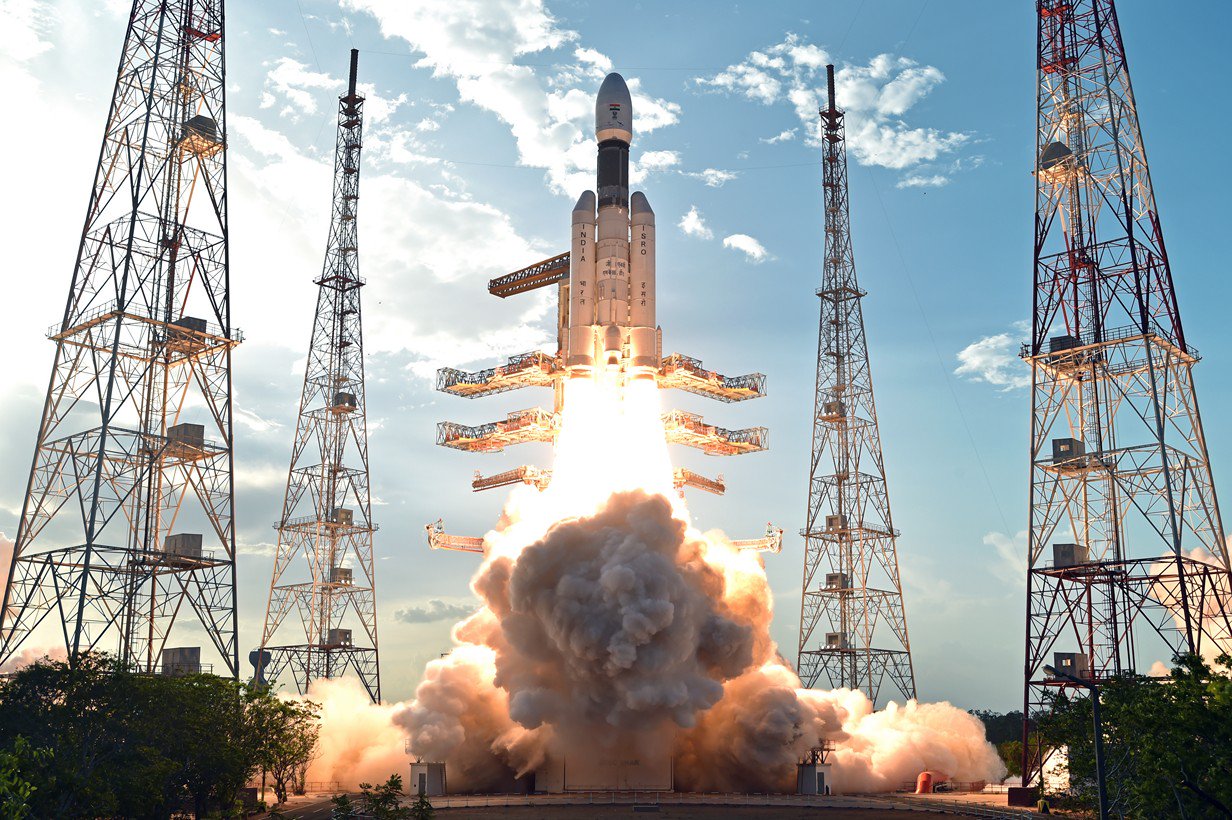
Launch facts
| Rocket | LVM-3 |
| Operator | Indian Space Research Organization |
| Pad | Satish Dhawan Space Centre Second Launch Pad, Satish Dhawan Space Centre, India |
| Launch window | Q3 2026 — date TBC |
| Status | TBD |
🚀 Gaganyaan-1 on LVM-3: Launch Time & How to Watch (Sep 30, 2026)
No confirmed launch date yet
The schedule only says Q3 2026. The day and the liftoff time don't exist yet — not here, not anywhere. There's nothing to count down to.
🚀 No confirmed launch date yet
We'll tell you the moment it gets a real date — and again about an hour before liftoff. Nothing else.
Free · no account · unsubscribe anytime
✈ TelegramGaganyaan-1 is the first uncrewed test flight of India's Gaganyaan human spaceflight program, launching on an LVM-3 rocket from the Satish Dhawan Space Centre in Sriharikota, India, on September 30, 2026. The mission is operated by the Indian Space Research Organization (ISRO) and lifts off from the Second Launch Pad, targeting a net launch time of 00:00 UTC.
What is Gaganyaan-1?
Gaganyaan-1 is a demonstration flight designed to validate the crew module and systems that will eventually carry Indian astronauts to low Earth orbit. This mission flies without a crew, using the launch to test the orbital module's re-entry, recovery, and safety systems before humans ever board. It is a cornerstone of Gaganyaan, India's flagship program to become the fourth nation to independently launch humans into space.
What is the LVM-3 rocket?
The LVM-3 (Launch Vehicle Mark-3), formerly known as GSLV Mk III, is ISRO's most powerful operational rocket. It stands roughly 43.5 meters tall and can lift about 8,000 kg to low Earth orbit or 4,000 kg to geostationary transfer orbit. The three-stage vehicle uses two solid-fueled S200 boosters, a liquid-fueled L110 core stage, and a cryogenic C25 upper stage. LVM-3 previously launched India's Chandrayaan-2 and Chandrayaan-3 lunar missions, giving it a proven flight heritage for high-value national payloads.
When is the launch?
Gaganyaan-1 is scheduled for September 30, 2026, at 00:00 UTC, from the Second Launch Pad at the Satish Dhawan Space Centre. The launch status is currently listed as TBD, meaning the date and time may shift as ISRO finalizes vehicle integration and testing. Human-rated test flights typically undergo extensive review, so schedule adjustments are common.
| Detail | Information |
|---|---|
| Mission | Gaganyaan-1 (uncrewed test flight) |
| Rocket | LVM-3 |
| Operator | Indian Space Research Organization (ISRO) |
| Launch site | Second Launch Pad, Satish Dhawan Space Centre, India |
| Target date | September 30, 2026, 00:00 UTC |
| Status | TBD |
What is the payload?
The payload is the Gaganyaan orbital module, comprising the crew module and service module flown uncrewed. The objective is to verify the full flight profile — ascent, orbital insertion, and controlled re-entry — along with the parachute deceleration and splashdown recovery systems. Because this is a systems-qualification flight, the mission prioritizes safety validation over any operational cargo. Subsequent Gaganyaan test flights are expected to build toward a crewed mission carrying Indian astronauts to an orbit of roughly 400 km altitude.
How to watch live
ISRO typically streams its major launches live through its official channels, with coverage beginning shortly before liftoff. For a human-spaceflight milestone of this magnitude, expect extended pre-launch programming.
You can also follow the countdown and watch the LVM-3 climb to orbit on Cosmik's rocket launch schedule. After liftoff, track the Gaganyaan orbital module and every other object in orbit on our live 3D solar-system and satellite map. For more ISRO coverage, see the latest launch news.
Why this launch matters
Gaganyaan-1 is a critical step toward India's first independent crewed orbital mission. A successful uncrewed test would clear the path for the crewed Gaganyaan flight and demonstrate that India can safely return a capsule from orbit. It also reinforces the LVM-3's role as ISRO's workhorse for the country's most ambitious missions, following its lunar successes.
Background on the vehicle and operator is available via the LVM-3, ISRO, and Satish Dhawan Space Centre Wikipedia pages. Launch data is sourced from The Space Devs Launch Library.
Follow Gaganyaan-1 live on Cosmik
Don't miss liftoff. Follow Gaganyaan-1 on Cosmik's real-time launch tracker, enable free launch alerts to get notified before the countdown, and watch the LVM-3 and its orbital module on our live 3D map the moment they reach space.
Follow this mission live in 3D and get a free alert before liftoff.
Open the live map →Sources
Next launches
- Falcon 9 Launches SDA Tranche 1 Tracking Layer E: Sept 30 — Q3 2026
- IRNSS-1L (NVS-03) on GSLV Mk II — launch time & how to watch — September 2026
- Chang'e 7 on Long March 5 — launch time & how to watch — September 2026
More launch coverage
- Martian Moon eXplorer (MMX) — launch time & how to watch — 19 October 2026, 19:41 UTC
- NeonSat-2 to 6 on Nuri — launch time & how to watch — 7 October 2026, 03:23 UTC
- Ariane 64 to Launch Amazon Leo LE-04 on Oct 7, 2026 — 7 October 2026
- Sentinel-3C & FLEX on Vega-C — launch time & how to watch — 15 September 2026, 01:21 UTC
- Long March 8A Launch: Time & How to Watch Sept 11, 2026 — 11 September 2026, 16:00 UTC
- SpaceX Falcon 9 USSF-xxx ("R-2") Launch: Sept 10, 2026 — 10 September 2026, 15:37 UTC