Ariane 64 to Launch Amazon Leo LE-04 on Oct 7, 2026
Published · Updated
Amazon LeoProject KuiperAriane 64Ariane 6preview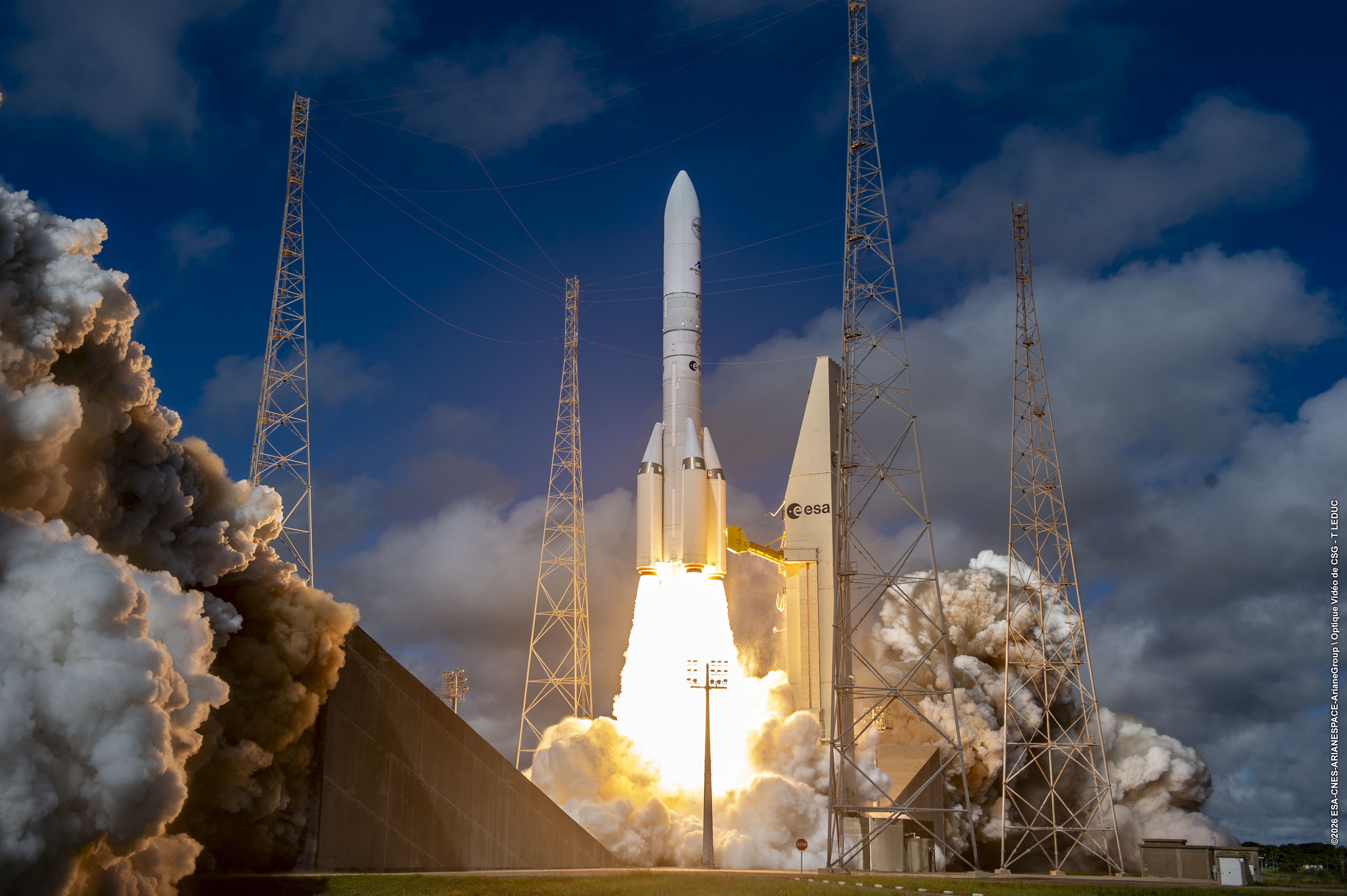
Launch facts
| Rocket | Ariane 64 Block 2 |
| Operator | Arianespace |
| Pad | Ariane Launch Area 4, Guiana Space Centre, French Guiana |
| Launch window | 7 October 2026 — time TBC |
| Status | TBD |
🚀 Ariane 64 to Launch Amazon Leo LE-04 on Oct 7, 2026
The day is set — the time isn't
Targeting 7 October 2026. The liftoff time hasn't been published yet, so there's still nothing to set an alarm to.
🚀 The day is set — the time isn't
We'll send you the liftoff time as soon as it's published — and a reminder about an hour before. Nothing else.
Free · no account · unsubscribe anytime
✈ TelegramArianespace will launch the Amazon Leo LE-04 mission on October 7, 2026, aboard an Ariane 64 Block 2 rocket from the Guiana Space Centre in French Guiana. The mission adds another batch of low-Earth-orbit broadband satellites to Amazon's Project Kuiper constellation, now branded Amazon Leo.
What is the Amazon Leo LE-04 mission?
Amazon Leo is Amazon's satellite internet network, designed to deliver low-latency broadband to homes, businesses and governments worldwide. The full constellation is authorized by the FCC for 3,236 satellites in low Earth orbit at altitudes around 590–630 km. LE-04 is one of a series of dedicated Arianespace flights contracted to deploy that network alongside launches from other providers.
The Ariane 64 is the heavy-lift variant of Europe's Ariane 6 rocket, distinguished by its four P120C solid-rocket boosters. It stands roughly 63 meters tall and can loft more than 21 metric tons to low Earth orbit, making it well suited for deploying large stacks of Amazon Leo satellites in a single flight.
When is the launch?
The launch is currently targeted for 00:00 UTC on October 7, 2026, with a status listed as TBD (to be determined). Launch windows for constellation deployment missions are often refined in the weeks beforehand, so check our rocket launch schedule for the latest confirmed time.
| Detail | Information |
|---|---|
| Mission | Amazon Leo LE-04 |
| Rocket | Ariane 64 Block 2 |
| Provider | Arianespace |
| Launch site | Ariane Launch Area 4, Guiana Space Centre |
| Target date | October 7, 2026, 00:00 UTC |
| Status | TBD |
Where is it launching from?
The mission lifts off from Ariane Launch Area 4 (ELA-4) at the Guiana Space Centre near Kourou, French Guiana. The equatorial location, at roughly 5 degrees north latitude, gives launchers a performance boost from Earth's rotation, which is one reason the site has been Europe's primary spaceport for decades.
What is Ariane 64?
Ariane 6 is the European Space Agency and Arianespace's flagship rocket, developed to replace the retired Ariane 5. It flies in two configurations: the Ariane 62 with two boosters and the more powerful Ariane 64 with four boosters. The reignitable Vinci upper stage allows the rocket to deploy payloads into multiple orbits and perform controlled deorbiting, a capability that suits methodical constellation build-out.
The multi-launch agreement between Amazon and Arianespace is one of the largest commercial launch contracts in the industry, reflecting the scale required to populate a constellation of thousands of satellites.
How to watch live
Arianespace typically streams its launches live, with coverage beginning shortly before liftoff. On launch day you can follow the countdown and watch the satellites reach orbit in real time on our live 3D solar system and satellite map. For the latest updates ahead of the flight, visit our launch news feed.
Why LE-04 matters
Each Amazon Leo deployment expands global broadband coverage and increases the number of tracked objects in low Earth orbit. As the constellation grows toward its authorized 3,236 satellites, missions like LE-04 steadily fill out the orbital shells that make continuous coverage possible. You can learn more about following orbiting satellites on our guide to tracking satellites.
Sources and further reading
Launch data is aggregated from The Space Devs Launch Library. Background on the vehicle and operator is available from Ariane 6, Arianespace, and the Guiana Space Centre on Wikipedia.
Follow the Amazon Leo LE-04 countdown and watch the newly deployed satellites orbit Earth live on Cosmik. Enable free launch alerts so you never miss liftoff, and explore the full upcoming launch schedule to plan your next viewing.
Follow this mission live in 3D and get a free alert before liftoff.
Open the live map →Sources
Next launches
- Falcon 9 Launches SDA Tranche 1 Tracking Layer E: Sept 30 — Q3 2026
- IRNSS-1L (NVS-03) on GSLV Mk II — launch time & how to watch — September 2026
- Chang'e 7 on Long March 5 — launch time & how to watch — September 2026
More launch coverage
- Dragon CRS-2 SpX-35 — launch time & how to watch — October 2026
- Martian Moon eXplorer (MMX) — launch time & how to watch — 19 October 2026, 19:41 UTC
- NeonSat-2 to 6 on Nuri — launch time & how to watch — 7 October 2026, 03:23 UTC