GISAT-1A (EOS-05) on GSLV Mk II — launch time & how to watch
Published · Updated
GSLV Mk IIGISAT-1AEOS-05ISROpreview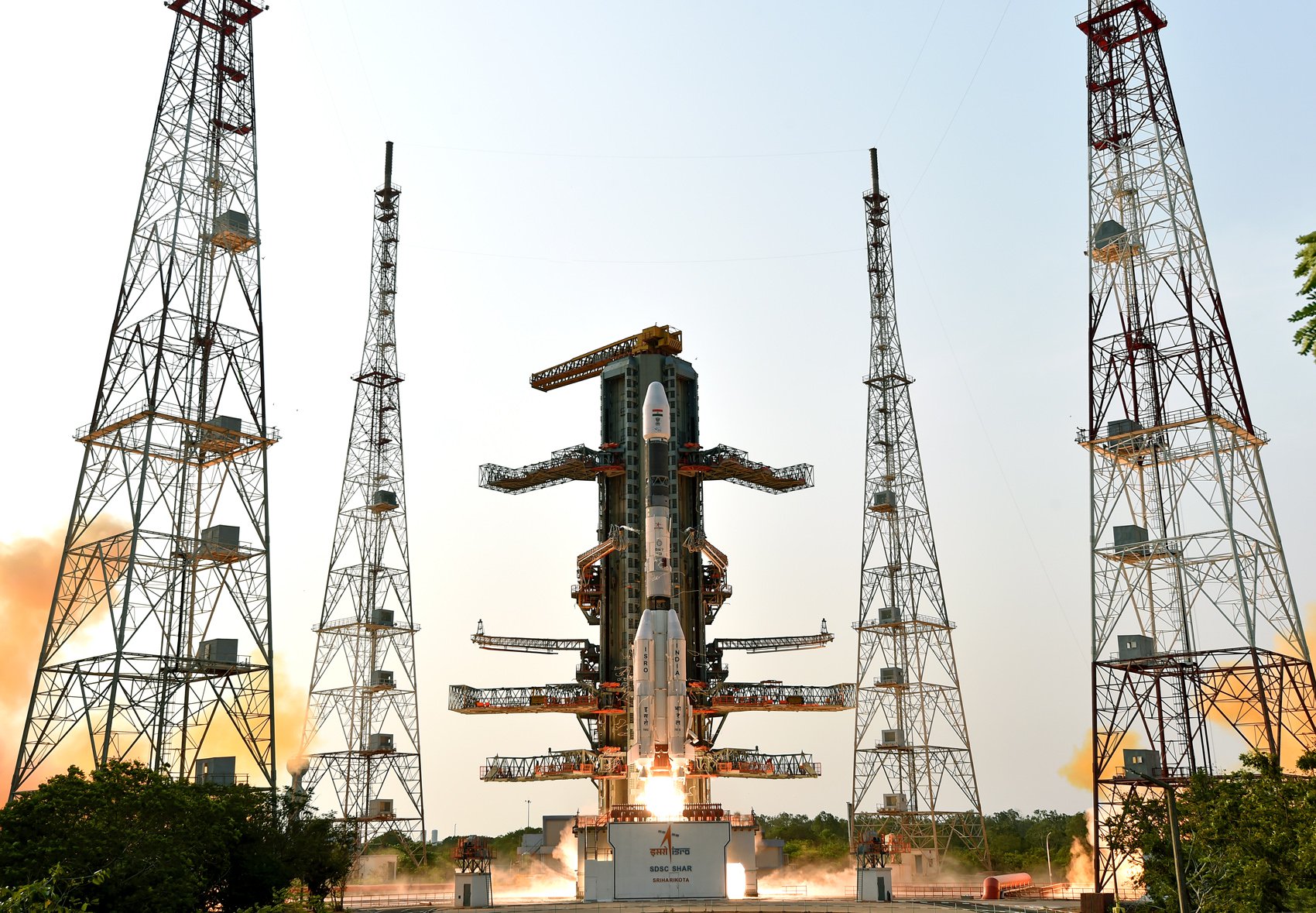
Launch facts
| Rocket | GSLV Mk II |
| Operator | Indian Space Research Organization |
| Pad | Satish Dhawan Space Centre Second Launch Pad, Satish Dhawan Space Centre, India |
| T-0 (UTC) | 3 September 2026 at 21:25 |
| Status | Success |
India's Geosynchronous Satellite Launch Vehicle Mark II (GSLV Mk II) is scheduled to launch the GISAT-1A (EOS-05) Earth-observation satellite on 30 September 2026 from the Second Launch Pad at the Satish Dhawan Space Centre in Sriharikota, India. The mission is operated by the Indian Space Research Organisation (ISRO) and targets a geostationary-class orbit for continuous imaging of the Indian subcontinent.
The GSLV Mk II is a three-stage, 49-meter-tall medium-lift rocket that combines solid, liquid, and India's indigenous cryogenic upper stage. It is ISRO's workhorse for placing roughly 2,500 kg payloads into geostationary transfer orbit (GTO).
When is the launch?
Liftoff is currently set for 30 September 2026, with the exact time still to be confirmed by ISRO. The mission status is listed as TBD, meaning the date and window may shift as launch campaign milestones are completed. For the most current time, check the countdown on the rocket launch schedule.
Where is it launching from?
The rocket flies from the Second Launch Pad at the Satish Dhawan Space Centre on Sriharikota Island off India's east coast. The spaceport, operational since 1971, is ISRO's sole orbital launch site and supports PSLV, GSLV, and LVM3 vehicles.
What is the payload?
GISAT-1A, also designated EOS-05, is a geo-imaging satellite intended to provide near-real-time observation of large regions of interest at frequent intervals. Unlike low-Earth-orbit imaging satellites that revisit a target only a few times per day, a geostationary imaging platform can continuously monitor the same area, making it valuable for disaster management, weather monitoring, agriculture, and border surveillance.
According to ISRO's mission concept, the satellite carries multispectral and hyperspectral imaging payloads operating in the visible and near-infrared bands. Placement in or near geostationary orbit at roughly 36,000 km altitude allows persistent coverage of the Indian landmass.
Why the GSLV Mk II?
The GSLV Mk II bridges the capability gap between the lighter PSLV and the heavier LVM3 (GSLV Mk III). Its cryogenic upper stage, powered by the indigenous CE-7.5 engine burning liquid hydrogen and liquid oxygen, is what enables it to loft heavier satellites toward geostationary transfer orbit. The vehicle has completed more than a dozen flights and became fully operational after ISRO qualified its home-built cryogenic stage.
How to watch live
ISRO typically streams its launches on its official YouTube channel and website, with coverage beginning shortly before liftoff. Once ISRO confirms the launch time, the webcast link and countdown will be available alongside the mission details.
- Follow the live countdown and trajectory on the Cosmik launch tracker.
- See ISRO's full manifest on our latest launch news hub.
- Watch the deployed satellite in orbit on the live 3D solar system and satellite map.
Mission at a glance
| Item | Detail |
|---|---|
| Rocket | GSLV Mk II |
| Payload | GISAT-1A (EOS-05) |
| Operator | Indian Space Research Organisation |
| Launch site | Second Launch Pad, Satish Dhawan Space Centre |
| Target date | 30 September 2026 (TBD) |
| Orbit | Geostationary transfer / geostationary |
Background on ISRO's Earth-observation fleet
The EOS series is ISRO's renamed line of Earth Observation Satellites, consolidating what were previously named Cartosat, Resourcesat, and RISAT platforms under a single designation. GISAT-1A follows an earlier attempt to place a geo-imaging satellite in orbit, and its successful deployment would give India a persistent, high-frequency imaging capability from geostationary altitude — a rare asset held by only a handful of nations.
Learn more about the vehicle and operator from these references:
- GSLV (Wikipedia)
- ISRO (Wikipedia)
- Satish Dhawan Space Centre (Wikipedia)
- The Space Devs Launch Library (data source)
Don't miss it: follow the GSLV Mk II launch of GISAT-1A live on Cosmik, track the satellite in 3D once it reaches orbit, and enable free launch alerts so you never miss liftoff.
Follow this mission live in 3D and get a free alert before liftoff.
Open the live map →Sources
Next launches
- Dragon CRS-2 SpX-35 — launch time & how to watch — 13 October 2026, 10:33 UTC
- Martian Moon eXplorer (MMX) — launch time & how to watch — 19 October 2026, 19:41 UTC
- Amazon Leo (LV-01) — launch time & how to watch — 29 October 2026
More launch coverage
- SpaceX Falcon 9 USSF-xxx ("R-2") Launch: Sept 10, 2026 — 10 September 2026, 15:42 UTC
- Starlink Group 15-24: Falcon 9 Launch Sept 6, 2026 — 6 September 2026, 14:26 UTC
- Onward and Upward on Spectrum — launch time & how to watch — 5 September 2026, 20:12 UTC
- Owl Around The World (StriX Launch 11) — launch time & how — 2 September 2026, 12:01 UTC
- Starlink 15-23: Falcon 9 Launch Sept 2, 2026 & How to Watch — 2 September 2026, 08:42 UTC
- Pallas-1 | Demo Flight — launch recap (1 September 2026) — 1 September 2026, 02:00 UTC