Owl Around The World (StriX Launch 11) — launch time & how
Published · Updated
Rocket LabElectronStriXiQPSpreview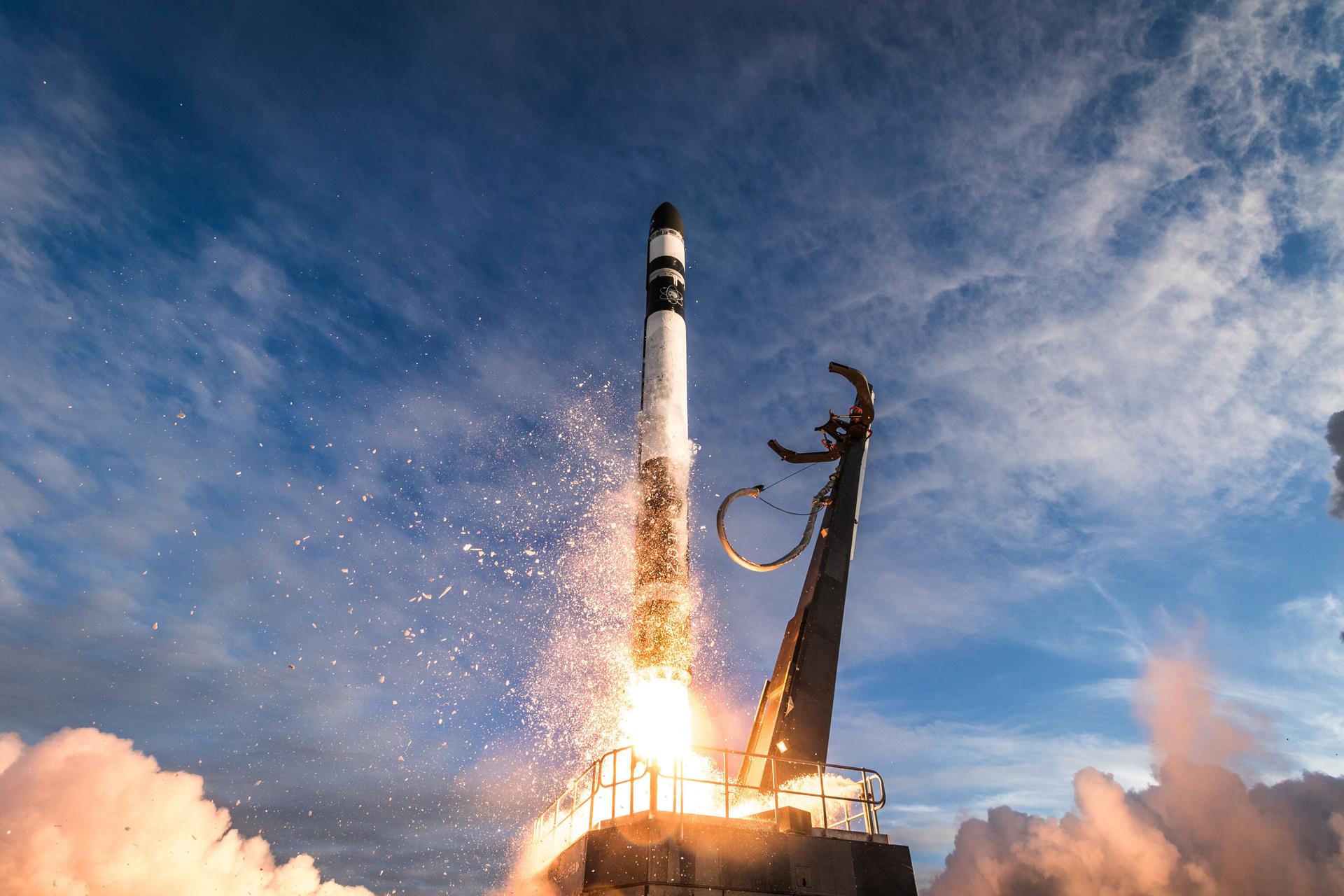
Launch facts
| Rocket | Electron |
| Operator | Rocket Lab |
| Pad | Unknown Pad, Rocket Lab Launch Complex 1, Mahia Peninsula, New Zealand |
| T-0 (UTC) | 2 September 2026 at 12:01 |
| Status | Success |
Rocket Lab will launch an Electron rocket carrying an iQPS StriX synthetic-aperture radar (SAR) satellite on August 31, 2026, at 12:05 UTC from Launch Complex 1 on the Mahia Peninsula, New Zealand. The mission, named "Owl Around The World," is the 11th StriX flight and is currently listed as Go for liftoff.
What is the mission?
Electron is a two-stage, 18-meter-tall small-satellite launch vehicle built by Rocket Lab. It is one of the most active small launchers in the world, purpose-built to place dedicated payloads of roughly 300 kg into low Earth orbit rather than sharing a ride on a larger rocket.
The payload is a StriX satellite for Japanese operator iQPS. StriX spacecraft carry synthetic-aperture radar instruments that image the Earth's surface day or night and through cloud cover, something optical satellites cannot do. iQPS is building out a constellation aimed at delivering frequent radar revisits of any point on the planet.
When is the launch?
| Detail | Value |
|---|---|
| Mission | Owl Around The World (StriX Launch 11) |
| Rocket | Electron |
| Provider | Rocket Lab |
| Launch time | August 31, 2026 — 12:05 UTC |
| Pad | Launch Complex 1, Mahia Peninsula, New Zealand |
| Status | Go |
Because this is a dedicated launch, the schedule is set by the customer's target orbit and can shift by a few hours or days due to weather or range availability. Check our rocket launch schedule for the latest confirmed time.
Where is it launching from?
Rocket Lab Launch Complex 1 sits on the Mahia Peninsula on New Zealand's North Island. It is the world's first private orbital launch site and Rocket Lab's primary Electron pad, offering a wide range of orbital inclinations thanks to its coastal, southward-facing launch corridors. See the Rocket Lab launch hub for the operator's full manifest.
What is the payload?
The single StriX satellite is a compact SAR imaging spacecraft. Radar satellites like StriX are typically deployed into sun-synchronous or near-polar low Earth orbits at altitudes around 500 km, where they can image the same ground track under consistent lighting-independent conditions. Each new StriX added to the iQPS fleet shortens the time between repeat observations of any given location, improving disaster monitoring, infrastructure surveillance, and maritime tracking.
Why radar imaging matters
- All-weather: SAR sees through clouds, smoke, and darkness.
- Frequent revisits: More satellites in the constellation mean faster imaging cadence.
- Small and dedicated: Electron flies these satellites to precise, custom orbits without waiting for a rideshare.
How to watch live
Rocket Lab typically streams Electron missions on its official channels beginning roughly 15 to 20 minutes before liftoff. On Cosmik, you can follow the countdown and, once the satellite separates, watch it appear on our live 3D solar system and satellite map as it enters orbit. Our guide to tracking satellites explains how to spot new spacecraft after deployment.
How does Electron recover its booster?
Rocket Lab has flown reusability tests in which Electron's first stage descends under a parachute for a controlled ocean splashdown and marine recovery, part of the company's effort to refly booster components. Whether recovery is attempted on any given flight depends on the specific mission profile. For live orbital tracking of the deployed StriX satellite and hundreds of other spacecraft, use our real-time map.
Launch data for this mission is sourced from The Space Devs Launch Library. Background on the vehicle and site is drawn from Electron and Launch Complex 1.
Follow the launch on Cosmik
Track the countdown, watch StriX reach orbit in 3D, and enable free launch alerts so you never miss a liftoff. Head to Cosmik's launch tracker or catch the latest updates on our space news page.
Follow this mission live in 3D and get a free alert before liftoff.
Open the live map →Sources
Next launches
- Dragon CRS-2 SpX-35 — launch time & how to watch — 13 October 2026, 10:33 UTC
- Martian Moon eXplorer (MMX) — launch time & how to watch — 19 October 2026, 19:41 UTC
- Amazon Leo (LV-01) — launch time & how to watch — 29 October 2026
More launch coverage
- Starlink Group 15-24: Falcon 9 Launch Sept 6, 2026 — 6 September 2026, 14:26 UTC
- Onward and Upward on Spectrum — launch time & how to watch — 5 September 2026, 20:12 UTC
- GISAT-1A (EOS-05) on GSLV Mk II — launch time & how to watch — 3 September 2026, 21:25 UTC
- Starlink 15-23: Falcon 9 Launch Sept 2, 2026 & How to Watch — 2 September 2026, 08:42 UTC
- Pallas-1 | Demo Flight — launch recap (1 September 2026) — 1 September 2026, 02:00 UTC
- Nancy Grace Roman Space Telescope — launch recap — 30 August 2026, 11:26 UTC