Long March 2C Launch: Aug 17, 2026 Time & Live Stream
Published · Updated
Long March 2CChina Aerospace Science and Technology CorporationTaiyuan Satellite Launch CenterCASCpreview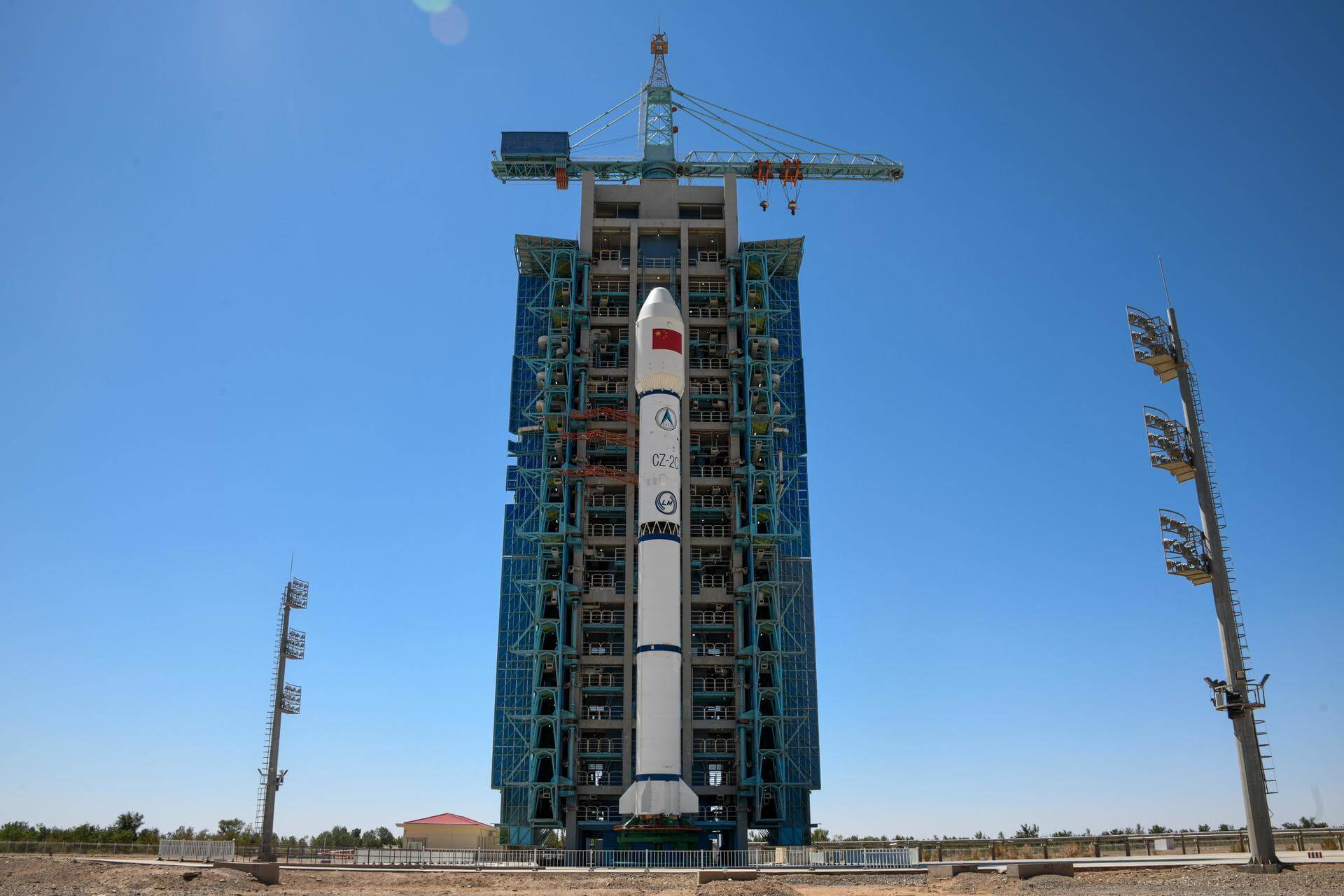
Launch facts
| Rocket | Long March 2C |
| Operator | China Aerospace Science and Technology Corporation |
| Pad | Launch Complex 9, Taiyuan Satellite Launch Center, People's Republic of China |
| T-0 (UTC) | 17 August 2026 at 03:02 |
| Status | Success |
A Long March 2C rocket will launch an undisclosed payload from Launch Complex 9 at the Taiyuan Satellite Launch Center in northern China on August 17, 2026, at 03:00 UTC. The mission, operated by the China Aerospace Science and Technology Corporation (CASC), is currently listed as Go for flight.
What is the Long March 2C?
The Long March 2C is a two-stage, liquid-fueled orbital launch vehicle in China's long-running Long March family, in service since 1982. It stands roughly 42 meters tall, is about 3.35 meters in diameter, and burns a hypergolic combination of unsymmetrical dimethylhydrazine (UDMH) and nitrogen tetroxide (N2O4). Depending on configuration and target orbit, the Long March 2C can deliver on the order of 3,850 kg to low Earth orbit, making it one of CASC's most reliable medium-lift workhorses.
The rocket has flown dozens of times across four decades and supports a wide range of missions, from remote-sensing and technology-demonstration satellites to constellation batches. An optional upper stage or restartable third stage lets the vehicle place payloads into sun-synchronous and other precise orbits.
When is the launch?
The launch is scheduled for 03:00 UTC on August 17, 2026. That converts to 11:00 China Standard Time the same morning and 11:00 PM EDT on August 16 for U.S. East Coast viewers. As with most Chinese government launches, the exact liftoff window is often confirmed only shortly before flight, so the time may shift.
| Detail | Value |
|---|---|
| Rocket | Long March 2C |
| Operator | China Aerospace Science and Technology Corporation |
| Launch site | Launch Complex 9, Taiyuan Satellite Launch Center |
| Target date/time | August 17, 2026, 03:00 UTC |
| Status | Go |
Where is it launching from?
The launch originates from the Taiyuan Satellite Launch Center (TSLC) in Shanxi Province, one of China's four main inland spaceports. Sitting at an elevation above 1,400 meters, Taiyuan specializes in launches to sun-synchronous and polar orbits, which is why it hosts many of China's Earth-observation, meteorological, and reconnaissance payloads. Launch Complex 9 is among the pads used for Long March 2C and related vehicles.
What is the payload?
The payload has not been publicly disclosed. Chinese state launches frequently fly under generic designations, with satellite identity, mass, and mission purpose released only after a successful deployment—if at all. Given the Long March 2C's history and Taiyuan's polar-orbit focus, the payload is likely a remote-sensing, scientific, or constellation satellite bound for a sun-synchronous orbit, though this is not confirmed in the mission data.
You can follow the full rocket launch schedule and see live orbital tracks of every active spacecraft on the Cosmik 3D solar-system map as new details emerge.
How to watch live
Chinese launches are rarely carried on an official live webcast the way SpaceX or NASA missions are. Coverage typically comes after the fact through Chinese state media (CCTV, Xinhua) and independent trackers, with footage and confirmation often appearing within hours of liftoff.
- Check the latest launch news on Cosmik for confirmation and updates.
- Watch the vehicle's projected trajectory and the deployed satellite's orbit on the live 3D map once cataloged.
- Learn more about following spacecraft in real time with our guide to tracking satellites.
Why this launch matters
Every Long March 2C flight adds to China's steady cadence of orbital launches, which has topped 60 missions in recent years as the country expands its Earth-observation and communications infrastructure. Missions from Taiyuan in particular reinforce China's capability to populate polar and sun-synchronous orbits, which are prime real estate for imaging and weather satellites that need consistent lighting on each pass.
For background on the vehicle and operator, see the Long March 2C, China Aerospace Science and Technology Corporation, and Taiyuan Satellite Launch Center. Launch data is sourced from The Space Devs Launch Library API.
Follow the launch on Cosmik
Track this Long March 2C mission and the satellite it delivers live on Cosmik's free 3D map, and turn on free launch alerts so you never miss a liftoff. Explore more upcoming missions on our launch tracker.
Follow this mission live in 3D and get a free alert before liftoff.
Open the live map →Sources
Next launches
- Dragon CRS-2 SpX-35 — launch time & how to watch — 13 October 2026, 10:33 UTC
- Martian Moon eXplorer (MMX) — launch time & how to watch — 19 October 2026, 19:41 UTC
- Amazon Leo (LV-01) — launch time & how to watch — 29 October 2026
More launch coverage
- Starlink Group 17-50 — launch recap (19 August 2026) — 19 August 2026, 04:01 UTC
- Zhuque-3 | Honghu-03 — launch recap (18 August 2026) — 18 August 2026, 23:35 UTC
- Flight 2 on Zhuque-3 — launch time & how to watch — 18 August 2026, 23:35 UTC
- Unknown Payload on Long March 12 — launch time & how to watch — 16 August 2026, 04:10 UTC
- SatNet LEO Group 24 — launch recap (16 August 2026) — 16 August 2026, 04:10 UTC
- Falcon 9 Block 5 | USSF-366 — launch recap (16 August 2026) — 16 August 2026, 01:50 UTC