Electron | LOXSAT 1 — launch time, how to watch (2026)
Published · Updated
Rocket LabElectronLOXSAT 1New Zealandpreview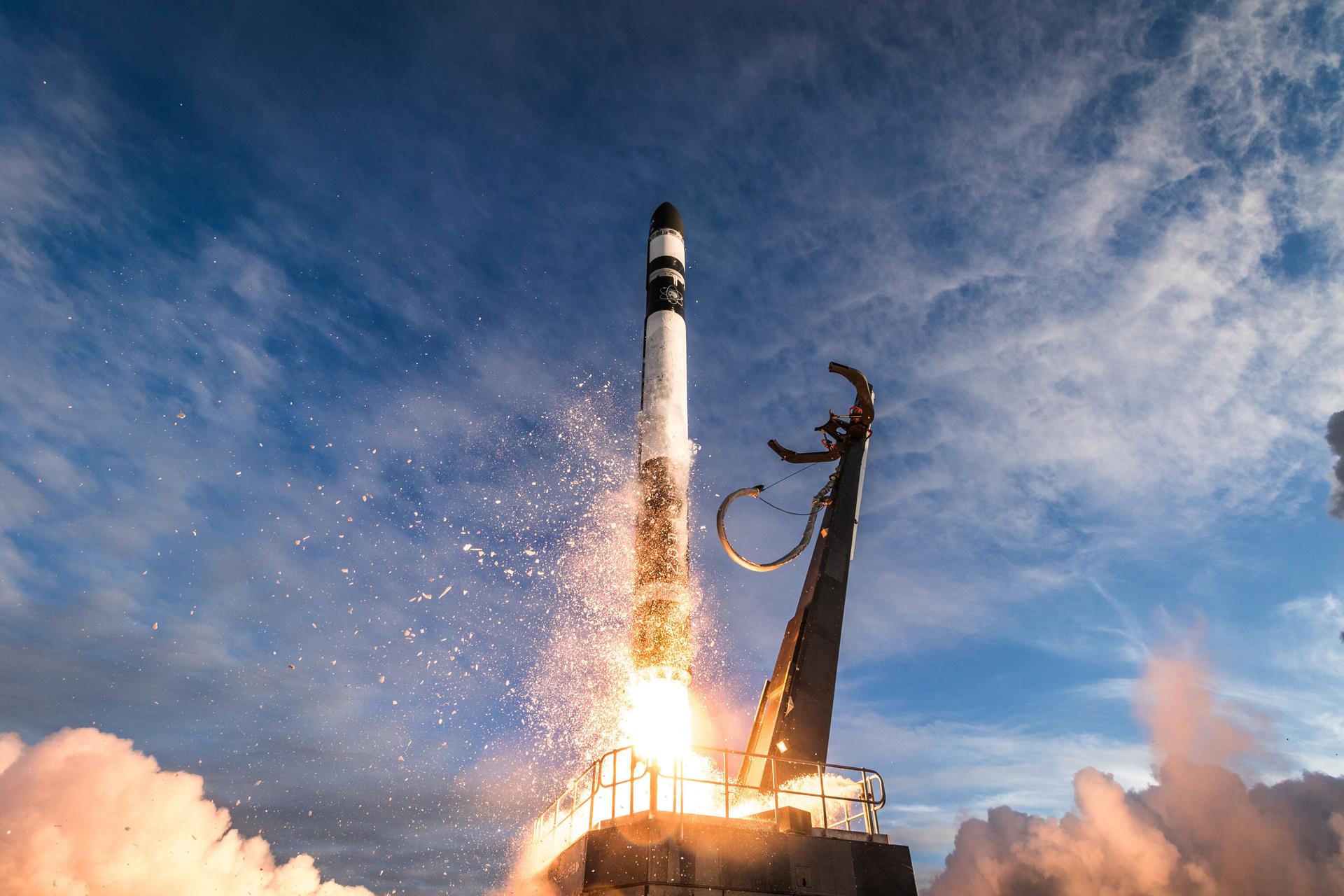
Launch facts
| Rocket | Electron |
| Operator | Rocket Lab |
| Pad | Unknown Pad, Rocket Lab Launch Complex 1, Mahia Peninsula, New Zealand |
| Launch window | 2026 — date TBC |
| Status | TBD |
🚀 Electron | LOXSAT 1 — launch time, how to watch (2026)
No confirmed launch date yet
The schedule only says 2026. The day and the liftoff time don't exist yet — not here, not anywhere. There's nothing to count down to.
🚀 No confirmed launch date yet
We'll tell you the moment it gets a real date — and again about an hour before liftoff. Nothing else.
Free · no account · unsubscribe anytime
✈ TelegramRocket Lab's Electron rocket is scheduled to launch the LOXSAT 1 mission from Launch Complex 1 on New Zealand's Mahia Peninsula, currently targeted in 2026 (UTC). Electron is a two-stage small-satellite launch vehicle standing 18 meters tall, designed to deliver payloads of up to about 300 kg to low Earth orbit.
When is the launch?
The current no-earlier-than (NET) date is 2026. The status is listed as TBD, meaning the exact launch time and date are still being finalized and may shift as the campaign progresses. Rocket Lab typically confirms a precise launch window in the days ahead of liftoff.
Because the launch date is provisional, we recommend checking the rocket launch schedule on Cosmik for the latest confirmed timing and any changes to the window.
What is the LOXSAT 1 payload?
LOXSAT 1 is the dedicated payload for this Electron flight, launching to low Earth orbit. As with most Electron missions, the payload will be deployed from Electron's Kick Stage, a small maneuvering upper stage that precisely places satellites into their target orbit after the second stage completes its burn.
Electron remains one of the world's most active dedicated small-satellite launchers. Since its debut in 2017, the vehicle has flown dozens of missions, making it the go-to option for operators that need a dedicated ride rather than sharing a rideshare on a larger rocket. Electron can loft up to roughly 300 kg to a 500 km sun-synchronous orbit, per Rocket Lab's published specifications.
Where is it launching from?
The mission lifts off from Rocket Lab Launch Complex 1 on the Mahia Peninsula, on the east coast of New Zealand's North Island. LC-1 was the first privately operated orbital launch site in the world and features multiple pads, allowing Rocket Lab to support a high cadence of dedicated Electron missions.
The southerly location and clear range over the Pacific Ocean make Mahia well suited to reaching sun-synchronous and other high-inclination orbits favored by Earth-observation and technology-demonstration satellites.
About Rocket Lab and Electron
Rocket Lab is a US-headquartered launch and space-systems company that operates the Electron rocket and is developing the larger, reusable Neutron vehicle. Electron's first stage uses nine electric-pump-fed Rutherford engines, the first orbital-class engines to use battery-powered turbopumps and to be largely 3D-printed. The single-engine second stage carries the payload and Kick Stage toward orbit.
How to watch the launch live
Rocket Lab typically streams Electron launches live on its official YouTube channel and website, beginning shortly before liftoff. For missions with a TBD status, confirm the webcast start time once Rocket Lab announces a firm launch window.
- Follow the countdown and live vehicle status on the Rocket Lab launch hub.
- Track the rocket and its orbit in real time on the Cosmik live 3D map after launch.
- Read the latest updates in launch news.
Launch at a glance
| Detail | Information |
|---|---|
| Mission | LOXSAT 1 |
| Rocket | Electron |
| Provider | Rocket Lab |
| Launch site | Launch Complex 1, Mahia Peninsula, New Zealand |
| Target date (NET) | 2026 (UTC) |
| Status | To be determined |
Why this mission matters
Dedicated small-satellite launches like LOXSAT 1 let operators control their exact orbit, timing, and deployment sequence, rather than accepting the compromises of a shared rideshare. Electron's flexibility in reaching high-inclination and sun-synchronous orbits from Mahia is a key reason it has become a workhorse for the small-satellite sector.
Once LOXSAT 1 reaches orbit, you'll be able to follow the deployed satellite alongside thousands of other objects circling Earth. Learn more about spotting and tracking spacecraft with our guide on how to track satellites.
Follow the launch live on Cosmik
Don't miss liftoff. Follow the Electron | LOXSAT 1 mission on Cosmik's real-time launch tracker, watch the rocket climb to orbit on our live 3D solar-system and satellite map, and enable free launch alerts so you're notified the moment the window is confirmed.
Sources: The Space Devs Launch Library, Rocket Lab (Wikipedia), Electron rocket (Wikipedia).
Follow this mission live in 3D and get a free alert before liftoff.
Open the live map →Sources
Next launches
- Dragon CRS-2 SpX-35 — launch time & how to watch — 13 October 2026, 10:33 UTC
- Martian Moon eXplorer (MMX) — launch time & how to watch — 19 October 2026, 19:41 UTC
- Amazon Leo (LV-01) — launch time & how to watch — 29 October 2026
More launch coverage
- Metop-SG B1 on Ariane 62 — launch time & how to watch — November 2026
- Cygnus CRS-2 NG-25 — launch time & how to watch — November 2026
- InnoSat-0 on HANBIT-Nano — launch time & how to watch — November 2026