The eclipse from Cardiff: 93% is not total
≈19:14 BST · ~93% partial — a deep partial eclipse
No. Cardiff sees a very deep (~93%) partial eclipse around ≈19:14 BST — impressive, but daylight never fully breaks and eclipse glasses must stay on at all times. Totality requires travelling into the path. Cardiff lies outside the path of totality: at maximum (≈19:14 BST) about 93% of the Sun is covered, with the Sun ~12° above the western horizon. It never gets fully dark and certified eclipse glasses must stay on the whole time. True totality runs across northern Spain and over Iceland.
🌑 Get a reminder before the eclipse
The timing for your area and how to watch it safely, before the day.
Free · no account · unsubscribe anytime
✈ TelegramFrequently asked questions
Is the eclipse total in Cardiff?
No. Cardiff sees a very deep (~93%) partial eclipse around ≈19:14 BST — impressive, but daylight never fully breaks and eclipse glasses must stay on at all times. Totality requires travelling into the path.
What time is the eclipse in Cardiff?
Maximum eclipse over Cardiff comes around ≈19:14 BST on Wednesday, August 12, 2026, with the Sun low in the western sky. Exact-to-the-second local circumstances will be added here as the date approaches.
Do I need eclipse glasses?
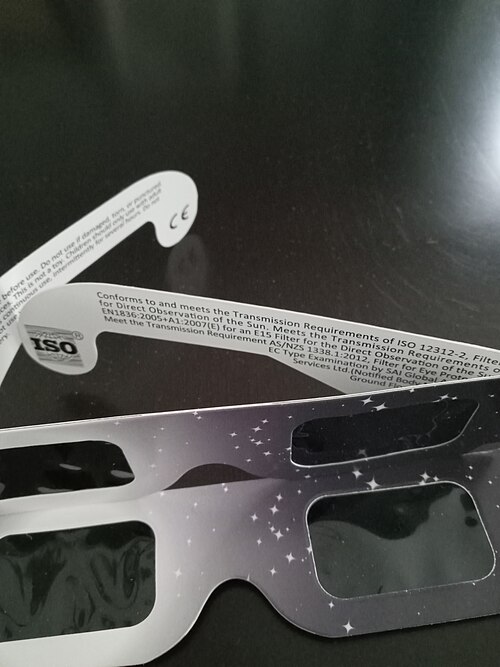
Yes, for the entire event — even at a deep partial eclipse there is NO safe naked-eye moment. Certified ISO 12312-2 glasses only; sunglasses never qualify.
What else happens that night?
The Perseid meteor shower peaks the very same night under a moonless sky — the best Perseid conditions since 2018. Stay out after the eclipse: up to ~100 meteors per hour.
That same night: the Perseids
The new moon that makes the eclipse possible also makes August 12-13 a perfect meteor night — the Perseids peak at up to ~100/hour. After the eclipse, keep looking up.
More for your sky
Certified eclipse glasses · The Perseids — same night · Full eclipse guide · Plymouth · Bristol · Belfast · Birmingham · Liverpool · Southampton · Portsmouth