Vikram-I Demo Flight: Skyroot Launch Recap (18 July 2026)
Gepubliceerd · Bijgewerkt
Skyroot AerospaceVikram-Ilaunch recapIndia✓ recap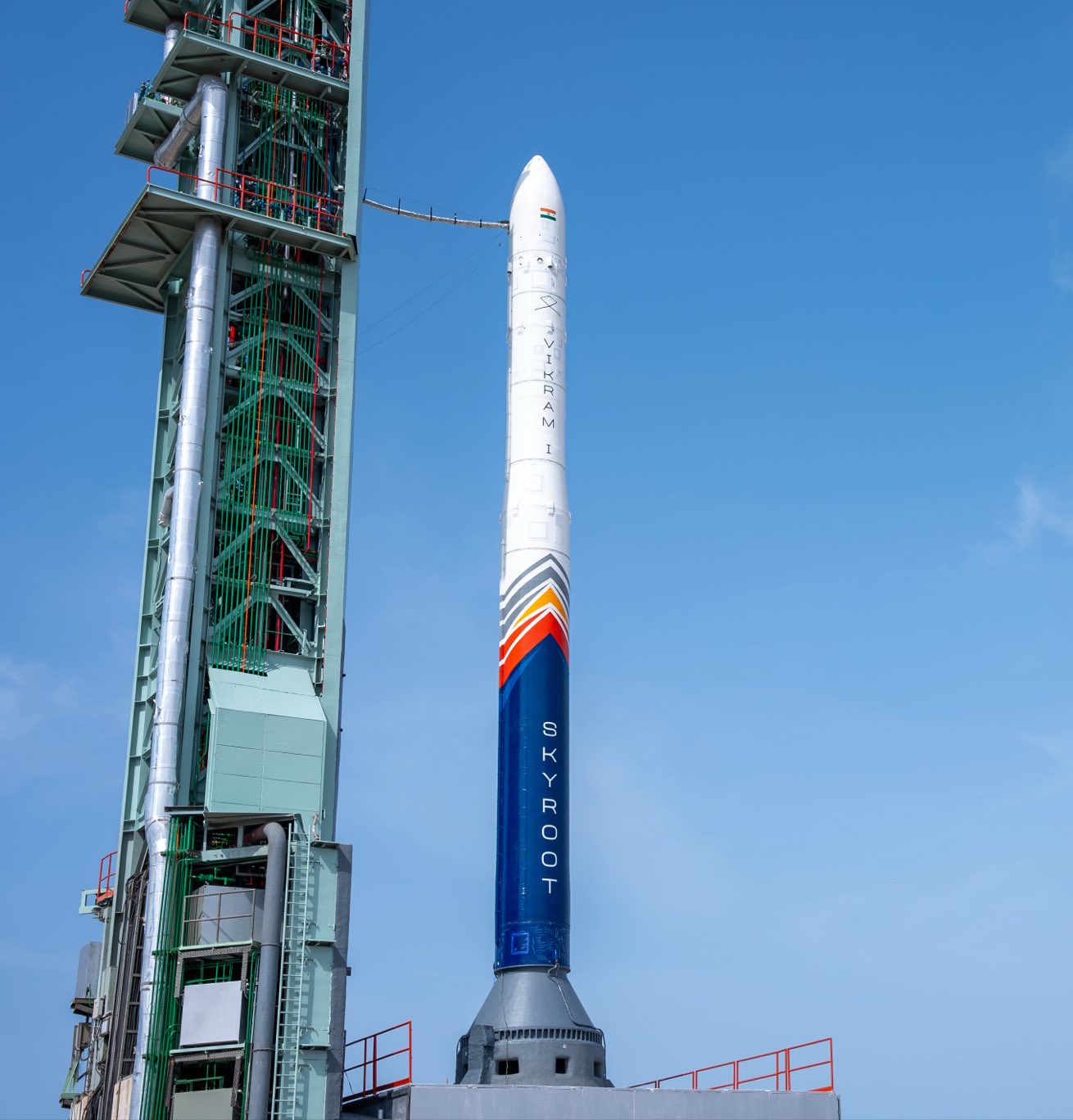
De lancering in het kort
| Rocket | Vikram-I |
| Operator | Skyroot Aerospace |
| Pad | Satish Dhawan Space Centre First Launch Pad, Satish Dhawan Space Centre, India |
| T-0 (UTC) | 18 juli 2026 om 06:35 |
| Status | Success |
What happened?
Skyroot Aerospace lifted off with its Vikram-I rocket on a demonstration flight from the First Launch Pad at the Satish Dhawan Space Centre in India on 18 July 2026 at 06:35:30 UTC (12:05 IST). Vikram-I is a three-stage, all-carbon-fibre orbital-class small-satellite launch vehicle developed by India's leading private launch company, Skyroot Aerospace.
The Vikram-I Demo Flight represents the maiden orbital attempt of the vehicle, following Skyroot's suborbital Vikram-S mission in November 2022, which made Skyroot the first Indian private company to launch a rocket. This recap covers what launched, from where, and why the mission matters.
Did the launch succeed?
Vikram-I departed the pad on schedule at 06:35 UTC and entered its powered ascent phase. For the latest confirmed status of stage separation, orbital insertion, and payload deployment, follow the real-time updates on the Cosmik rocket launch schedule and our latest launch news feed, which track the mission through each milestone.
A successful orbital demonstration would make Vikram-I one of the very few privately developed orbital rockets to reach space on an early flight, and it establishes Skyroot as a commercial competitor to India's state-run launch establishment and to global small-launch providers.
What is Vikram-I?
Vikram-I is a small-lift orbital launch vehicle named after Dr. Vikram Sarabhai, the founder of India's space programme. Key characteristics of the vehicle, according to Skyroot Aerospace, include:
- Three solid-fuelled stages plus a liquid-propellant orbital adjustment module for precise satellite placement.
- A payload capacity of roughly 300 kg to a 500 km low Earth orbit, targeting the growing smallsat and constellation market.
- An all-carbon-fibre composite airframe, which reduces structural mass and improves performance.
- 3D-printed engine components designed to compress build times and lower cost.
The vehicle builds directly on the flight-proven Kalam-series solid motors that Skyroot developed and static-fired in the years leading up to this mission.
Who is Skyroot Aerospace?
Founded in 2018 and headquartered in Hyderabad, Skyroot Aerospace is India's best-funded private launch startup. Its 2022 Vikram-S suborbital flight, which reached an apogee of about 89.5 km, was the first launch by an Indian private company and validated core propulsion and avionics technologies now flying on Vikram-I.
Where did it launch from?
The mission flew from the First Launch Pad at the Satish Dhawan Space Centre on Sriharikota Island, India's primary spaceport on the Bay of Bengal. Established in 1971, the centre is the launch site for India's PSLV, GSLV and LVM3 rockets, and its low latitude of about 13.7 degrees north is well suited to a range of orbital inclinations.
| Detail | Value |
|---|---|
| Rocket | Vikram-I |
| Operator | Skyroot Aerospace |
| Mission | Demo Flight (maiden orbital attempt) |
| Launch date/time | 18 July 2026, 06:35:30 UTC |
| Launch site | Satish Dhawan Space Centre, First Launch Pad, India |
| Payload class | Up to ~300 kg to 500 km LEO |
Why does this mission matter?
A working Vikram-I gives India a dedicated commercial ride for small satellites, which currently often wait for slots on larger shared launches. Dedicated small-lift vehicles deliver payloads to precise orbits on the customer's schedule, a key advantage for Earth-observation and communications constellations. A successful demo flight validates the propulsion, guidance and staging architecture needed before Skyroot moves to routine commercial service and larger follow-on vehicles.
How to track the mission and its payload
Once satellites from the flight are cataloged, you can follow them in orbit on the Cosmik live 3D satellite map, which renders every tracked object around Earth in real time. To learn the basics of finding objects overhead, see our guide on how to track satellites, and watch the ISS tracker for another live example of orbital tracking.
Launch data is sourced from The Space Devs Launch Library. Background on the vehicle and site is drawn from Skyroot Aerospace and the Satish Dhawan Space Centre.
Follow the next launch live
Track Vikram-I and its deployed satellites live on Cosmik, browse the full upcoming launch schedule, and enable free launch alerts so you never miss a liftoff.
Volg deze missie live in 3D en ontvang gratis een melding vóór de lancering.
Open de live kaart →Bronnen
Volgende lanceringen
- Falcon 9 lanceert SDA Tracking Layer E op 30 september 2026 — Q3 2026
- Crew-13 op Falcon 9 Block 5 — lancering 30 september 2026 & hoe live te kijken — september 2026
- QuickSounder-lancering op Firefly Alpha: 30 september 2026 — Q3 2026
Meer lanceringsnieuws
- Falcon 9 lanceert MRV-1 vanaf Cape Canaveral — 21 juli 2026 — 21 juli 2026, 21:15 UTC
- Starlink Group 17-39 gelanceerd: geslaagd op 21 juli 2026 — 21 juli 2026, 14:49 UTC
- Soyuz 2.1b lanceert 16 Rassvet-3-satellieten (19 juli 2026) — 19 juli 2026, 17:51 UTC
- SDA Tranche 1 Transport Layer E: Falcon 9 Launch Recap — 16 juli 2026, 20:32 UTC
- Long March 8A lanceert SpaceSail Polar #14 — 5 juli 2026 — 5 juli 2026, 13:43 UTC
- Starlink Group 17-40 terugblik: Falcon 9 gelanceerd op 28 juni 2026 — 28 juni 2026, 16:09 UTC