Gravity-1 Launch: Sea-Based Liftoff Set for 31 July 2026
Gepubliceerd · Bijgewerkt
Gravity-1OrienspaceHaiyang Oriental SpaceportChina launchpreview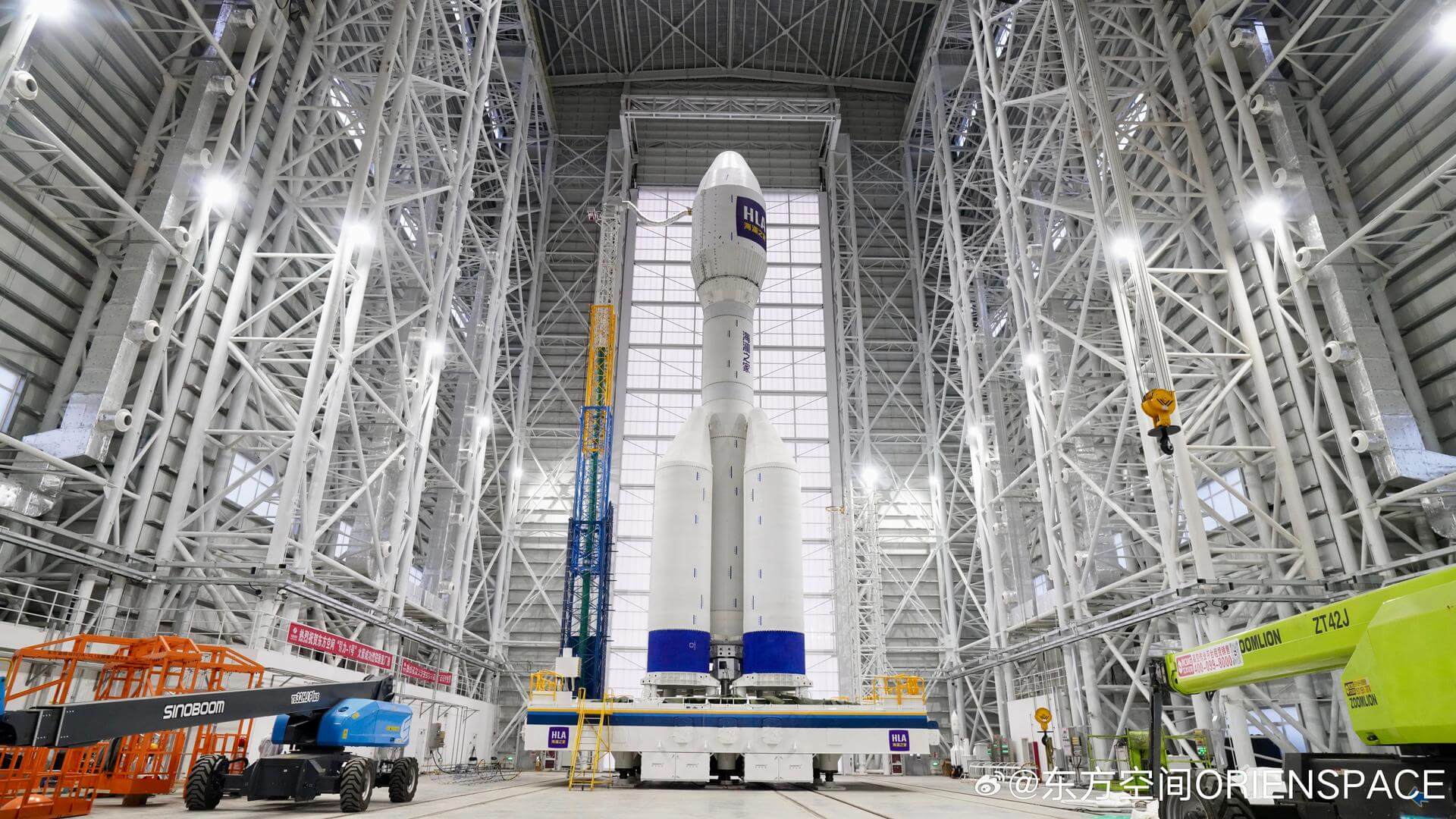
De lancering in het kort
| Rocket | Gravity-1 |
| Operator | Orienspace Technology |
| Pad | Haiyang offshore launch location, Haiyang Oriental Spaceport |
| T-0 (UTC) | 22 juli 2026 om 02:50 |
| Status | Go |
When is the Gravity-1 launch?
Orienspace Technology's Gravity-1 rocket is scheduled to lift off no earlier than 31 July 2026 at 00:00 UTC. The launch will take place from the Haiyang offshore launch location at the Haiyang Oriental Spaceport in China, one of the country's growing hubs for sea-based orbital launches.
The current status of this mission is listed as TBD (to be determined), which is common for commercial Chinese launches. Exact timing can shift based on maritime conditions, range clearance, and payload readiness. For the latest confirmed timing, check our rocket launch schedule, which updates automatically as new information becomes available.
What is Gravity-1?
Gravity-1 (Yinli-1) is a solid-propellant medium-lift launch vehicle developed by Orienspace, a Chinese commercial space company. It made history on its debut flight in January 2024 as one of the most powerful solid-fueled rockets in the world at the time, and notably launched from a sea platform off the coast of Haiyang.
The rocket uses a bundled configuration of solid-fuel motors, giving it substantial lift capacity for a solid-propellant design. Sea-based launches offer key advantages: they allow rockets to fly over open water instead of populated areas, provide flexibility in choosing launch azimuths, and reduce risk to communities near the coast.
Why launch from the sea?
The Haiyang Oriental Spaceport supports mobile offshore launches, where the rocket is transported to a maritime platform and fired from open water. This approach has become a signature capability for China's commercial launch sector, enabling a range of orbital inclinations without the constraints of a fixed inland pad.
What is the payload?
The payload for this mission has not yet been publicly disclosed. Chinese commercial launches frequently carry technology-demonstration satellites, remote-sensing spacecraft, or batches of small satellites for emerging constellations. As official details are released, we will update our latest launch news coverage with confirmed payload information.
Because the payload and precise orbital parameters remain unconfirmed, we are not speculating on satellite counts or destinations. What we can confirm is the rocket, operator, launch site, and target date listed above.
How to watch the Gravity-1 launch live
Chinese commercial launches are not always accompanied by an official live webcast, and coverage availability for this flight has not been confirmed. When a stream is made available, it typically appears through the provider or affiliated Chinese media channels near the launch window.
Even without a webcast, you can follow the mission in real time on Cosmik:
- Track the countdown and status updates on our launch tracker.
- Watch the rocket's trajectory and, once deployed, view the new satellites on our live 3D solar-system and satellite map.
- Learn more about following spacecraft after deployment with our guide to tracking satellites.
Launch at a glance
| Detail | Information |
|---|---|
| Rocket | Gravity-1 |
| Provider | Orienspace Technology |
| Launch site | Haiyang offshore launch location, Haiyang Oriental Spaceport |
| Target date/time | 31 July 2026, 00:00 UTC |
| Status | TBD |
| Payload | Not yet disclosed |
Why this launch matters
Gravity-1 represents the continued rise of China's commercial launch industry, which is expanding rapidly alongside state-run programs. Each flight of a privately developed vehicle like Gravity-1 helps validate reusable, flexible, and cost-effective access to orbit. Sea-based launches in particular are becoming a distinctive feature of China's approach, offering launch flexibility that fixed pads cannot match.
For observers, this mission is another data point in a busy year for global orbital activity. You can compare it against other upcoming flights on our full launch schedule.
Learn more
- Gravity-1 rocket (Wikipedia)
- Orienspace (Wikipedia)
- Launch data sourced from The Space Devs Launch Library
Follow the launch live on Cosmik
Don't miss liftoff. Track the Gravity-1 countdown, follow the rocket in real time, and watch the deployed satellites orbit Earth on our free live 3D map. Enable free launch alerts on Cosmik so you're notified the moment the mission is confirmed and ready to fly.
Volg deze missie live in 3D en ontvang gratis een melding vóór de lancering.
Open de live kaart →Bronnen
Volgende lanceringen
- Falcon 9 lanceert SDA Tracking Layer E op 30 september 2026 — Q3 2026
- Crew-13 op Falcon 9 Block 5 — lancering 30 september 2026 & hoe live te kijken — september 2026
- QuickSounder-lancering op Firefly Alpha: 30 september 2026 — Q3 2026
Meer lanceringsnieuws
- Long March 3B/E Launch: Time & How to Watch (23 July 2026) — 23 juli 2026, 12:00 UTC
- Long March 3B/E lanceert Tianlian 2-06 — terugblik 23 juli 2026 — 23 juli 2026, 12:00 UTC
- Gravity-1 lanceert 9 satellieten vanaf Gele Zee (22 juli 2026) — 22 juli 2026, 02:54 UTC
- Falcon 9 lanceert MRV-1 vanaf Cape Canaveral — 21 juli 2026 — 21 juli 2026, 21:15 UTC
- Starlink Group 17-39 gelanceerd: geslaagd op 21 juli 2026 — 21 juli 2026, 14:49 UTC
- Soyuz 2.1b lanceert 16 Rassvet-3-satellieten (19 juli 2026) — 19 juli 2026, 17:51 UTC